10 Cool Castles Used for Filming

Real castles are film sets you can actually visit. From vampire haunts to cult comedy, these locations have doubled as kingdoms, lairs, and schools of sorcery — and they’re just as cinematic when you’re standing in the wind with a camera of your own.

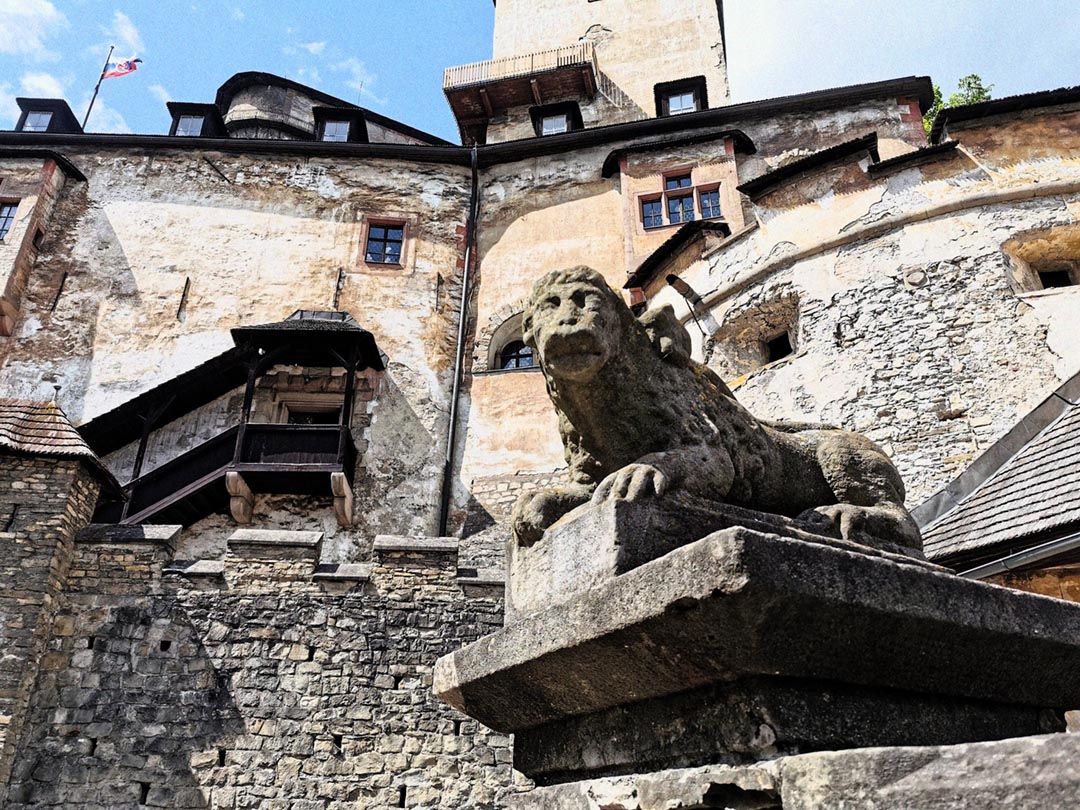
Orava Castle perched high on a crag above the Orava River

Orava Castle – Nosferatu (1922)

F. W. Murnau needed a fortress that looked like it had crawled out of a nightmare; Orava Castle delivered. Standing on a knife-edge of rock over the Orava River, its stacked courtyards and narrow stairs became Count Orlok’s domain in cinema’s most influential vampire film. The sharp silhouettes, looming keep and cliff-side drops read perfectly in stark black-and-white, giving the movie its documentary-ghost feeling — like the camera stumbled into a real monster’s home.

Visit for the views (and the vertigo). The climb through the upper ward recreates those famous stair shots; dusk light along the ramparts turns every arch into a Nosferatu frame. Exhibits cover local history, but the ambience is pure gothic: wind, stone, distance.
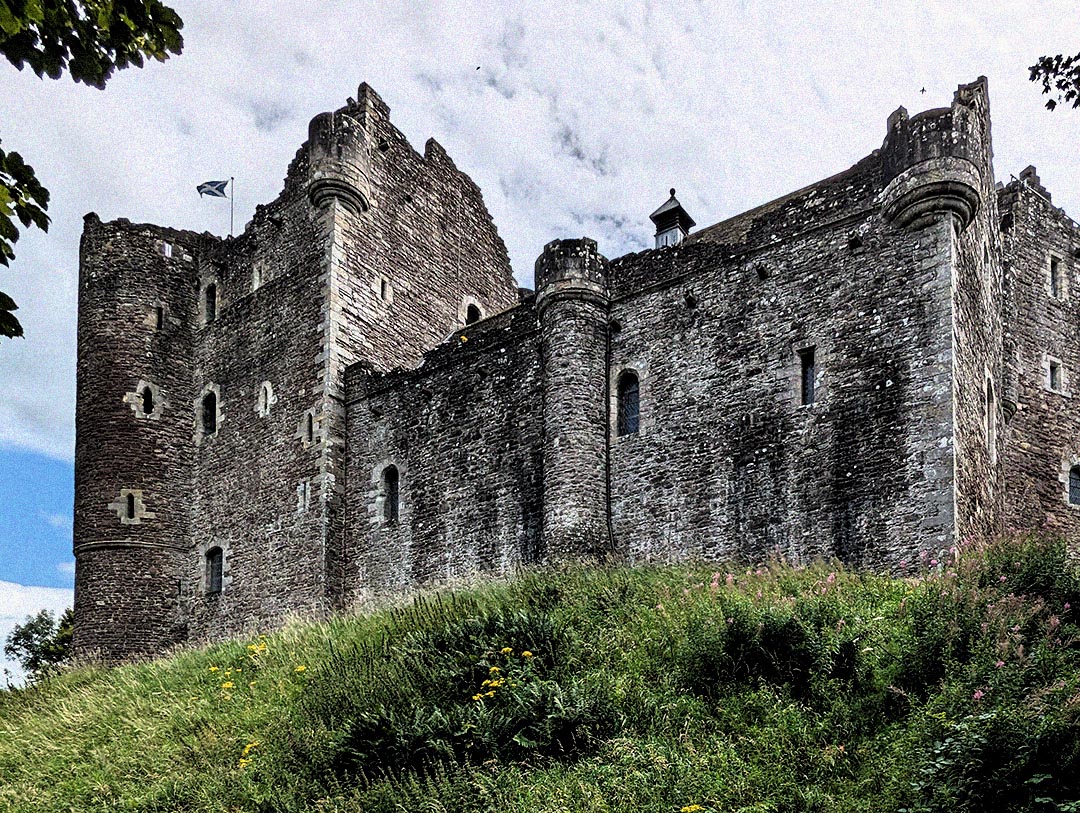
Doune Castle tower and courtyard in Scotland

Doune Castle – Monty Python and the Holy Grail (1975)

On a shoestring budget, the Pythons used one castle to play almost all the castles — and Doune’s angles did the heavy lifting. The gatehouse became the taunting French battlements; the courtyard turned into Castle Anthrax; the great hall moonlighted as Camelot (it’s only a model). The result: a cult classic whose geography is a running joke and a love letter to medieval masonry.

Today, audio guides let you toggle between “straight history” and “Python trivia.” Stand beneath the parapet and you’ll hear the ghostly clop of coconut halves; peek into the hall and you can picture chorus lines pulling out of numbers mid-verse. Fans of Outlander and Game of Thrones will also spot familiar shots — Doune keeps working.

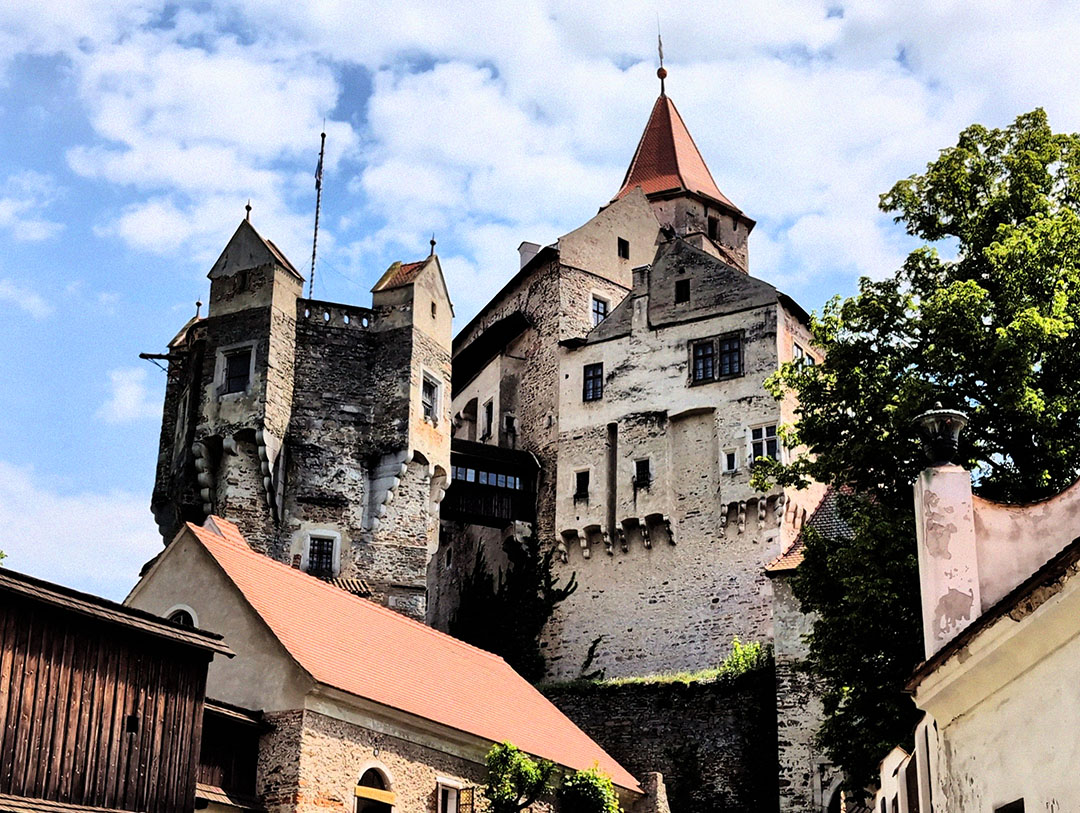
Pernštejn Castle’s gothic masonry and tight courtyard turns

Pernštejn Castle – Nosferatu: Phantom der Nacht (1979)

Werner Herzog’s remake trades expressionist starkness for feverish romantic decay, and Pernštejn is the dream. Its corkscrew stairways, timbered galleries, and tight passages give the camera a predatory glide; every doorway feels like a threshold you shouldn’t cross. Klaus Kinski’s pallid vampire drifting through these rooms is pure gothic operatic — tragic, hungry, inevitable.

Walking the site, you get the same compression and release the film leverages: cramped inner turns that suddenly explode into rampart views. Go late in the day — stone warms to copper, and the courtyards look like they’re holding their breath.

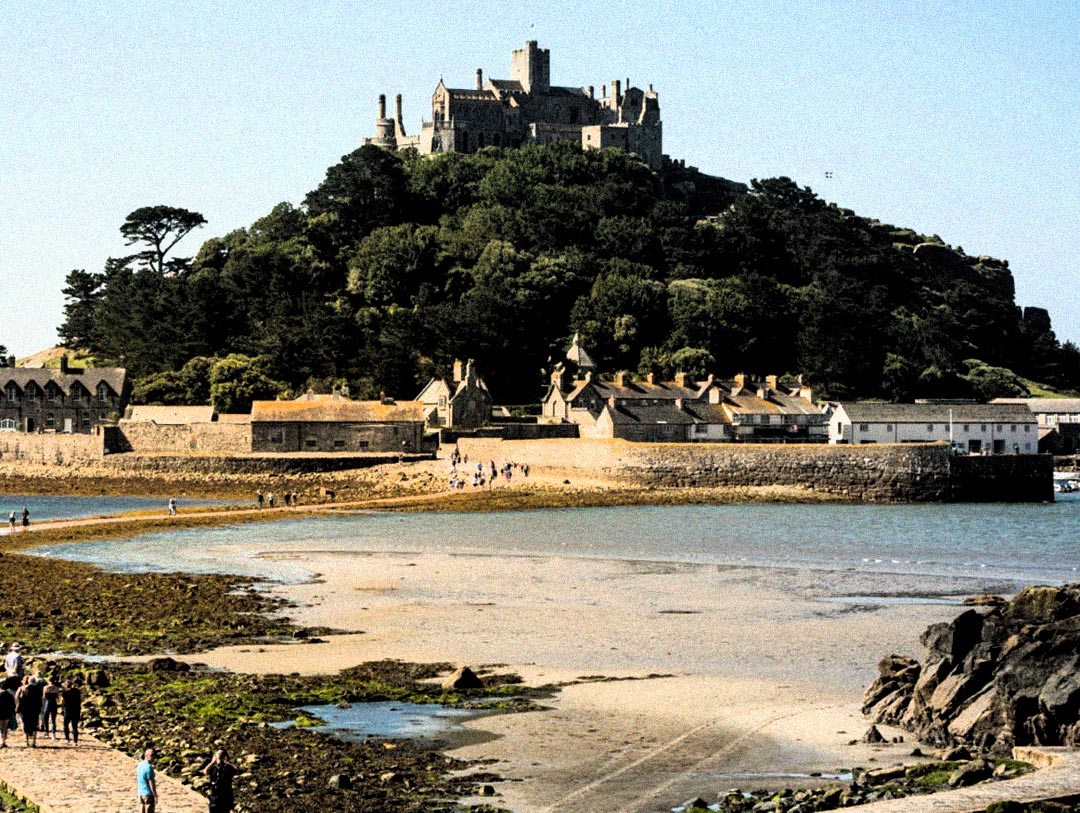
St Michael's Mount island castle connected by a tidal causeway

St Michael’s Mount – Dracula (1979)

John Badham’s sleek, romantic Dracula needed gothic grandeur with sea-salt on it. The tidal island of St Michael’s Mount answers with a priory-turned-mansion, granite outcrops, and a causeway that vanishes under the tide — an image that feels tailor-made for coffins, fog, and late arrivals by boat.

Time your visit to the tide tables: arriving on foot and leaving by boat is the most cinematic way to feel the location shift under you. Inside, the furnished rooms read more “ancestral home” than “crypt,” but step outside anywhere along the sea wall and the film mood clicks in.

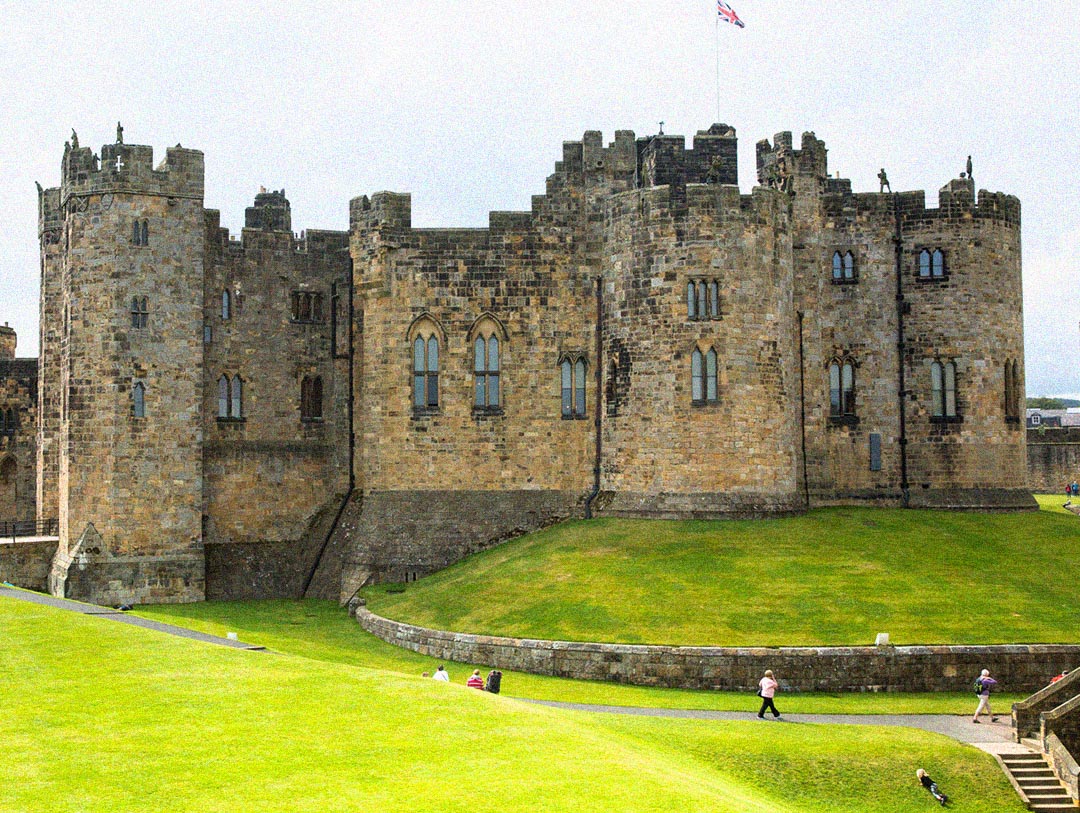
Alnwick Castle’s curtain walls and green bailey

Alnwick Castle – Count Dracula (1977) + Blackadder (1983)

Northumberland’s great fortress is a TV chameleon. In the BBC’s 1977 Count Dracula, its battlements give period teeth to a faithful, chilly adaptation. A few years later, The Black Adder leans into the same medieval textures for comic tyranny and crown-chasing chaos. Different tones, same stone credibility.

Walk the outer bailey to line up the classic “hero approaching the gatehouse” shot, then circle to the river for softer, pastoral frames. Alnwick is also famous from other franchises, so expect fellow pilgrims with wands and scarves — the castle wears multiple screen crowns comfortably.

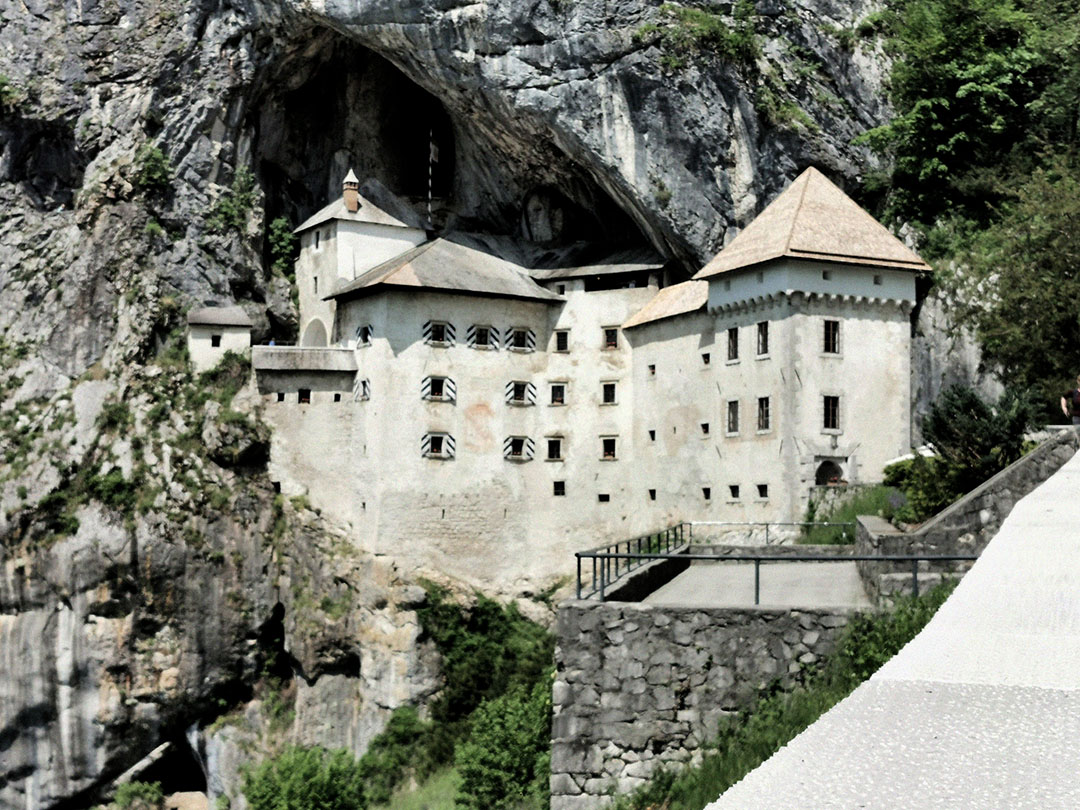
Predjama Castle built into the mouth of a limestone cliff cave

Predjama Castle – Armour of God (1986) + The Witcher (2019)

Half-castle, half-cavern, Predjama looks impossible — which is exactly why filmmakers point cameras at it. In Jackie Chan’s adventure, the cliffside setting becomes part of the stunt language, with chases that make gravity a co-star. In modern fantasy, it reads as an instantly believable outpost on the edge of a monster’s map, an establishing shot that does worldbuilding in a single frame.

Touring the interior reveals the secret tunnel, cave chambers, and a dining room that literally sits inside the cliff. For the most dramatic photographs, step back to the opposite hillside and let the overhang swallow the keep — the same angle productions love.

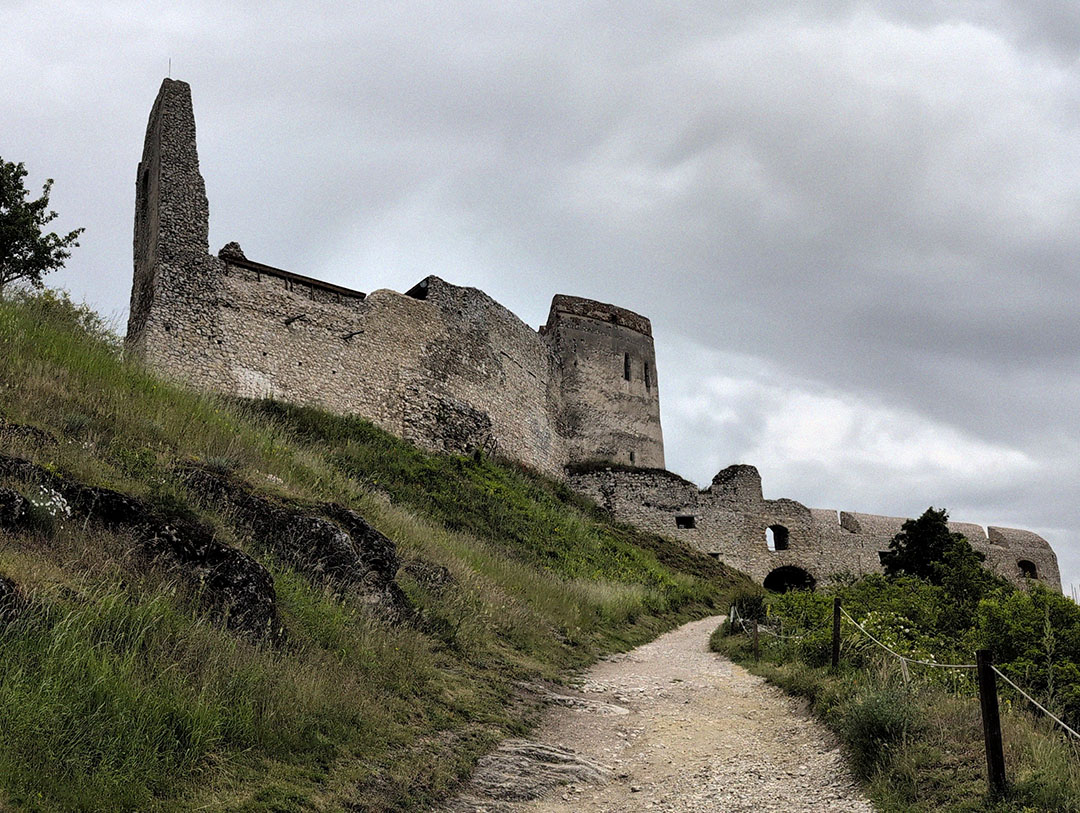
Ruins of Čachtice Castle on a hilltop ridge in Slovakia

Čachtice Castle – Dragonheart (1996)

Dragonheart needed credible medieval ruin to anchor its CGI dragon and swashbuckling tone. Čachtice’s skeletal walls, ridge-top position, and open sky give the film vistas that feel mythic without a single matte painting. The camera loves the approach — a pilgrim’s path that turns the ruin into a promise.

The hike up pays off in 360° views across limestone hills. Stay for sunset: the ruined gatehouse cuts a perfect silhouette, and you can frame shots that echo the film’s “lonely castle on the horizon” beats.

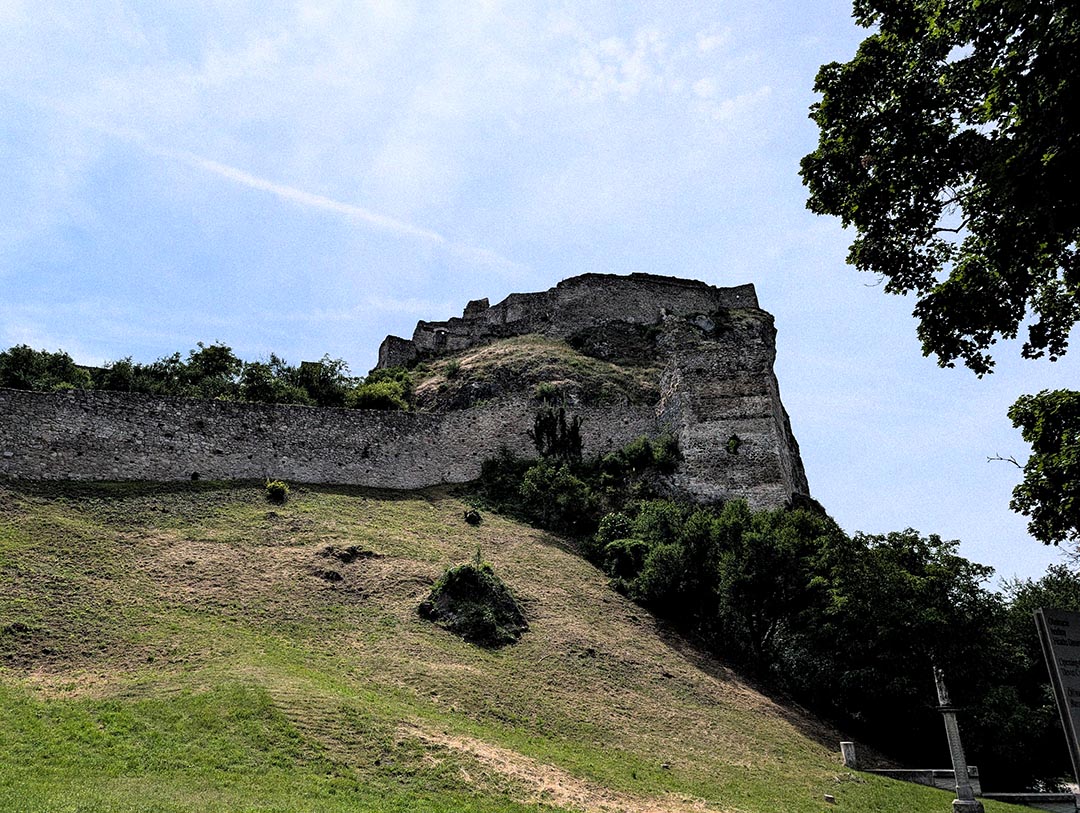
Devín Castle ruins above the confluence of the Danube and Morava rivers

Devín Castle – Kull the Conqueror (1997)

A sword-and-sorcery romp needs horizons; Devín supplies them. Set on a crag at the meeting of two rivers, the ruin gives filmmakers sweeping approaches, jagged towers, and cliff-edge drama without set-building. Even when the film leans camp, the castle stays epic.

Wander the upper castle for panoramas and the lower courtyards for more intimate rubble-and-arch textures. With the Danube glittering below, it’s easy to compose frames that look like fantasy matte art — only they’re real.

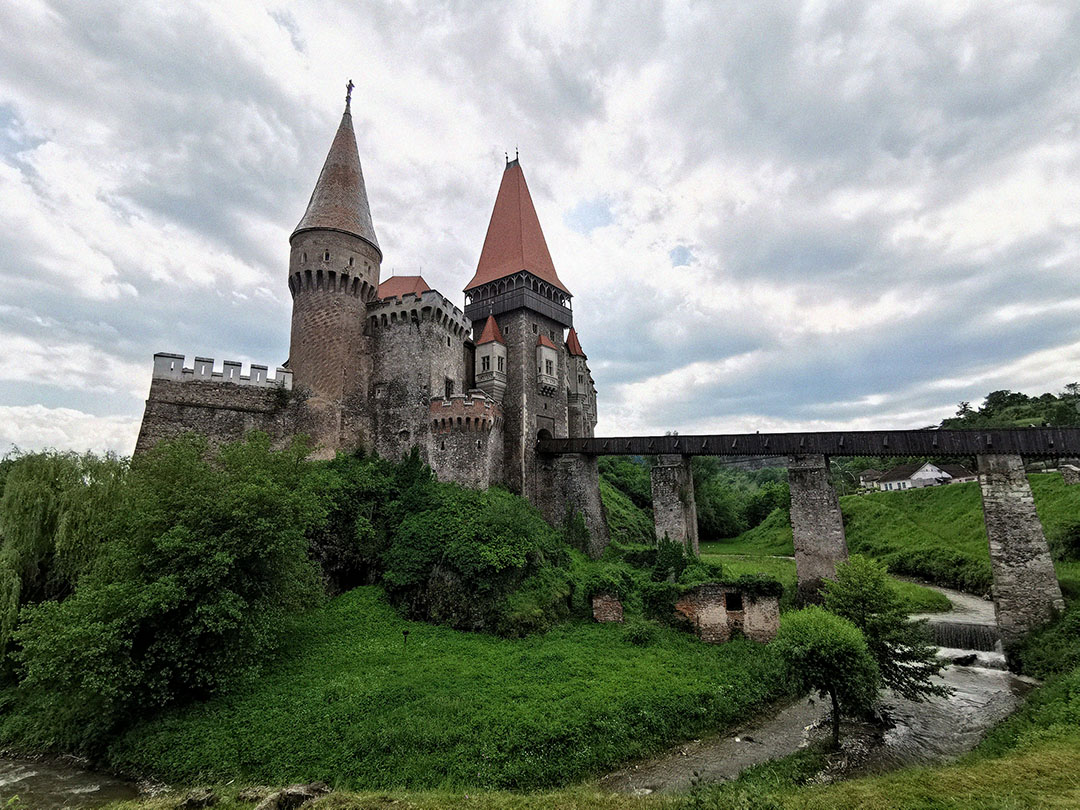
Gothic bridge and towers of Corvin (Hunyadi) Castle in Romania

Corvin Castle – The Nun (2018)

Part of the Conjuring Universe’s baroque demonology, The Nun leans hard on real architecture — and Corvin does half the haunting for it. A drawbridge over dark water, needle roofs, torch-ready corridors: you could switch off the fog machine and it would still feel cursed. The film’s monastery scenes borrow Corvin’s exterior menace and then burrow into shadowed interiors that feel carved from the same stone.

Crossing the bridge at night tours feels like stepping into a production still. By day, stained glass and painted halls break the gloom, but the courtyards keep their theatrical angles — long lenses love this place.

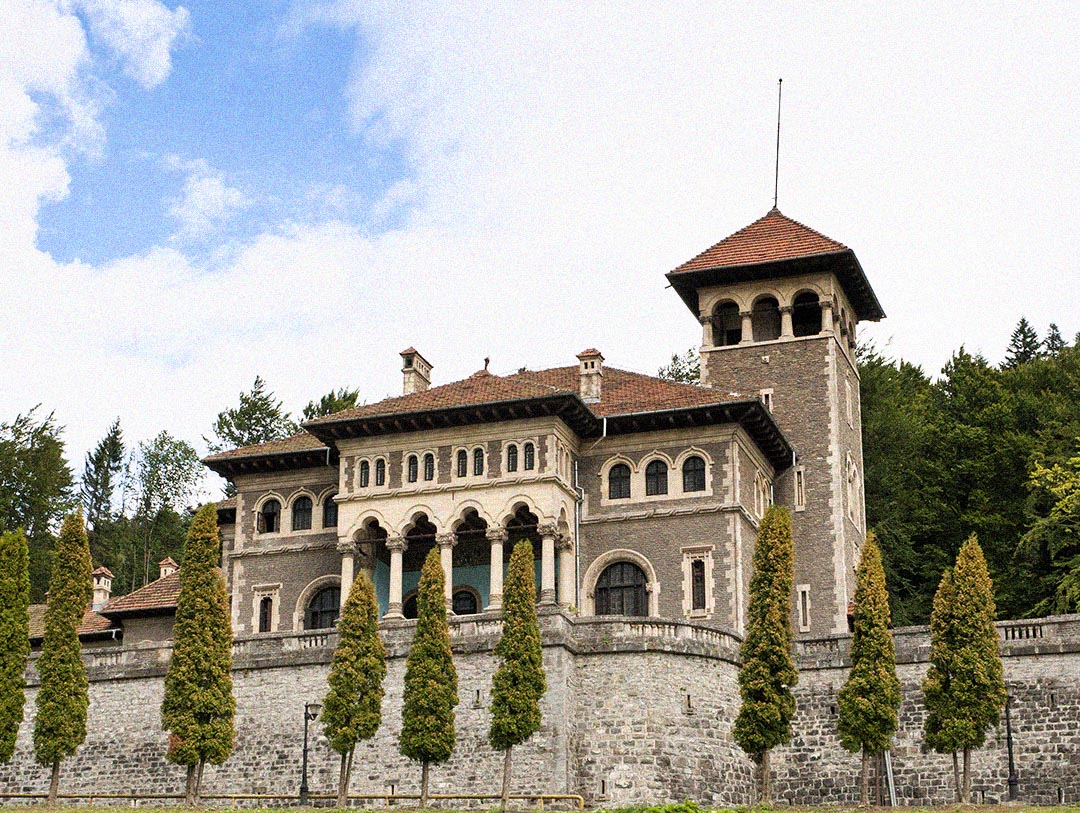
Cantacuzino Castle façade and terraces in Bușteni, Romania

Cantacuzino Castle – Wednesday (2022)

Netflix reimagined this Belle Époque mountain palace as Nevermore Academy, where gargoyles keep watch over teen goth sleuthing. Cantacuzino’s arcaded loggias, carved stone, and alpine backdrop telegraph “elite, eccentric, slightly ominous” before a single line is spoken. It’s a location that lets production design focus on uniforms and props; the building already knows how to brood.

The terraces offer the show’s signature vista — palace in front, Carpathians behind. Inside, salons and galleries gleam with stained glass and painted heraldry. Visit midweek to dodge crowds and you can snap Nevermore angles without a queue.

Film transforms place — but these castles transform film right back. Go for the locations you loved on screen, stay for the details the camera missed: the smell of wet stone, the way sound dies in a stairwell, the horizon that a matte painting can’t fake.