York Cold War Bunker
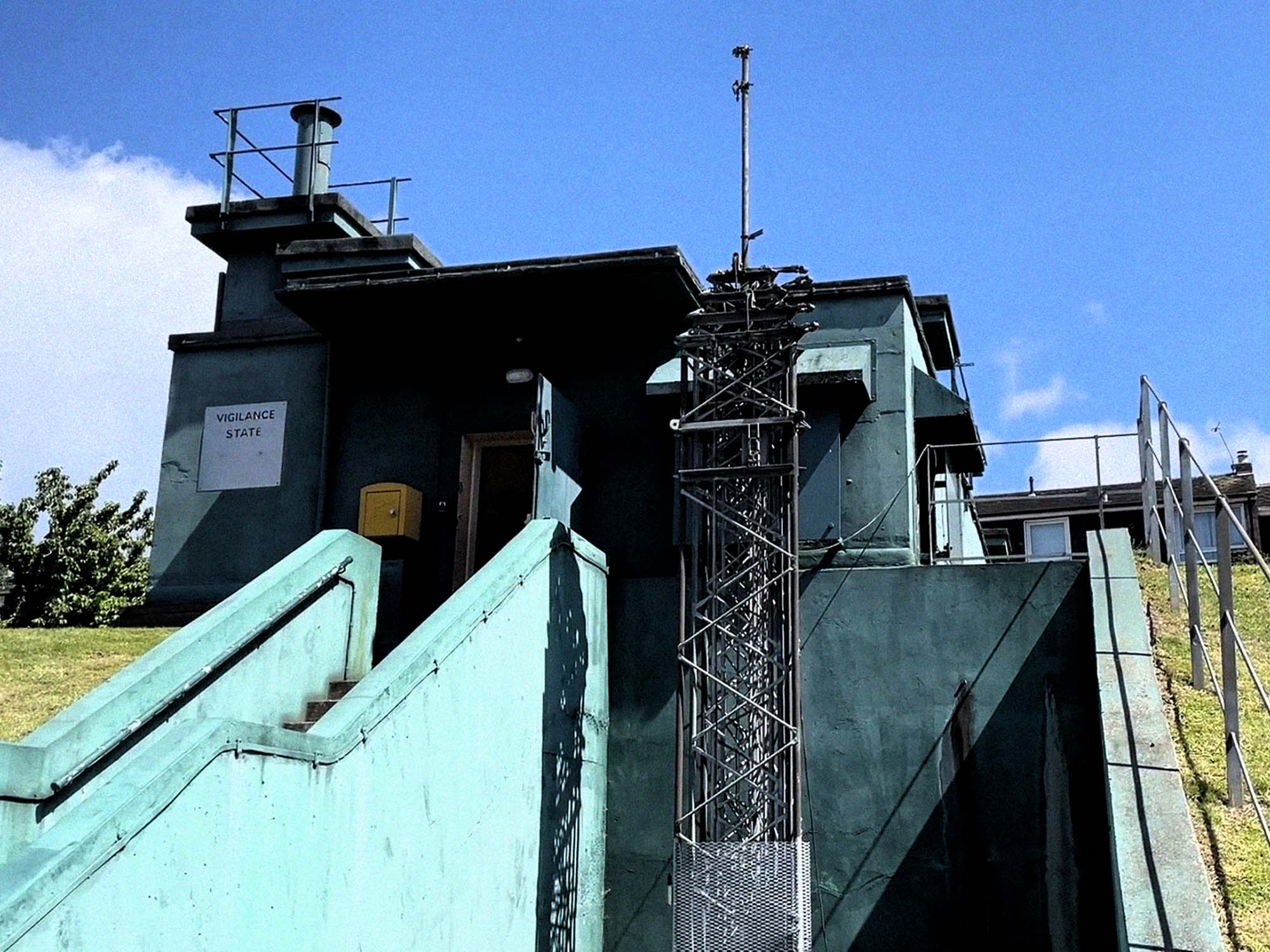
A preserved Royal Observer Corps headquarters built in 1961 to identify nuclear explosions, calculate their power and monitor the movement of radioactive fallout across Yorkshire.
York Cold War Bunker is a semi-subterranean nuclear monitoring facility in the Holgate area of York. It opened on 16 December 1961 as No. 20 Group Headquarters, also known as 20 Group Control. The bunker formed part of the United Kingdom Warning and Monitoring Organisation, a Home Office network intended to gather and distribute information following a nuclear attack. It was operated by the Royal Observer Corps, a largely volunteer organisation that had previously monitored hostile aircraft during the Second World War.
The York headquarters coordinated information from more than 40 underground monitoring posts across Yorkshire. Each post was designed for a crew of three and equipped to detect the direction, power and approximate location of nuclear explosions and measure subsequent radiation levels. Reports were sent to York, where staff plotted the information on maps and transparent display boards. Data from several posts could be compared to estimate the position and explosive yield of a detonation and predict the direction in which radioactive fallout would travel.
Information processed at York was passed by telecommunications equipment to the regional sector headquarters in Lincoln and onwards to organisations including the Ministry of Defence, central and local government and civil-defence authorities. The system was intended to help officials issue fallout warnings, identify contaminated areas and determine where surviving emergency services and supplies could still operate after an attack.
The reinforced-concrete bunker extends over two principal levels. It was designed to withstand the effects of a nuclear explosion at some distance and protect its occupants from radioactive fallout, but it was not expected to survive a direct hit. The wider monitoring network relied partly on redundancy: if one control centre or monitoring post was destroyed, neighbouring facilities could continue collecting and transmitting information.
The interior contained an operations room, communications centre, offices, plant rooms, kitchen, canteen, dormitory and decontamination facilities. Air-filtration equipment, emergency power, stored water and a specialised sewage system would have allowed the bunker to remain sealed for approximately 30 days. Between fifty and sixty personnel could have worked there during an emergency. Beds were shared between rotating shifts in a system commonly known as hot bedding, with one person taking a bed after another returned to duty.
The monitoring equipment included the Ground Zero Indicator, a pinhole-camera device designed to record the direction and elevation of a nuclear fireball; the Bomb Power Indicator, which measured the pressure wave from an explosion; and radiation instruments used to monitor fallout. Much of the equipment changed relatively little during the bunker’s operational life, although its communications systems were modernised over time.
The headquarters was normally staffed by a small permanent team consisting of one full-time and two part-time officers, supported by several hundred Royal Observer Corps volunteers throughout the regional group. Volunteers trained at the bunker several evenings each week and participated in exercises simulating nuclear attacks. Longer exercises could continue for between 24 and 36 hours, with crews working in rotating shifts and processing fictional reports of explosions and radioactive contamination.
The bunker was never placed on full operational alert, including during the Cuban Missile Crisis of 1962. Had an attack appeared imminent, its steel entrance doors would have been sealed and the staff on duty would have remained inside to continue monitoring conditions outside. Their work was based on the assumption that a functioning warning and reporting system would still be required after widespread destruction of cities, communications and public infrastructure.
Most of the Royal Observer Corps was stood down on 30 September 1991 following the end of the Cold War, and the national network of monitoring bunkers closed during the following months. York Cold War Bunker ceased operating in 1992. Some communications equipment was removed, but much of the interior, furniture, machinery and monitoring apparatus remained in place.
English Heritage acquired the bunker in 2000 and carried out a programme of research and conservation lasting until 2006. The restored facility is now visited by guided tour. Its original operations room, plotting boards, communications equipment, dormitory, canteen, decontamination rooms and mechanical systems make it one of the most complete surviving examples of Britain’s Cold War nuclear-warning infrastructure.
Location: On Monument Close in the Holgate area, west of central York.
Address: Monument Close, York, North Yorkshire YO24 4HT, England
Category: museum, bunker
Tags: bunker, Cold War, nuclear warfare, radioactive fallout, Royal Observer Corps, civil defence, underground facility, nuclear monitoring
Darkness Level: ☠ ☠ ☠ ☠ ☠ ☠ ☠ ☠
Homepage: english-heritage.org.uk
Map: Open in Google Maps
Gallery