WW2 Graffiti: Be True to H7
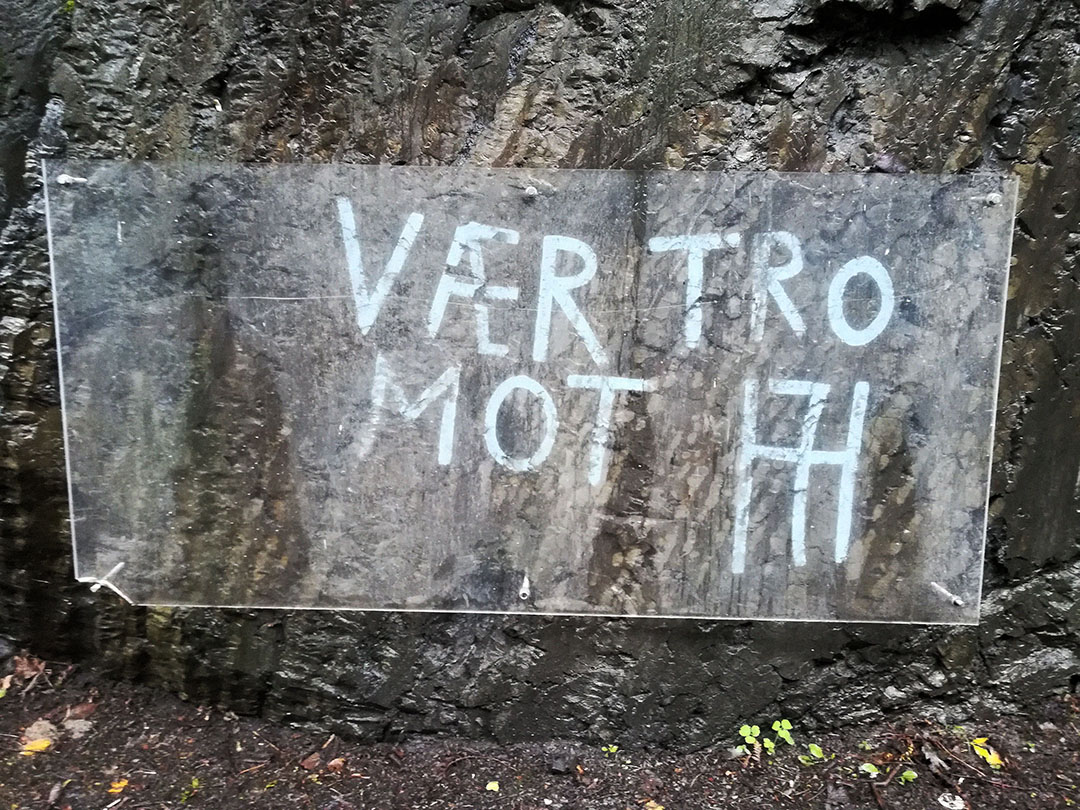
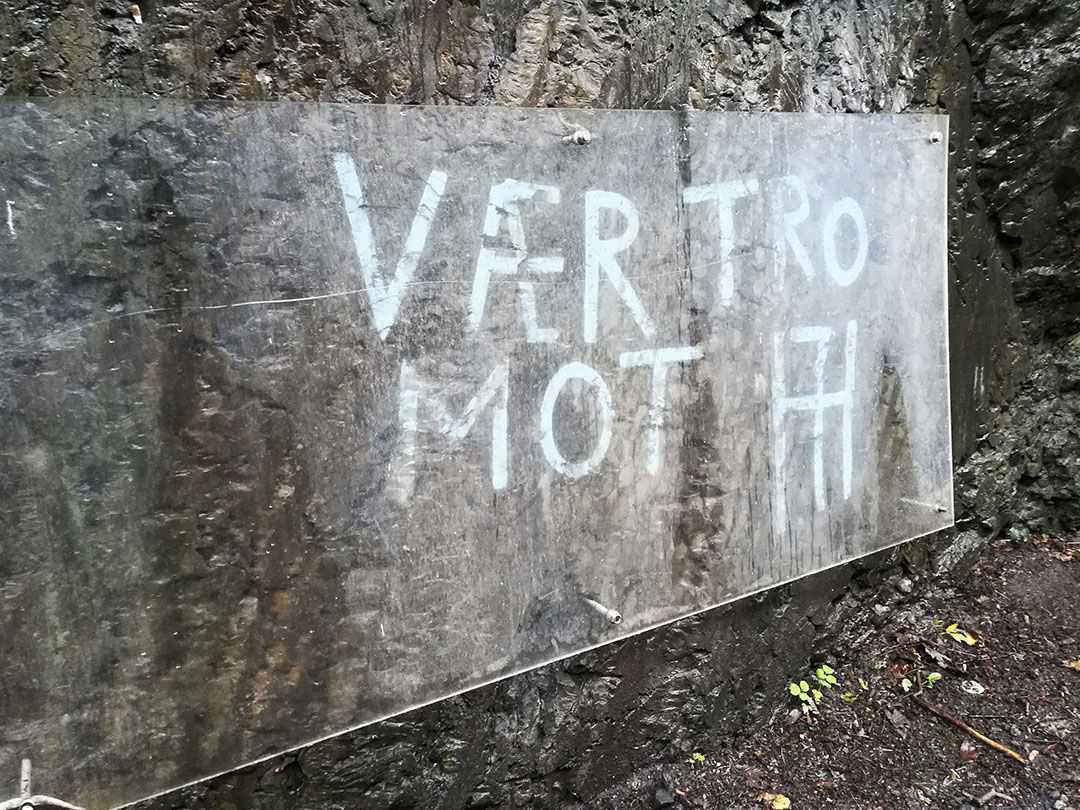
A graffiti to support the Norwegian king Haakon VII made during the Second World War still stands today.
On a rock cutting in Uranienborgveien in Oslo, protected behind a sheet of plexiglass, are four simple words painted during the German occupation of Norway: “Vær tro mot H7” – “Be loyal to H7”. It is one of the rare surviving pieces of resistance graffiti from the Second World War, and its location made the message considerably more dangerous than it might appear today. The anonymous person who painted it did so in an area heavily used by the occupying forces and Norwegian Nazis, reportedly directly within sight of the leadership of the Hirden, Nasjonal Samling's uniformed paramilitary organisation.
The H7 referred to King Haakon VII. After Germany invaded Norway on 9 April 1940, the king refused German demands that he appoint Vidkun Quisling as prime minister. Haakon and the Norwegian government eventually escaped to Britain, where they continued the war from exile. His refusal to cooperate with the occupation authorities transformed the king into one of the most powerful symbols of Norwegian resistance. The intertwined H7 royal monogram appeared illegally on walls, fences, coins, badges and homemade objects across occupied Norway. Simply displaying it could be interpreted as open defiance of both the Germans and Nasjonal Samling.
That gives the sentence in Uranienborgveien a little more weight than ordinary graffiti. Whoever brought the blue paint and wrote “Vær tro mot H7” on the exposed rock was not merely expressing an opinion. The occupation authorities had prohibited demonstrations of loyalty towards the exiled king, and people could be arrested for far less obvious acts of resistance. Even more provocative was where the message appeared. Accounts from the later restoration describe it as having been painted directly in front of windows used by senior members of the Hirden. It was difficult to misunderstand the point.
The identity of the person responsible appears to have been lost. There is no famous resistance name attached to the inscription and no dramatic story of escape afterwards. In a way, that makes it more interesting. Thousands of small acts of opposition during the occupation were carried out by people whose names never entered history books. This one survived simply because somebody put paint on a rock and the words remained there long after both the occupation and the Hirden had disappeared.
Haakon VII remained in Britain until the end of the war, regularly addressing Norwegians through BBC broadcasts from London. His popularity increased during the occupation, and the H7 symbol became so closely associated with resistance that it was immediately recognisable without any further explanation. The events surrounding his refusal to submit to the German demands in April 1940 were later dramatised in the 2016 Norwegian film The King's Choice.
By the early 2000s, however, Oslo was in danger of losing its little piece of wartime graffiti. The inscription had faded badly and was becoming increasingly difficult to see. Architect and professor Thomas Thiis-Evensen drew attention to its condition, and in 2005 Oslo's city government provided 33,000 kroner for specialists from the Norwegian Institute for Cultural Heritage Research to restore it. The preserved inscription was subsequently protected behind a transparent screen.
The unveiling brought one of Norway's most famous resistance fighters to this very small memorial. Gunnar “Kjakan” Sønsteby, the highly decorated saboteur who had operated in occupied Oslo, cut the ribbon, while fellow resistance veteran and Major General Bjørn Egge also attended. There is something appropriate about Sønsteby helping preserve a message left by someone whose identity was never known. One resistance fighter became famous; the other left only four words behind.
Curiously, the wartime graffiti is not the only reason this particular rock face has been preserved. The road cutting itself dates from the development of Uranienborgveien in the late 1870s and is protected as an important geological site. It exposes dark shale containing nodules of limestone – knollekalk in Norwegian – that was folded during the Caledonian mountain-building period more than 400 million years ago. The rock also preserves evidence of later volcanic activity. According to the Geological Survey of Norway, this modest roadside cutting manages to illustrate several hundred million years of Oslo's geological history.
So the same piece of rock has somehow become a protected monument for two completely unrelated reasons. Geologists can study ancient seabed deposits, mountain building and volcanic activity, while only a few metres away four fading words preserve a much more recent moment when writing the wrong thing on a wall could have serious consequences. Of the two, “Vær tro mot H7” may be easier to understand than nodular limestone – but both have helped ensure that this particular piece of Oslo remains exactly where it is.
Location: The graffiti can be found in Uranienborgveien close to Uraniensborg Park.
Address: Uranienborgveien, 0258 Oslo, Norway
Category: monument, graffiti
Tags: local history, graffiti, WW2, war
Darkness Level: ☠ ☠ ☠ ☠ ☠ ☠ ☠ ☠ ☠
Map: Open in Google Maps
Gallery