Trostburg Castle
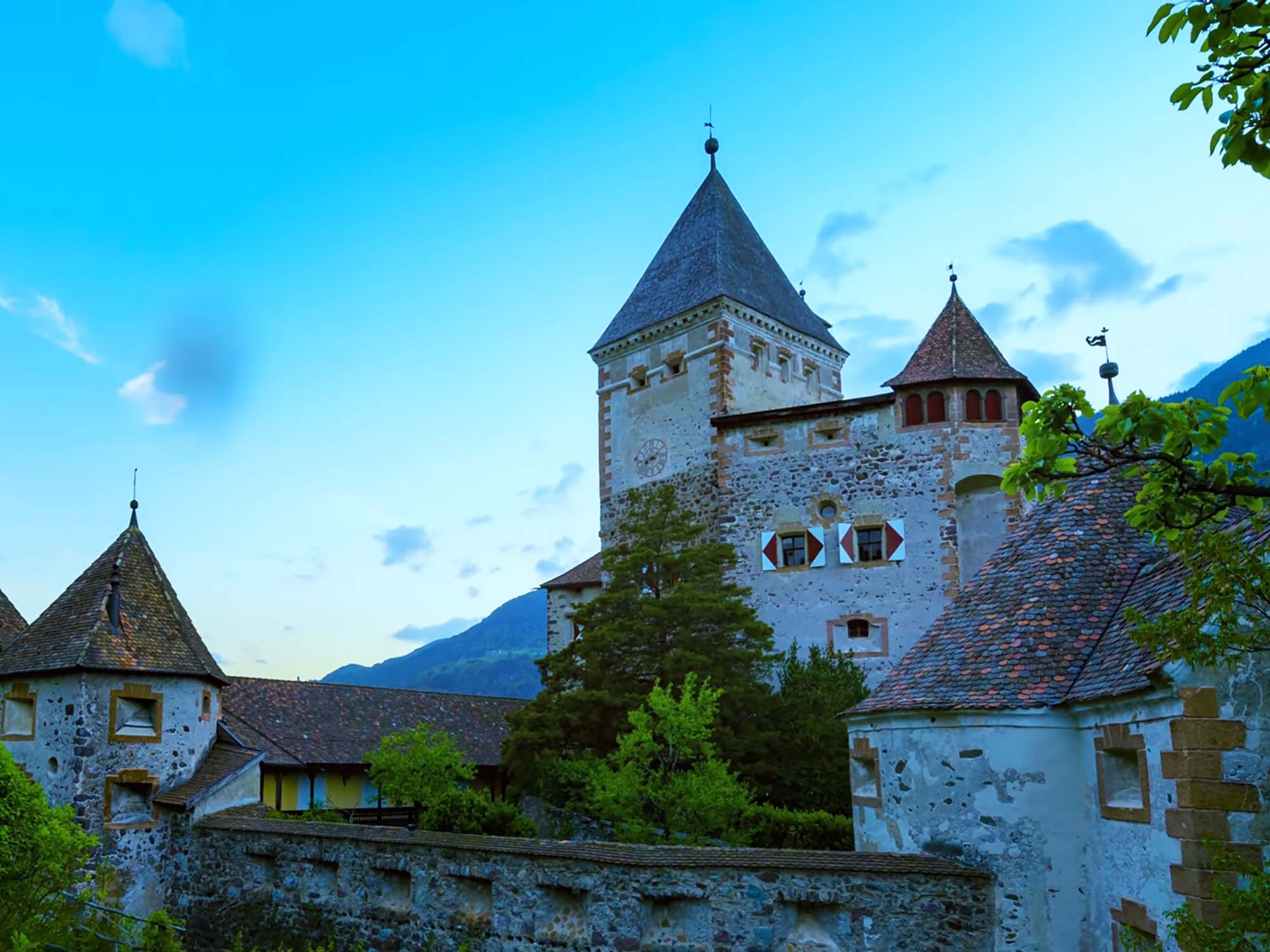
A well-preserved medieval fortress above Ponte Gardena, once the centre of a feudal judicial district and the ancestral residence of the Wolkenstein-Trostburg family, now housing the South Tyrolean Castles Museum.
Trostburg Castle, known in German as Schloss Trostburg and in Italian as Castel Trostburg, stands on a rocky spur above Ponte Gardena in South Tyrol. The castle controlled an important crossing in the Eisack Valley and the entrance to Val Gardena, part of a major route through the Alps. It was first documented in 1173 as the residence of Cunrat de Trosperch, a member of the Lords of Castelrotto.
The oldest substantial parts of the present complex date from the 13th century. The keep was constructed around 1230, while the Romanesque residential palace developed around a small inner courtyard. Trostburg later belonged to the Lords of Velthurns, who were described in later historical accounts as highway robbers. Around 1290, the castle passed to the Counts of Tyrol, who subsequently transferred or pledged it to the Lords of Villandro and the Wolkenstein family.
Trostburg became the principal residence of the Wolkenstein-Trostburg family and remained connected with the dynasty for approximately six centuries. The family exercised lower judicial authority over the surrounding Burgfrieden, a feudal district comprising farms, properties and residents who were subject to the castle’s manorial jurisdiction. The modern settlement of Ponte Gardena developed from this district. Members of the family also administered the neighbouring Court of Villandro from Trostburg during parts of its history.
The castle is closely associated with Oswald von Wolkenstein, the late-medieval poet, composer, diplomat and knight who lived from approximately 1377 to 1445. Although his precise birthplace is disputed, he spent much of his childhood at Trostburg before leaving his family at around ten years of age. His autobiographical songs and surviving documents provide an unusually detailed account of travel, political conflict, warfare and imprisonment during the late Middle Ages.
Trostburg was considerably enlarged between the 14th and 16th centuries. Its defensive structures include fortified gates, narrow passages, curtain walls and a separate round signal and watchtower situated on a higher rocky outcrop. This tower, sometimes called the Roman Tower or Kreideturm, was used for warning fires that could communicate danger across the surrounding territory.
The largest period of architectural transformation took place from the late 15th to the early 17th century. The medieval residence was expanded with more comfortable living quarters, decorated rooms and Renaissance ceremonial spaces. Surviving interiors include a richly carved triple-vaulted Gothic parlour, residential rooms used by the Counts of Wolkenstein, a loggia decorated with coats of arms and wall paintings dating from around 1514 that depict hunting and cooking scenes.
The most elaborate room is the New Knights’ Hall, completed around 1618. It contains a large inlaid coffered ceiling, stucco decoration and furnishings created during the castle’s Renaissance rebuilding. The complex also includes a chapel dedicated to Saint Anthony the Abbot, vaulted stables, an extensive outer bailey and a historic wine press traditionally described as the largest surviving wine press in South Tyrol.
From the 17th century onwards, members of the Wolkenstein family increasingly used Trostburg only as a seasonal residence. Maintenance became more difficult, and by the 20th century the complex was threatened by structural decay. In 1967, a private company formed by members of the South Tyrolean Castle Institute acquired the property and began extensive stabilisation and restoration work. The castle opened to the public in 1977 and was formally transferred to the institute in 1981.
Since 2005, Trostburg has housed the South Tyrolean Castles Museum. Its permanent exhibition examines the construction, development and preservation of fortified residences throughout the region. The collection includes 86 scale models showing South Tyrolean castles in their present or reconstructed historical forms. Large parts of Trostburg retain their original layout, furnishings and decorative elements, making the building itself the principal exhibit.
Location: On a rocky spur above Ponte Gardena, overlooking the Eisack Valley and the entrance to Val Gardena.
Address: Via Burgfrieden 22, 39040 Ponte Gardena BZ, Italy
Category: castle, museum
Tags: medieval fortress, feudal jurisdiction, highwaymen, fortified residence, Oswald von Wolkenstein, Wolkenstein-Trostburg, Renaissance, signal tower, castle museum
Darkness Level: ☠ ☠ ☠ ☠ ☠
Homepage: burgeninstitut.com
Map: Open in Google Maps
Gallery