The Witches’ Well
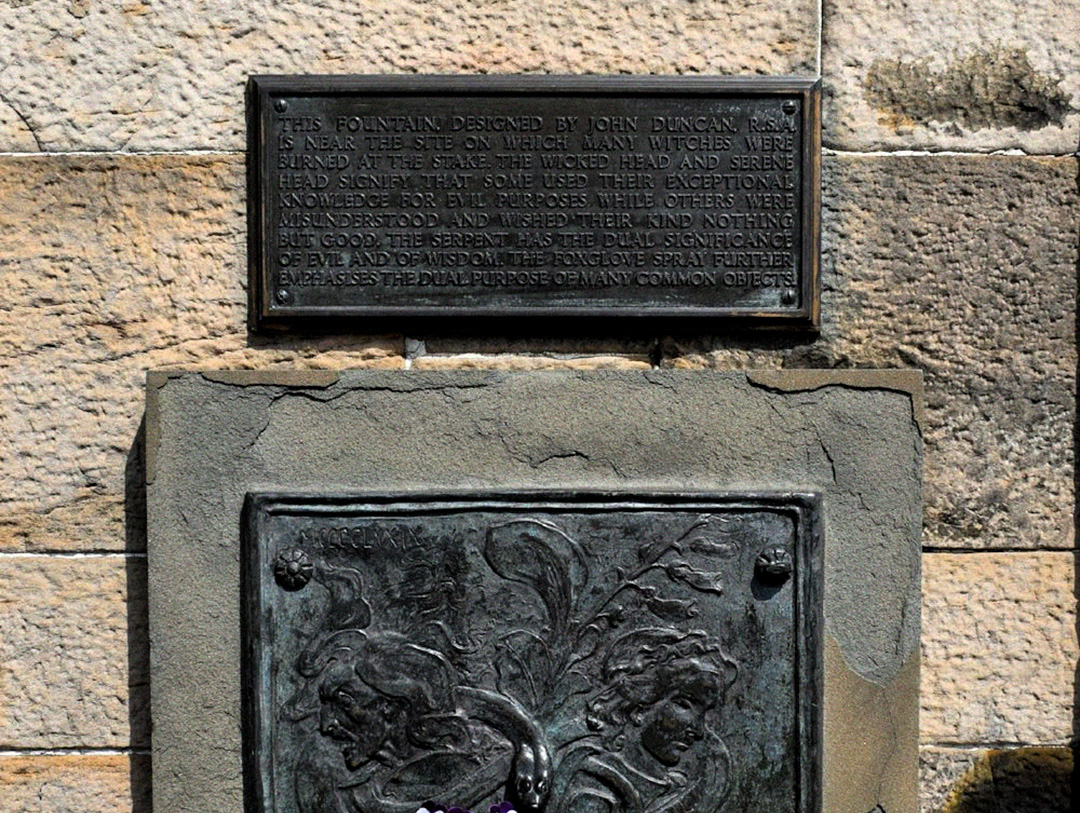
A modest memorial fountain and bronze relief on Castlehill, placed near a historic execution site and dedicated to people accused of witchcraft during Scotland’s witch-hunt era.
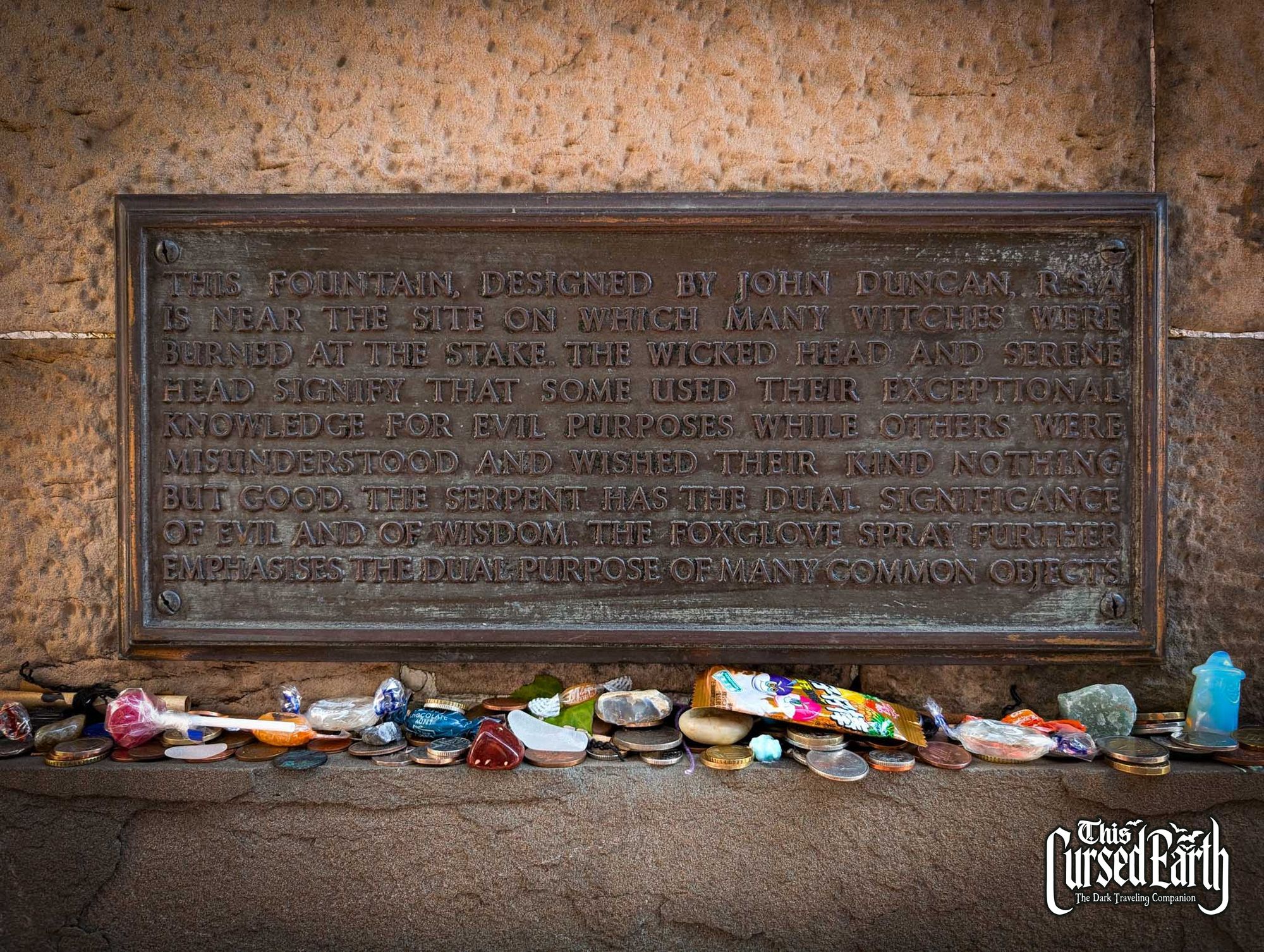
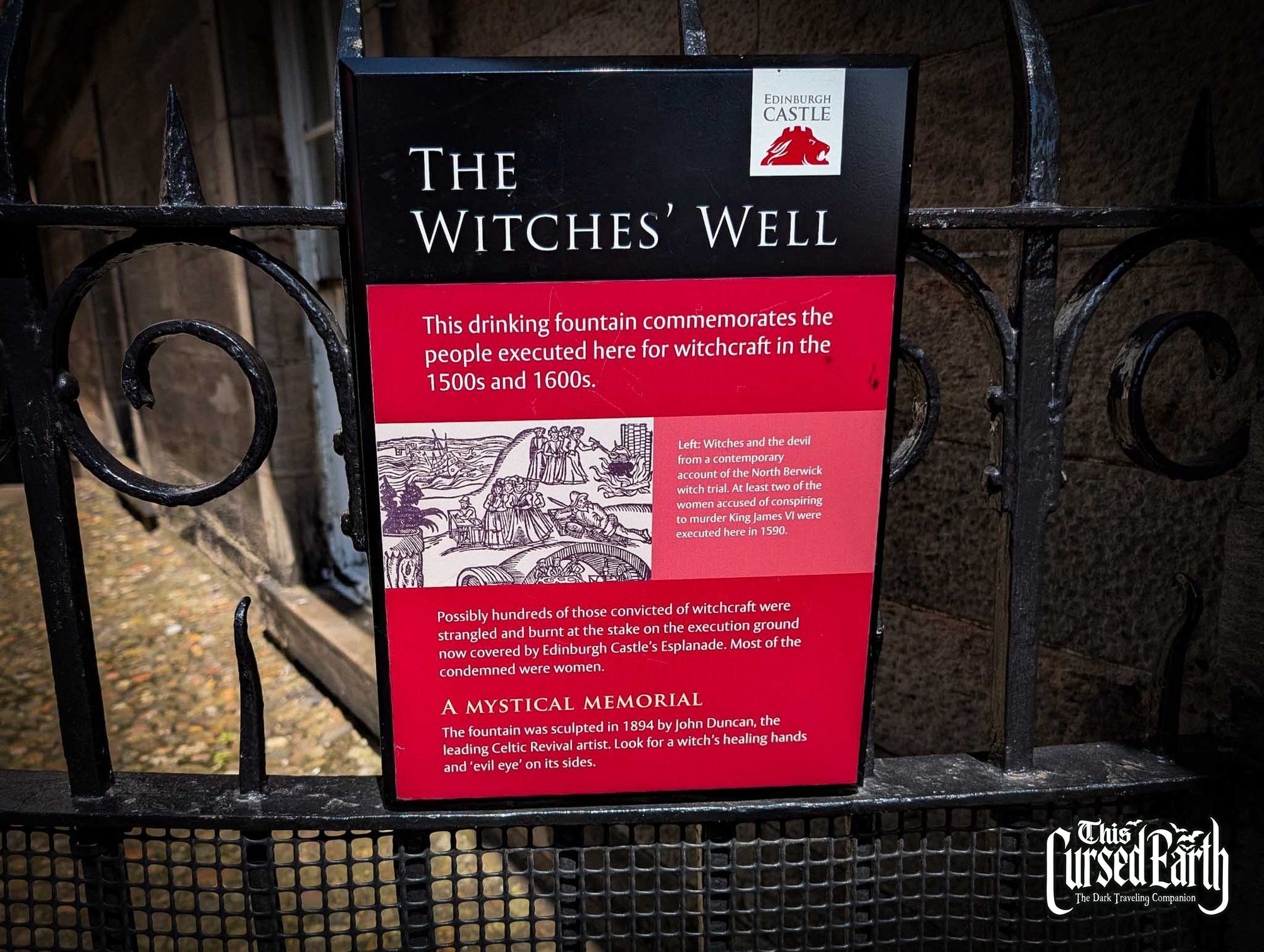
The Witches’ Well is a small memorial drinking fountain set into a wall at the lower end of Castlehill, close to Edinburgh Castle. It was commissioned in 1894 by the urban planner Sir Patrick Geddes and designed by the artist John Duncan. The work is both monument and warning: a public object intended to mark, however quietly, a location associated with executions carried out during Scotland’s witchcraft persecutions.
The bronze relief combines medical and symbolic imagery. A snake coils around the heads of Hygeia and Asclepius (figures associated with healing), while other details include plants, an “evil eye,” and hands linked to cure and protection. Roman numerals reference the period commonly associated with Scotland’s most intense witch-hunting, emphasising the historical framing of the memorial rather than any endorsement of the accusations that led to death sentences.
Unlike large civic memorials, The Witches’ Well is easy to miss, reflecting how mass persecution can be folded into the everyday fabric of a city. The plaque and imagery have also been criticised for wording that appears to assume the victims’ supernatural powers, highlighting a persistent tension between commemoration and mythmaking.
Location: On Castlehill, below the Castle Esplanade and near Edinburgh Castle.
Address: Castlehill, Edinburgh EH1 2ND, Scotland
Category: monument, historical site, witch
Tags: witch trials, executions, memorial, folklore, persecution, Old Town, fountain, public monument
Darkness Level: ☠ ☠ ☠ ☠ ☠ ☠ ☠ ☠ ☠
Map: Open in Google Maps
Gallery