The Ten Bells
The Ten Bells is one of London's most notorious haunted pubs, forever linked to the Jack the Ripper murders and filled with eerie ghostly encounters.
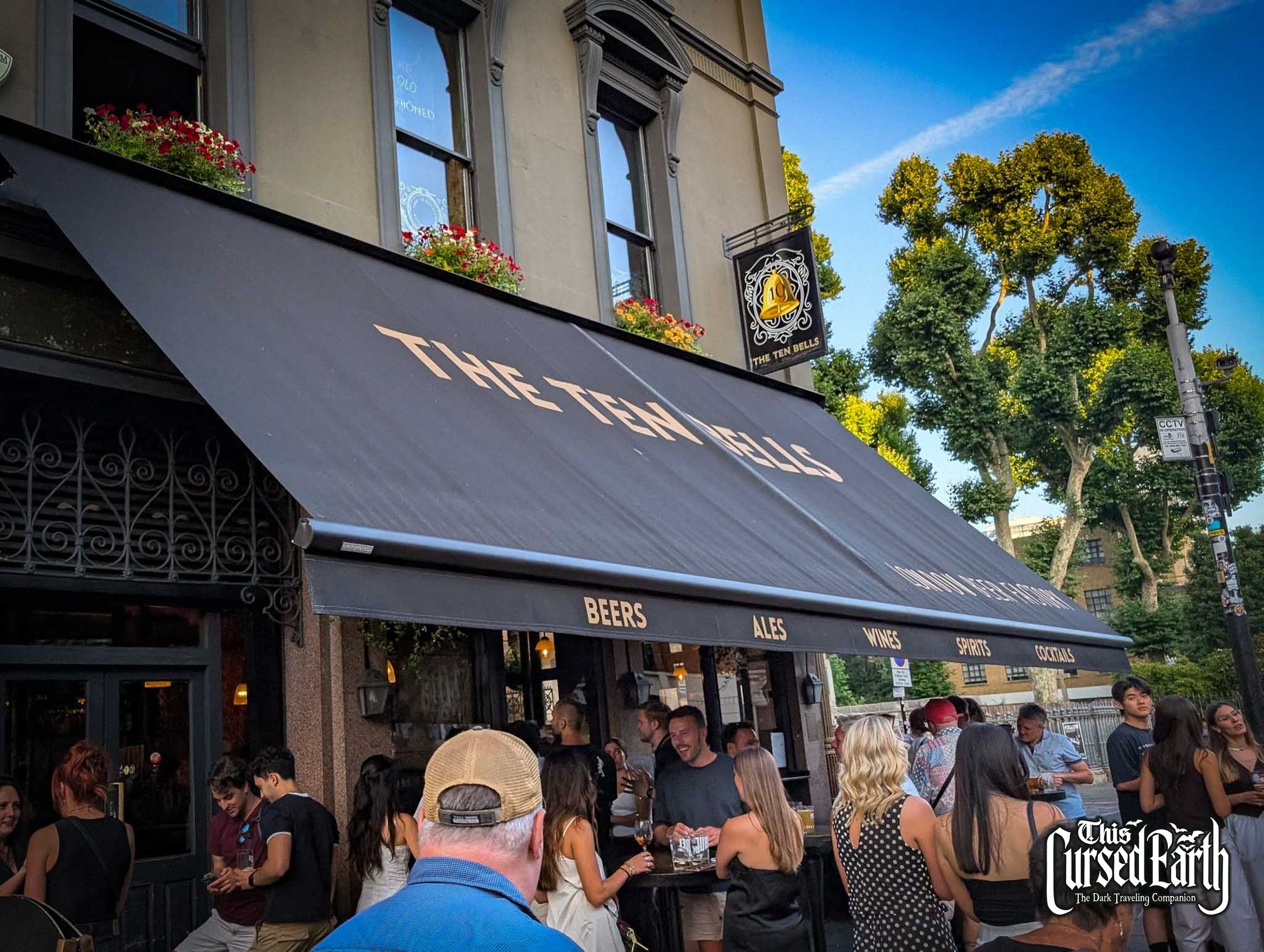
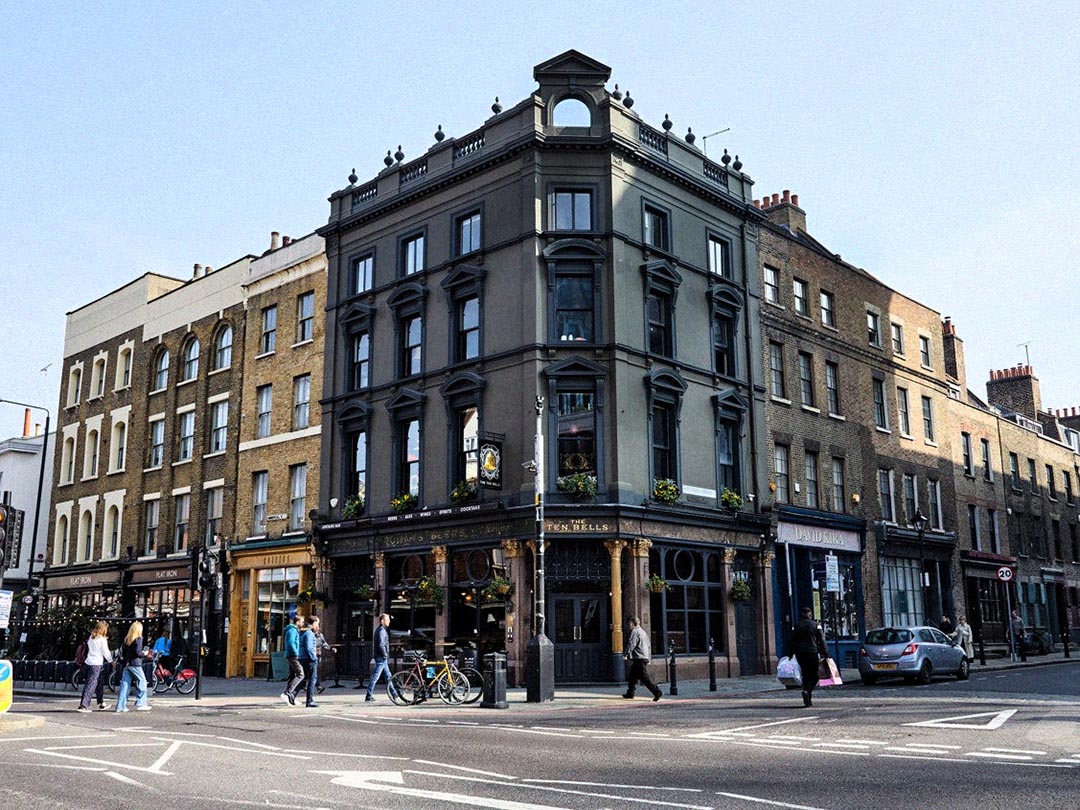
On the corner of Commercial Street and Fournier Street in Spitalfields stands one of the few surviving pubs that can still be connected, however imperfectly, with the Jack the Ripper murders of 1888. The Ten Bells was already serving drink when Whitechapel became the centre of one of history's most infamous murder mysteries, and two of the women generally counted among the Ripper's five canonical victims – Annie Chapman and Mary Jane Kelly – have both been associated with the pub. More than 135 years later, separating what actually happened here from what has grown into Ripper folklore is not always easy.
A pub has existed under variations of the Ten Bells name since the 18th century. Records place an alehouse here by the 1750s, although the present building dates from the mid-19th century, when the pub moved a short distance during the construction of Commercial Street. Its name refers to the bells of Nicholas Hawksmoor's imposing Christ Church Spitalfields directly opposite. By 1888 it was a busy East End drinking house standing beside Spitalfields Market and only a short walk from some of the most notorious streets in Victorian London.
On 8 September 1888, the mutilated body of 47-year-old Annie Chapman was discovered in the backyard of 29 Hanbury Street, only a few minutes' walk from the Ten Bells. Chapman had been homeless and spent her final weeks moving between lodging houses in Spitalfields. A story soon appeared claiming that she had been drinking at the Ten Bells at around five in the morning and that a strange-looking man had appeared at the door and called her outside shortly before her murder.
It is a wonderfully sinister story, but there is a problem: nobody gave this evidence at Chapman's inquest. The account appears to have originated with a worker at the pub and was reported in the press without initially even naming Chapman. Historians of the Ripper murders therefore treat the story cautiously. She may have visited the Ten Bells – it was close to the places where she lived and spent time – but the often-repeated claim that she left the pub with Jack the Ripper shortly before her death cannot be established as fact.
The connection with Mary Jane Kelly is somewhat stronger. Kelly lived nearby at 13 Miller's Court, off the notoriously poor and overcrowded Dorset Street, and was murdered there during the early hours of 9 November 1888. One account places her drinking in the Ten Bells with a woman named Elizabeth Foster on the evening before her death. Decades later, a former Spitalfields Market porter also recalled Kelly regularly standing outside the pub looking for clients. The memory was recorded long after the murders, so it cannot be treated with the same certainty as contemporary police testimony, but it helped cement the Ten Bells as part of the geography of Kelly's final years.
Kelly's murder was by far the most horrific of the canonical Ripper killings. Unlike the earlier victims, who were attacked outdoors, Kelly was killed inside her small room at Miller's Court. The privacy gave the murderer considerably more time, and the mutilation of her body was extreme. Her death on 9 November is generally regarded as the final murder that can be confidently associated with Jack the Ripper, although several later killings have also been proposed.
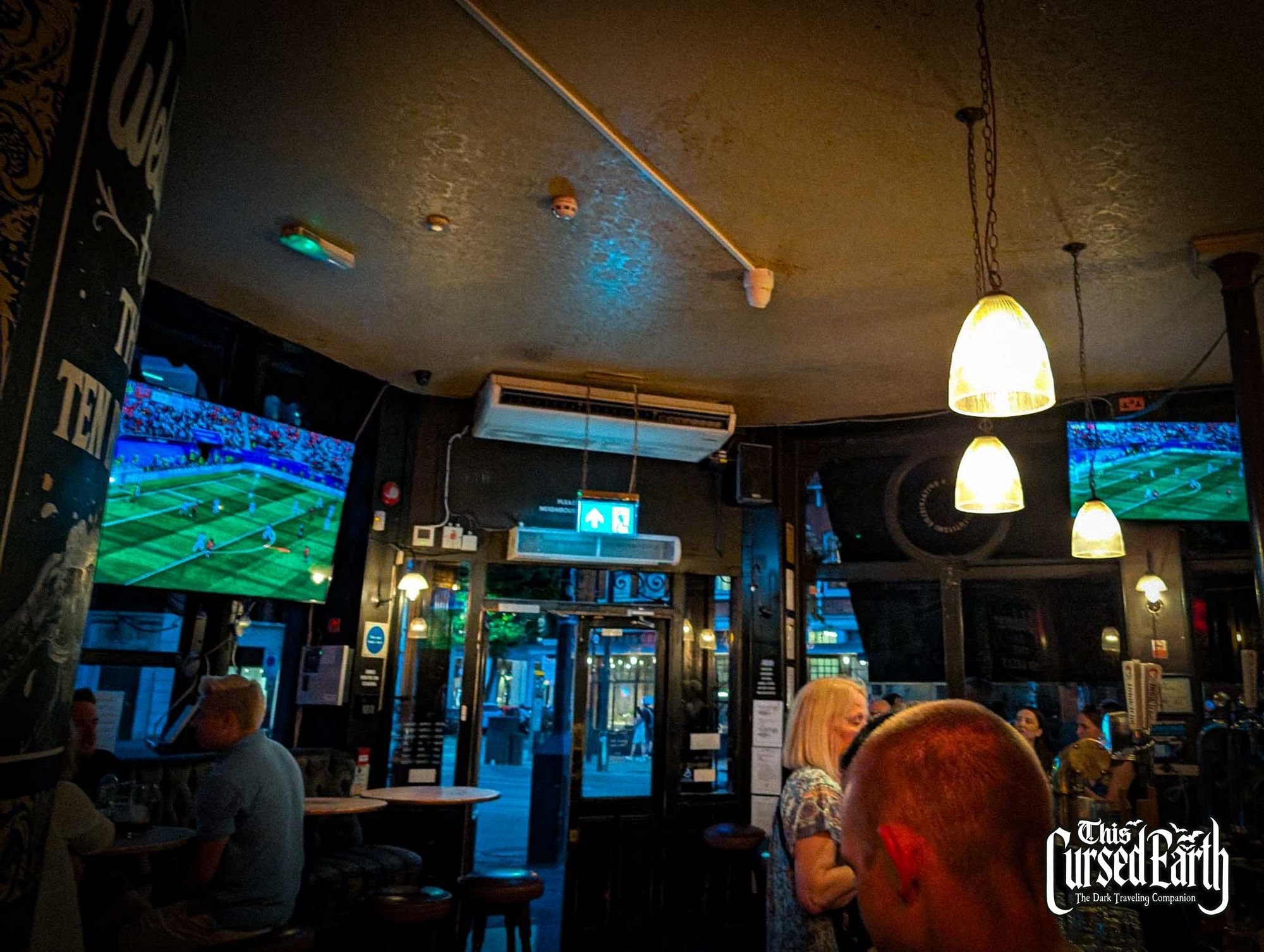
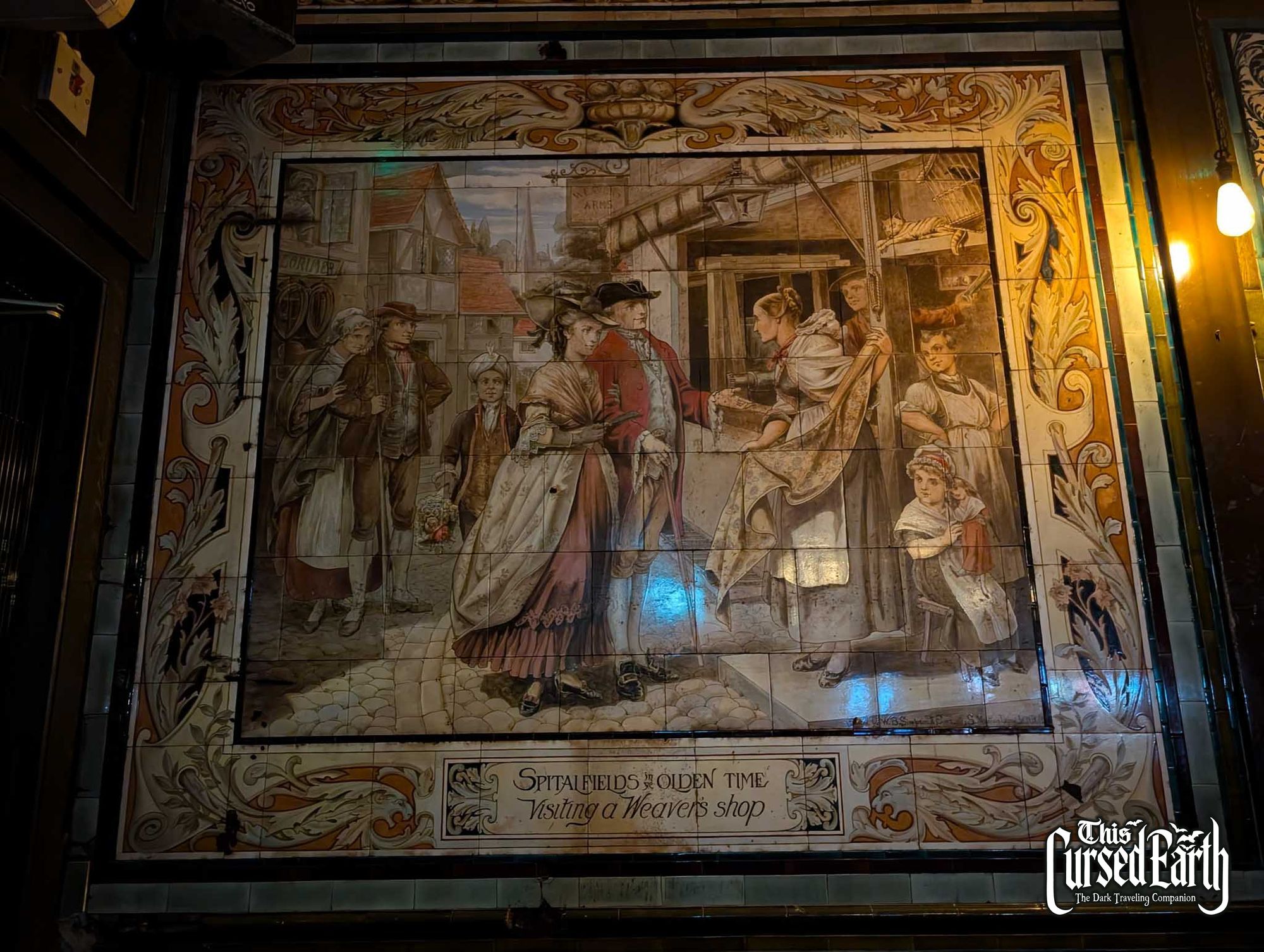
The Ten Bells survived while much of the surrounding Ripper landscape disappeared. Dorset Street was eventually demolished, Miller's Court vanished and numerous Victorian buildings around Spitalfields were replaced or redeveloped. Inside the pub, however, substantial late-Victorian decoration remains. The walls are covered with elaborate ceramic tiles, including the large pictorial panel Spitalfields in ye Olden Time – Visiting a Weaver's Shop, produced by W. B. Simpson & Sons. The historic interior helped earn the building Grade II listed status in 1973.
By the 1970s, the pub's connection with the murders had become commercially useful. In 1976 it was actually renamed The Jack the Ripper, with photographs and memorabilia relating to the murders displayed inside. Today that decision seems particularly uncomfortable: a drinking establishment associated with several murdered women had effectively been renamed in honour of the man who killed them.
The name did not go unchallenged. Feminist campaigners, including women associated with Reclaim the Night, objected to turning an unidentified murderer of women into a tourist attraction. After years of pressure, the brewery restored the name The Ten Bells in 1988 – exactly a century after the Whitechapel murders. The episode is itself an interesting part of the way the Ripper story has changed. Victorian newspapers turned the killer into a sensation; a century later, businesses were still discovering that his name could sell things.
The pub also became part of the fictional Jack the Ripper world created by Alan Moore and Eddie Campbell in From Hell, their enormous graphic novel exploring the murders and the mythology surrounding them. The Ten Bells appears again in the 2001 film adaptation starring Johnny Depp as Inspector Frederick Abberline and Heather Graham as Mary Kelly. In the film, Abberline drinks with Kelly inside the pub. Despite the apparent authenticity, Johnny Depp never actually sat drinking in the real Ten Bells: the filmmakers recreated the pub as an interior set at Hostivar Studios in Prague, where much of Victorian Whitechapel was constructed for the production.
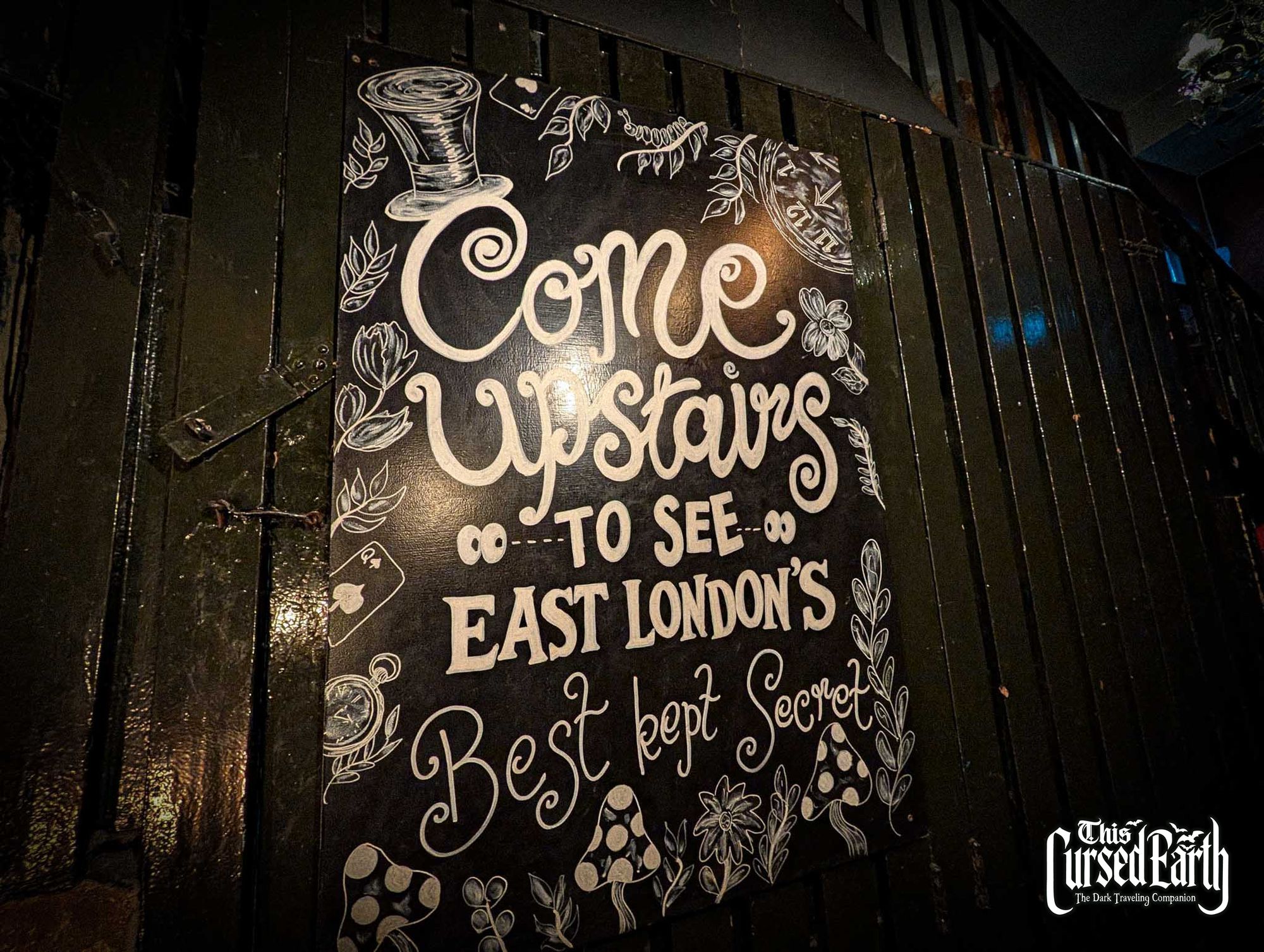
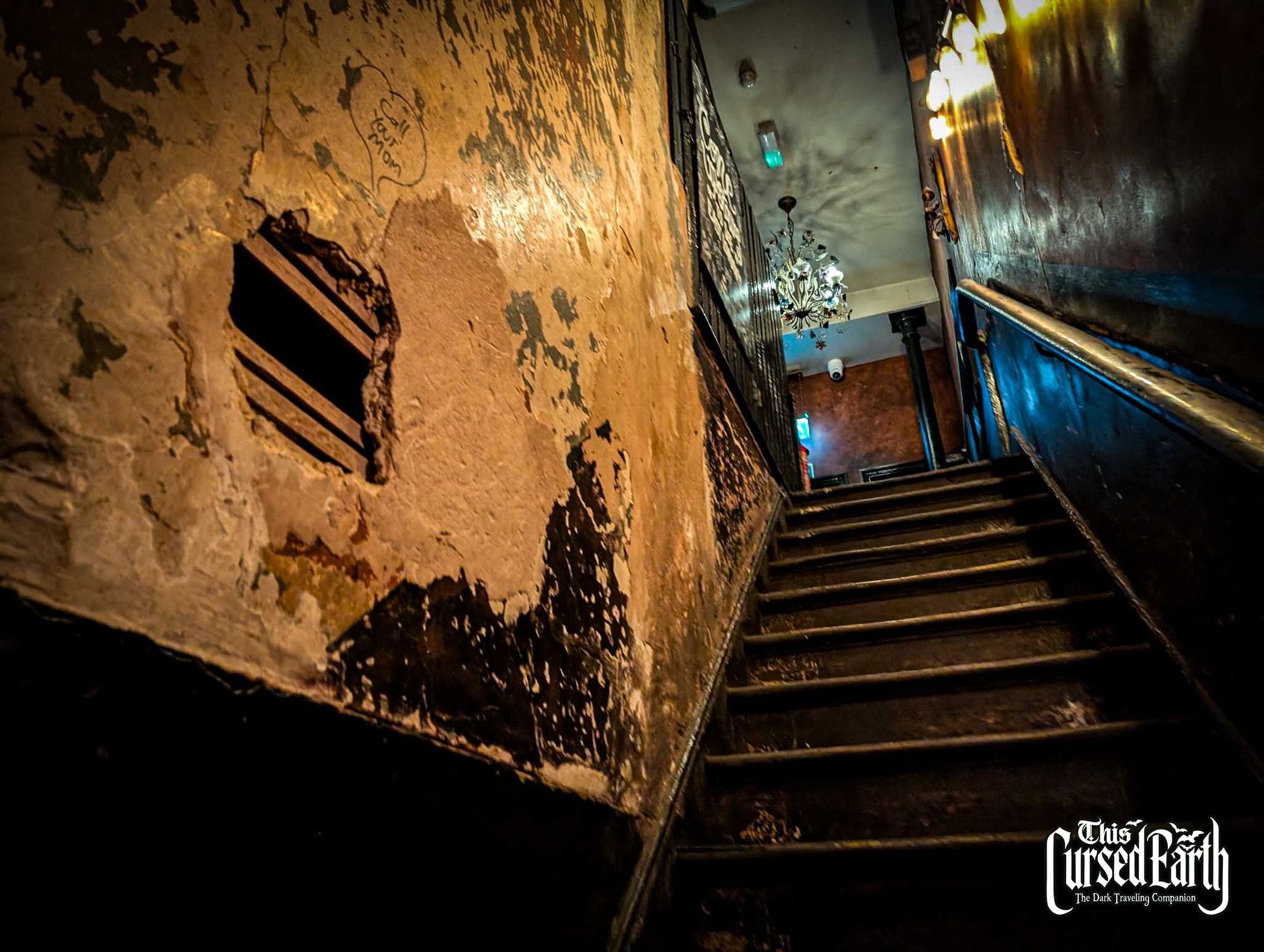
Inevitably, a pub this old and this closely associated with Jack the Ripper has also accumulated ghost stories. Staff and visitors have reported footsteps, strange noises and apparitions in the upper parts of the building, while one commonly repeated story concerns the ghost of a Victorian man. Some versions identify him as a former landlord said to have been murdered with an axe. Other stories involve far more disturbing claims about something having happened to a child in the upstairs rooms. There is little historical evidence behind these supernatural tales, but they have become another layer in the mythology surrounding the Ten Bells.
The real history is disturbing enough without the ghosts. Within a few minutes' walk of the pub, women were sleeping in overcrowded lodging houses, selling sex to survive and, during the autumn of 1888, being murdered with extraordinary brutality. Annie Chapman died in Hanbury Street nearby. Mary Jane Kelly lived and died around the corner in Dorset Street. Whether either woman spent as much time inside the Ten Bells as later legend suggests is impossible to know, but they moved through this neighbourhood while the pub was already standing here.
Location: The Ten Bells is located in the Spitalfields district of London, England.
Address: 84 Commercial Street, London E1 6LY, United Kingdom
Category: pub, historical site, Jack the Ripper, restaurant
Tags: Jack the Ripper, serial killer, killer
Darkness Level: ☠ ☠ ☠ ☠ ☠ ☠
Homepage: thetenbells.com
Map: Open in Google Maps
Gallery