The Norwegian National Museum of Justice
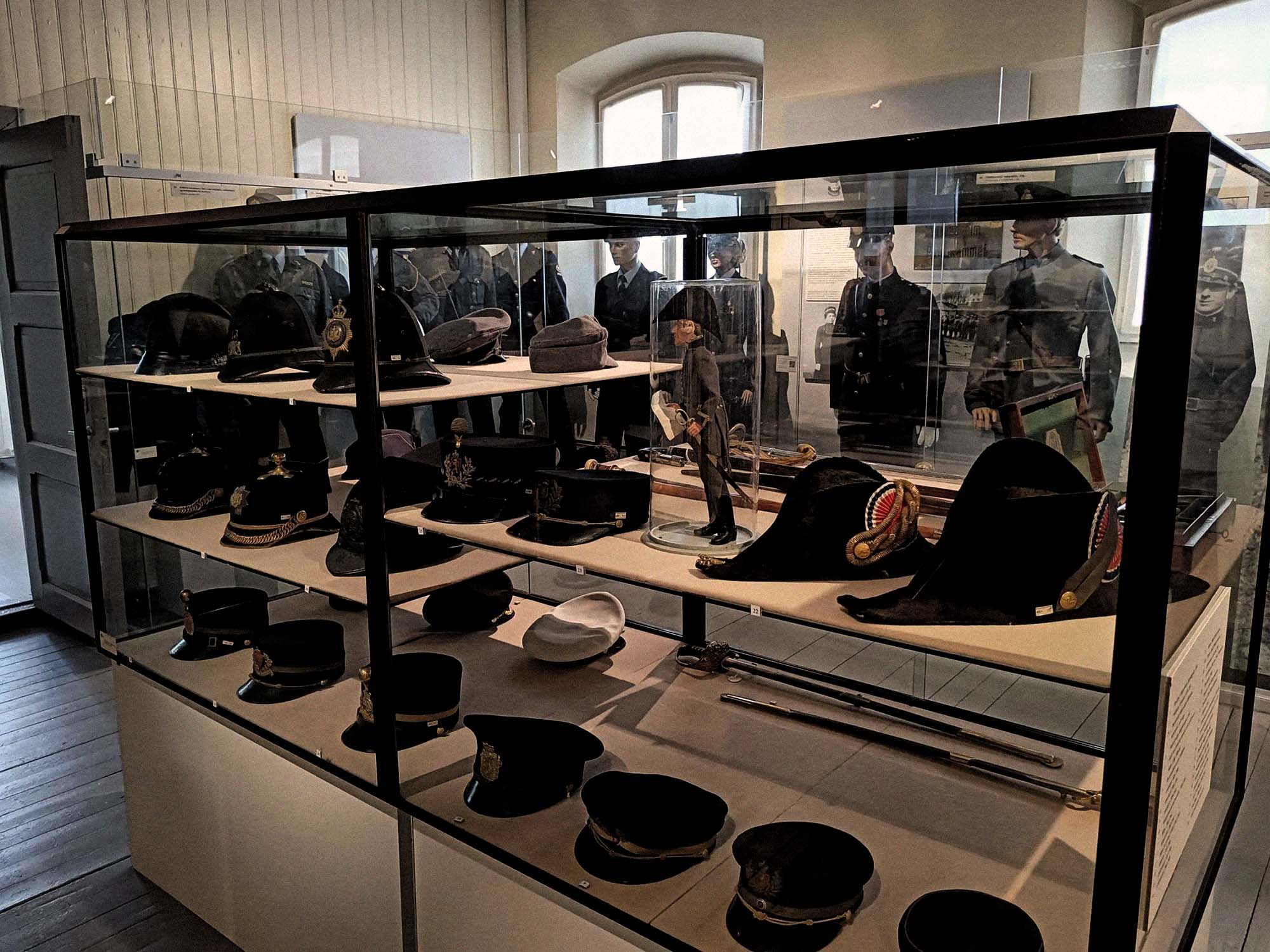
Norway’s national museum for the police, judiciary and correctional services, housed partly in a former penal-labour prison that later became the country’s first criminal asylum, with exhibitions on executions, punishment, forensic evidence, notorious criminal cases and the German occupation.
The Norwegian National Museum of Justice, known in Norwegian as Justismuseet, is located in the Kalvskinnet district of Trondheim. The museum documents the history of the Norwegian police, courts, prosecution authorities and correctional services. It was established under the name Norsk rettsmuseum in 2000 and maintains a collection of approximately 20,000 objects and 6,000 photographs dating from the 17th century to the present.
The museum occupies two neighbouring historic buildings: the former Criminal Asylum and an old military hospital containing the reception and additional exhibitions. The Criminal Asylum building was designed by architect Ole Peter Riis Høegh and completed in 1833. It was originally constructed as Slaveriet, an institution for convicts sentenced to hard labour. In this historical Norwegian context, the word “slavery” referred to penal labour carried out by prisoners who were often kept in irons and used for construction, fortification work and other physically demanding tasks.
The building incorporated contemporary ideas about prison surveillance. Its original plan centred on an oval observation room from which guards could look into the prisoners’ shared quarters through small openings known as Judas eyes. Large rooms occupied the corners of each floor, while separate spaces at the ends served as privies. The institution came into use in stages from 1835 and continued to hold penal-labour prisoners during much of the 19th century. It later formed part of the local women’s and men’s prison before closing in that capacity in 1888.
In 1895, the interior was converted into Norway’s first specialised institution for people considered both mentally ill and dangerous. The Criminal Asylum initially contained sixteen individual cells with heating systems designed to prevent patients from dismantling the stoves or using their components as weapons. A second floor was converted in 1900. The institution remained in operation until 1961, when its patients were transferred to Reitgjerdet Hospital and responsibility for this group passed from the prison system to the health service.
Several of the former cells and corridors are incorporated into the museum. One room reconstructs the accommodation of Ludvig Wang, who was sent to the Criminal Asylum after being declared unfit for punishment following a murder conviction. Wang became a trusted patient but escaped during an accompanied church visit in 1927. While the police searched for him, he sent letters and poems to Trondheim newspapers in which he denied being dangerous and mocked the investigation. He was later recaptured and spent a total of 66 years in different institutions.
The museum’s Executioner’s Room covers corporal and capital punishment under Christian V’s Norwegian Code of 1687 and subsequent legislation. Its collection includes stocks formerly placed outside Trondheim’s old town hall, branding equipment and the axes and sword used by Johann Caspar Öhlstein, executioner for the Trondheim district from 1744 to 1768. A human skull displayed beside the executioner’s equipment is believed to have belonged to a woman executed at Ørlandet during the 18th century.
Other punishment-related exhibits contain heavy leg irons, restraints, straitjackets and equipment used in Norwegian prisons and penal institutions. Among the objects is an iron collar used during the detention of participants in the Kautokeino uprising of 1852. The collection also includes a wooden punishment cupboard in which prisoners could be confined and sprayed with cold water, a branding iron used to mark convicted thieves and an execution axe used in several Norwegian beheadings during the 19th century.
The museum also preserves evidence and objects from Norwegian criminal investigations. The exhibition Clues covers fingerprinting, footprints, hair, photographs and other forms of forensic evidence and includes genuine material from criminal cases dating from the early 20th century onwards. The wider collection contains approximately 10,000 police photographs from criminal albums produced between 1864 and 1915, originally used to identify repeat offenders.
A separate exhibition examines the breakdown of the rule of law during the German occupation of Norway. It contains uniforms, propaganda, confiscated material and objects from the trial of the Rinnan group, the Nazi-controlled organisation led by Henry Rinnan that infiltrated resistance networks and used imprisonment and torture against suspected opponents. The displayed torture instruments were recovered and preserved by Trondheim police after the war. The exhibition also contains an original Enigma cipher machine.
The museum’s collections developed partly from Trondheim’s first criminal museum, established within the police service in 1918. This early collection remained closed to the general public for more than seventy years. A police museum later opened in the former Criminal Asylum in 1997, and the building was transferred to the Norwegian National Museum of Justice in 2003. The preserved cells, observation corridors and institutional architecture now form an important part of the museum alongside the objects displayed within them.
Location: In the Kalvskinnet district, close to Ilen Church and Skansen.
Address: Erling Skakkes gate 80–86, 7012 Trondheim, Norway
Category: museum, prison
Tags: crime and punishment, true crime, police history, prison history, penal labour, criminal asylum, executions, capital punishment, torture instruments, forensic evidence, human remains, World War II, Rinnan group
Darkness Level: ☠ ☠ ☠ ☠ ☠ ☠ ☠ ☠
Homepage: justismuseet.no
Map: Open in Google Maps
Gallery