The London Dungeon
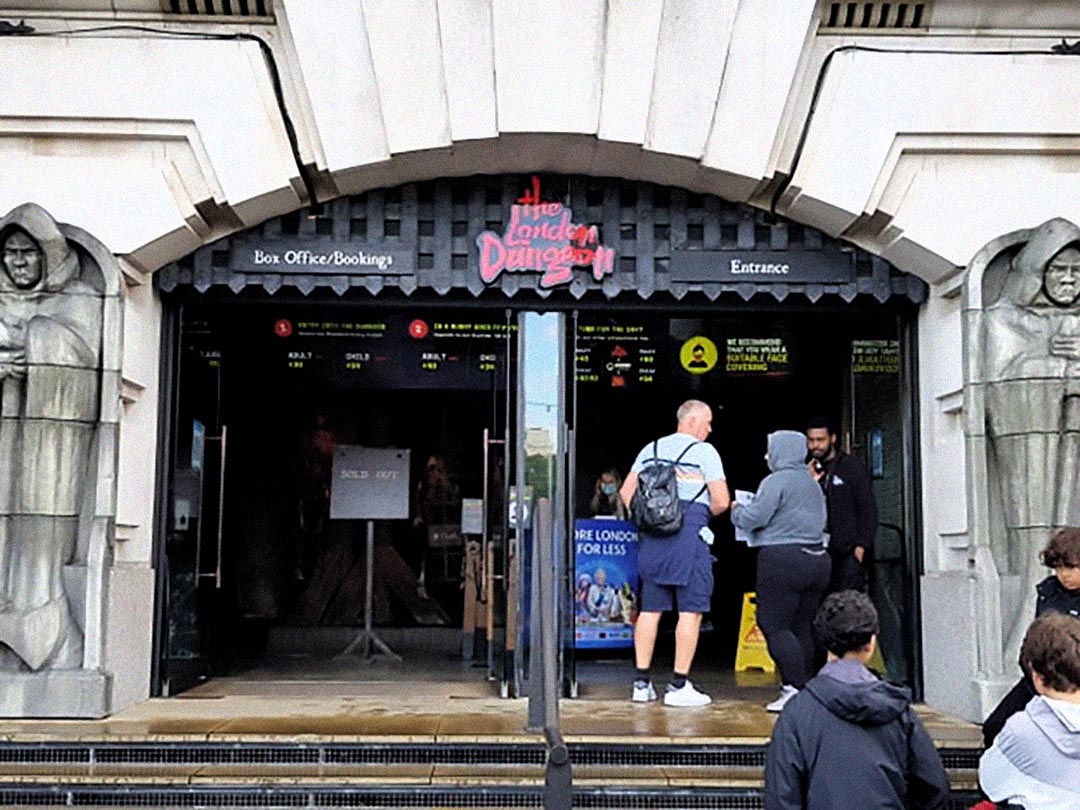
The London Dungeon is a darkly entertaining attraction that brings the grisly and gruesome history of London to life through immersive storytelling and thrilling experiences.
The London Dungeon has spent more than half a century turning the darkest chapters of London's history into entertainment. Murderers, executions, torture, plague, witch trials and failed acts of terrorism are all given the Dungeon treatment: live actors, elaborate sets, darkness, unpleasant smells, sudden noises and a generous amount of very British gallows humour. It is not really a conventional history museum, and historical accuracy occasionally has to make room for a good scare, but few attractions have made such a successful business out of London's gruesome past.
The London Dungeon was opened in 1974 by Annabel Geddes beneath the railway arches near London Bridge Station in Tooley Street. The original version was considerably closer to a macabre wax museum than the attraction seen today. Visitors wandered freely between tableaux depicting bloody episodes from British history, with early subjects including Boudica, Mary Tudor and Thomas Becket. The underground arches, dripping brickwork and rumble of the railway above gave the original Dungeon an atmosphere that was difficult to manufacture.
During the 1980s and 1990s, the attraction gradually became more theatrical. Elaborate sections devoted to subjects such as the Great Fire of London and Jack the Ripper were introduced, followed by actors, audience participation and eventually rides. By the late 1990s, visitors were no longer simply looking at horrible things happening to wax figures. There was an increasing chance that the judge, torturer or executioner might decide to involve them personally.
After almost four decades in Tooley Street, the original London Dungeon closed on 31 January 2013. A month later it reopened beneath County Hall on the South Bank, directly opposite the Houses of Parliament. The move involved a completely new attraction reportedly costing around £20 million. Quite appropriately, one of the stories now performed beneath County Hall concerns Guy Fawkes and the Gunpowder Plot of 1605 – an attempt to destroy the very Parliament building visible across the Thames.
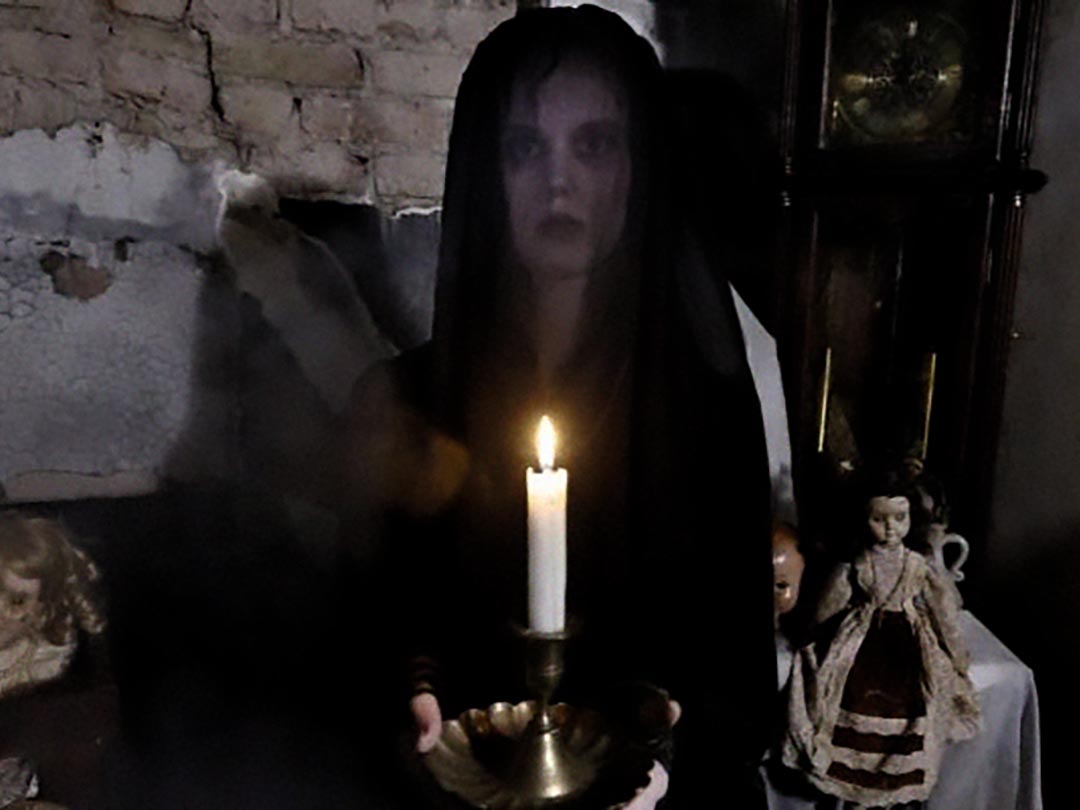
The present Dungeon takes visitors through a sequence of theatrical scenes inspired by roughly a thousand years of London's unpleasant history. One section enters the world of the Gunpowder Plot, where Guy Fawkes and his fellow conspirators planned to blow up King James I and Parliament. Another leads into a torture chamber filled with instruments designed around the rather alarming number of ways human beings have invented to hurt one another. Audience members are regularly dragged into the proceedings, usually to discover that justice in the Dungeon is neither fair nor particularly interested in evidence.
Then comes London in 1665. The Great Plague killed tens of thousands of people in the capital, and the Dungeon recreates streets marked by disease, rats and houses carrying the dreaded red cross. A plague doctor demonstrates the medical understanding of the period – which does not inspire much confidence – while smells and sound effects make the experience rather more immediate than reading a museum label about buboes and mass graves.
One of the darker historical stories concerns Elizabeth Sawyer, the so-called Witch of Edmonton. Sawyer was a real woman accused of witchcraft and executed in 1621 after confessing that she had made contact with the Devil. Her case became famous almost immediately and inspired the play The Witch of Edmonton. At the Dungeon, her final hours are transformed into a supernatural horror sequence. The real story hardly needs much embellishment: an elderly and unpopular woman was accused by her neighbours, convicted of witchcraft and hanged.
The line between history and legend becomes considerably blurrier with Sweeney Todd. The murderous “Demon Barber of Fleet Street”, who supposedly cut his customers' throats before Mrs Lovett baked their remains into meat pies, is one of London's most famous horror characters. There is no convincing evidence that Sweeney Todd ever existed, but by this point the story has been part of London folklore for nearly two centuries. The Dungeon wisely seems unwilling to let something as useful as a cannibalistic pie shop disappear merely because historians have doubts about it.
Jack the Ripper brings the attraction back to very real murder. In 1888, at least five women were murdered in and around Whitechapel by the unidentified killer who became known as Jack the Ripper. The Dungeon focuses particularly on Mary Jane Kelly, murdered in her room at Miller's Court on 9 November 1888. Visitors then move through a disorientating recreation of Whitechapel before reaching the Ten Bells, the real East End pub closely associated with several of the Ripper victims. The killer's identity remains unknown, which naturally gives the Dungeon plenty of room to work with.
The tour eventually reaches the courtroom, where members of the audience can find themselves accused of suitably ridiculous crimes before being sentenced by a judge who appears to regard a fair trial as an unnecessary inconvenience. From there, the condemned can face Drop Dead, a vertical drop ride themed around execution at the gallows. The mechanics are modern; the idea of making people contemplate their own hanging is rather older.
The London Dungeon has never been particularly subtle about what it does. It takes genuine disasters, murders and executions, mixes them with folklore and fictional killers, adds actors and special effects, and makes the whole thing funny enough that people willingly queue to be tortured, sentenced and frightened. Serious historians may occasionally wince, but that strange mixture has now survived for more than fifty years.
Perhaps that longevity is what makes the Dungeon interesting in its own right. It began as a collection of gruesome wax figures beneath London Bridge and gradually evolved into an elaborate theatrical horror attraction copied in cities across Europe. The victims, murderers and executioners have changed over the decades, as have the rides and technology, but the basic idea has remained remarkably consistent: London has accumulated an enormous amount of death, crime and misery over the centuries, and somebody was eventually going to turn it into a show.
Location: The London Dungeon is located near the South Bank of the River Thames, close to major landmarks like the London Eye and Westminster Bridge.
Address: Riverside Building, County Hall, Westminster Bridge Rd, London SE1 7PB, United Kingdom
Category: attraction, museum
Tags: Jack the Ripper, medieval torture, London history, theatrical horror, dungeon
Darkness Level: ☠ ☠ ☠ ☠ ☠ ☠
Homepage: thedungeons.com
Map: Open in Google Maps
Gallery