The Lizzie Borden House
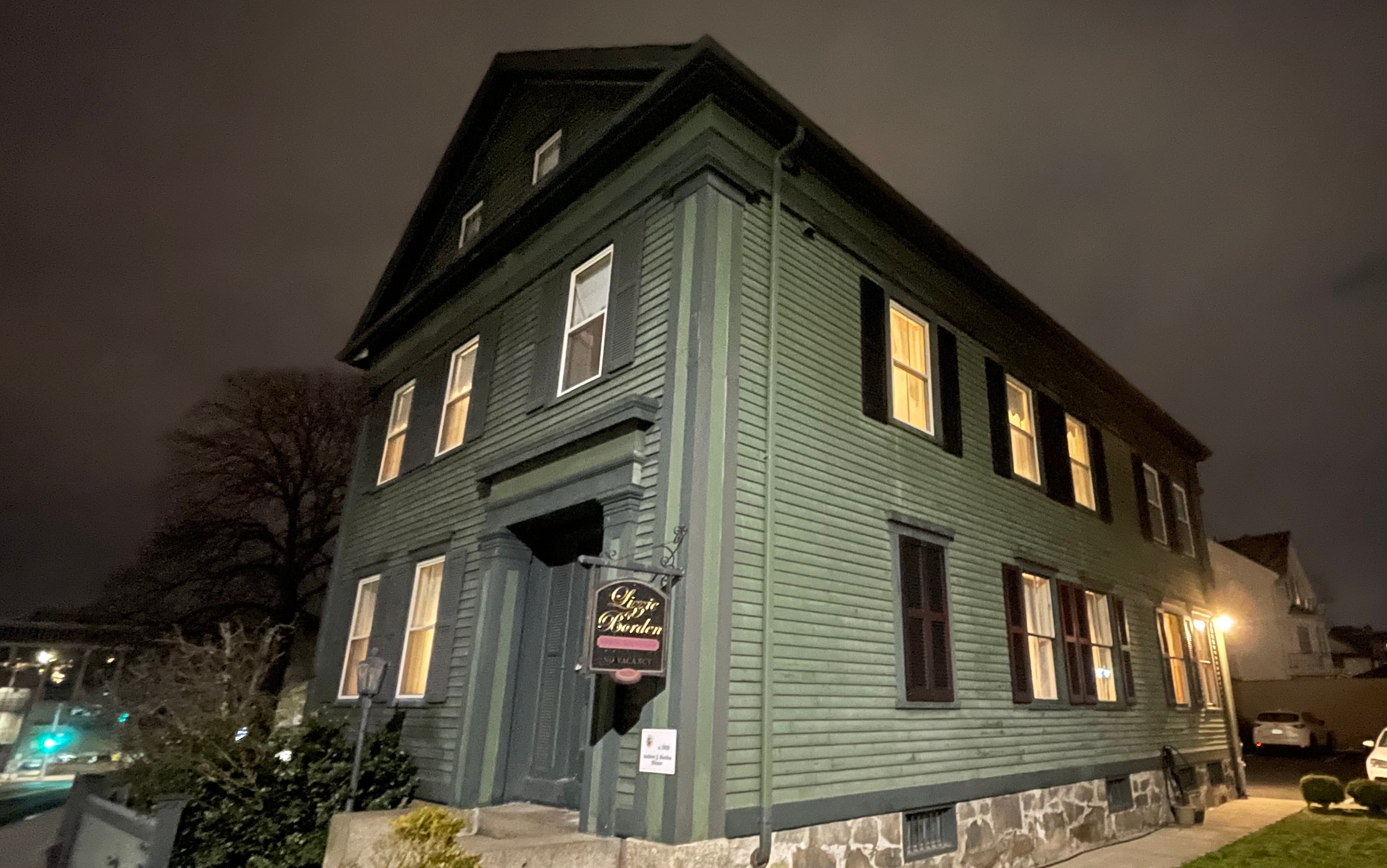
Book your stay at the infamous site of the 1892 axe murders, the Lizzie Borden House is one of America’s most haunted and mysterious true crime locations.
On the morning of 4 August 1892, something extraordinarily violent happened inside an otherwise ordinary house at 92 Second Street in Fall River, Massachusetts. Sixty-four-year-old Abby Borden was attacked in an upstairs bedroom and struck repeatedly in the head with a sharp-edged weapon. About an hour and a half later, her husband Andrew was killed while lying on a sofa downstairs. His face was so badly damaged that the crime-scene photograph remains difficult to look at more than 130 years later. Nobody was ever convicted of either murder.
The woman whose name became permanently attached to the killings was Andrew's 32-year-old daughter, Lizzie Borden. She lived in the house with her older sister Emma, her father, her stepmother Abby and the family's Irish maid, Bridget Sullivan. Emma was away from Fall River when the murders occurred. Andrew's brother-in-law John Morse had stayed overnight but left the house that morning. That left Lizzie and Bridget as the two surviving people known to have been inside or immediately around the house during the crucial periods.
Abby was killed first. She had gone into the second-floor guest room to make the bed after John Morse's stay when someone attacked her. The first blow struck the side of her head and apparently caused her to fall face-down onto the floor. The killer then continued striking the back of her head. Later examinations counted around nineteen blows. Her body remained upstairs unnoticed while normal life continued elsewhere in the house.
Andrew returned home at around 10:45 a.m. and settled on the sofa in the sitting room. Bridget Sullivan, who had been outside washing windows and was feeling unwell, went upstairs to rest in her attic room. Not long afterwards, Andrew was attacked while apparently asleep. He received around ten or eleven blows to the head and face. At approximately 11:15, Lizzie called upstairs: “Maggie, come down quick! Father's dead. Somebody came in and killed him.”
The problem for investigators was explaining how somebody could brutally murder two people inside the same relatively small house, roughly ninety minutes apart, and then apparently disappear. Doors were routinely kept locked. There were no conventional hallways through much of the house, meaning people often had to pass through one room to reach another. Whoever killed Abby seemingly remained undetected while Andrew returned home, and whoever killed Andrew managed the same trick while Bridget was upstairs. It was the kind of locked-house problem that crime writers usually have to invent.
Suspicion gradually settled on Lizzie. Her relationship with Abby was reportedly strained, there were tensions over Andrew's property and money, and witnesses claimed that Lizzie had attempted to purchase prussic acid shortly before the murders. Then came another detail that has fuelled arguments ever since. Three days after the killings, Lizzie's friend Alice Russell saw her burning a dress in the kitchen stove. Lizzie explained that it had been stained with paint. Considering what had happened in the house a few days earlier, investigators were understandably interested in the timing.
There were serious problems with the case against her, however. Police never found clothing covered in the amount of blood one might expect from such attacks. The axes and hatchets recovered from the property produced no decisive physical evidence. Some important testimony was excluded from the eventual trial, and Lizzie's confused statements at the inquest were complicated by the fact that her doctor had prescribed morphine after the murders. There was plenty to make her suspicious, but proving beyond reasonable doubt that she had swung the weapon was another matter entirely.
Lizzie was arrested on 11 August 1892 and spent the following months in jail awaiting trial. When proceedings finally began in June 1893, the case became a national sensation. Newspaper reporters packed the courtroom, theories spread across the country and Lizzie's gender and social position became part of the story. To many people in Victorian America, the idea that a respectable, churchgoing woman from a prosperous family could reduce two people's skulls with a hatchet simply seemed difficult to accept. Her defence did not discourage that impression.
On 20 June 1893, the jury found Lizzie Borden not guilty. The jurors reportedly reached their decision quickly enough that they waited before returning to the courtroom so it would not appear that they had barely discussed the case. Lizzie walked free. No one else was ever prosecuted for the murders, leaving one of America's most famous criminal cases permanently without a legal answer.
Fall River was less willing to forget. Lizzie and Emma inherited their father's fortune and moved to a much larger house in the fashionable part of town, which Lizzie named Maplecroft. Acquittal did not restore her reputation. Neighbours stared, children reportedly tormented her with pranks and sections of respectable Fall River society kept their distance. Lizzie remained in the city until her death in 1927, forever carrying a surname that had become shorthand for axe murder.
The little rhyme that eventually turned her into something close to a folkloric monster did even more damage:
“Lizzie Borden took an axe,
And gave her mother forty whacks.
When she saw what she had done,
She gave her father forty-one.”
Almost every important detail in the rhyme is wrong. Abby was Lizzie's stepmother rather than her mother. The presumed murder weapon was more likely a hatchet than the large axe people generally imagine. And there were nowhere near forty or forty-one blows: contemporary examinations indicate around nineteen injuries to Abby and ten or eleven to Andrew. The rhyme was much better at creating a legend than recording a crime scene.
The murder house itself survived. The address was eventually renumbered from 92 to the present 230 Second Street, but it is the same building. In 1996, after restoration intended to return the interior to something close to its 1892 appearance, it opened to the public as the Lizzie Borden Bed & Breakfast Museum. Crime-scene photographs were used to help reconstruct rooms and furnishings, which creates one particularly uncomfortable possibility: you can stand almost exactly where the original photographer stood while documenting the bodies.
You can also sleep here. The upstairs John V. Morse Room is the room in which Abby Borden was murdered, and it can still be booked for overnight stays. Andrew's murder location is downstairs in the sitting room and remains a common area rather than a bedroom. The present house contains period furnishings, reproductions and displays connected with the case rather than pretending that every chair and curtain has somehow remained untouched since 1892. The building itself, however, is genuine.
Perhaps inevitably, decades of people sleeping inside a famous murder house have produced an enormous collection of ghost stories. Guests have reported footsteps, voices, moving objects, figures appearing in rooms and the sensation of somebody sitting on beds. Abby is frequently blamed for activity in the room where she died, while other stories involve Andrew, Lizzie and unidentified children. The current operators lean enthusiastically into this reputation, offering evening ghost tours and late-night investigations with paranormal equipment. Whether anyone from the Borden family actually remains in residence is obviously impossible to establish. The house's reputation as a haunted location is considerably easier to prove than the ghosts themselves.
There is even a slightly macabre breakfast connection. The Borden family ate mutton on the morning of the murders, and versions of the historic breakfast have periodically been recreated for guests. The current inn has sensibly decided that authenticity has limits: its modern breakfast takes inspiration from the 1892 meal but specifically leaves out the mutton and johnnycakes because, according to the house itself, most guests simply do not like them. Being murdered later in the morning was apparently not the only unpleasant possibility facing the Borden household at breakfast.
The case has escaped far beyond Fall River. Lizzie Borden has appeared in films, television series, books, plays, documentaries and countless theories attempting to solve the murders. American heavy metal band Lizzy Borden even took its name from her, although with a slightly altered spelling. More than a century after the trial, people still debate whether Lizzie was an innocent woman trapped by suspicion or whether a jury simply allowed a double murderer to walk out of the courtroom.
That unanswered question is what gives the house much of its power. The famous rhyme tells us that Lizzie did it. The court said the prosecution could not prove that she did. The physical evidence never produced another killer. And unlike so many famous murder locations, 92 Second Street was never demolished or replaced by something mundane. The house is still here, the rooms are still here, and you can still walk from the upstairs bedroom where Abby died to the sofa where Andrew was killed. What happened during the ninety minutes between those two rooms remains a mystery.
Location: The Lizzie Borden House is located in Fall River, Massachusetts, USA.
Address: 230 Second Street, Fall River, MA 02721, United States
Category: true crime, haunted house, serial killer, hotels
Tags: Lizzie Borden, axe murder, haunted house, "paranormal
Darkness Level: ☠ ☠ ☠ ☠ ☠ ☠ ☠ ☠ ☠
Homepage: lizzie-borden.com
Map: Open in Google Maps
Gallery