The Abbey of Thelema
The Abbey of Thelema was Aleister Crowley’s occult retreat, where he practiced dark rituals, magick, and secretive Thelemic rites.
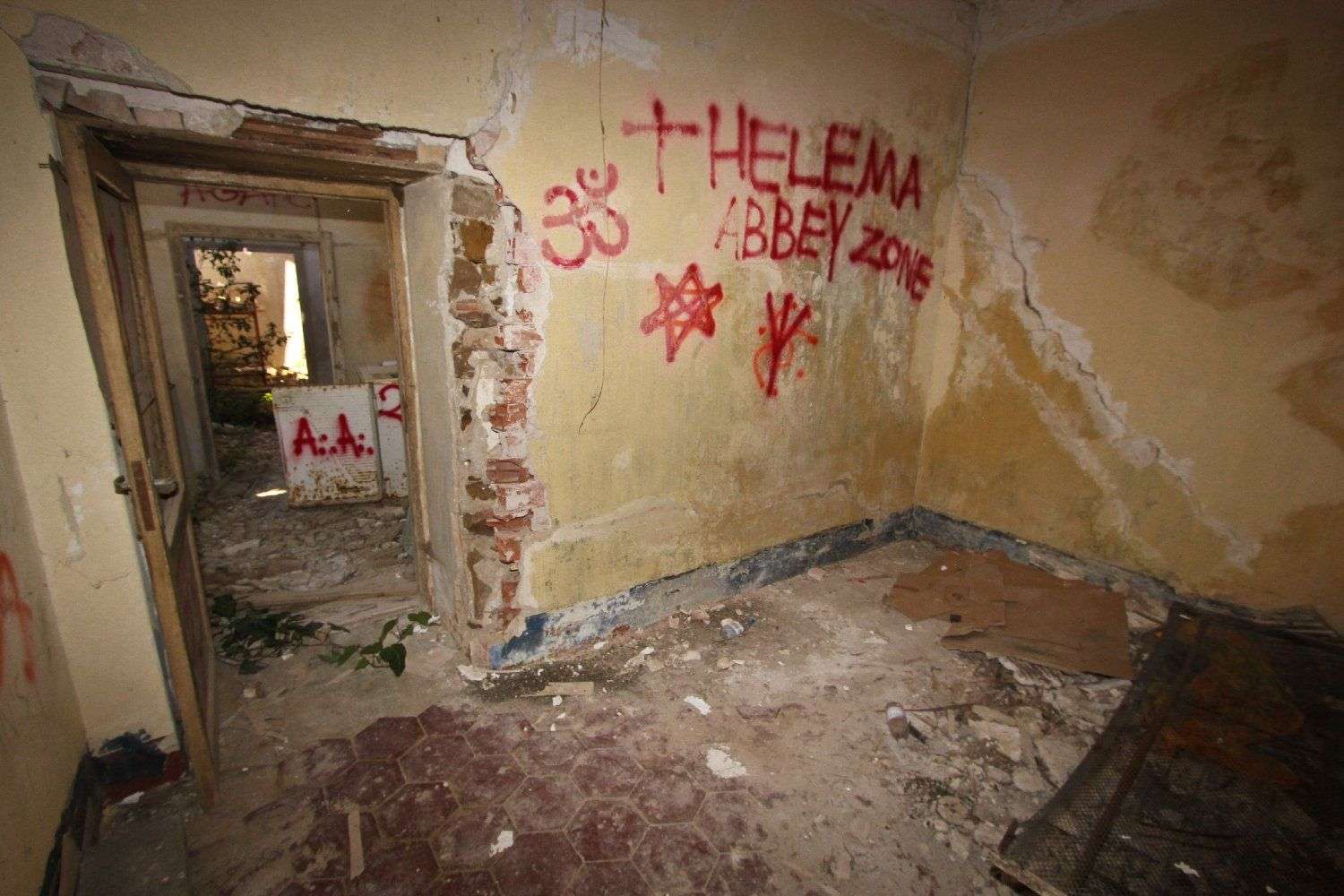
On a hillside above Cefalù in Sicily stands a crumbling little house with one of the most notorious names in occult history. This was the Abbey of Thelema, the commune established by British occultist Aleister Crowley in 1920. Despite the grand name, there were no Gothic towers, underground temples or ancient monastery walls. The “abbey” was Villa Santa Barbara, a relatively simple one-storey country house surrounded by the Sicilian landscape. What Crowley and his followers did inside would give it a reputation considerably larger than the building itself.
Crowley arrived in Cefalù in April 1920 with his magical partner Leah Hirsig and a small group of companions. He had been looking for somewhere to establish a permanent community based around Thelema, the religious and philosophical system he had developed after writing The Book of the Law in 1904. Its most famous principle was straightforward enough: “Do what thou wilt.” Crowley did not mean simply doing whatever felt good at the moment; in Thelemic philosophy, the challenge was discovering and following one's individual “True Will”.
The name Abbey of Thelema was borrowed from François Rabelais' 16th-century Gargantua and Pantagruel, which describes an imaginary anti-monastery whose inhabitants live according to their own free will rather than conventional monastic rules. Crowley clearly appreciated the joke. His Sicilian version had no monks taking vows of obedience and chastity. Instead, its residents experimented with ceremonial magick, meditation, yoga, sexual practices and Crowley's rather demanding programme of spiritual training.
Daily life was a peculiar combination of mystical retreat and unconventional household. Followers came from Britain, continental Europe and the United States to study with Crowley. Among them was American actress Jane Wolfe, who abandoned a Hollywood career to spend several years at Cefalù. Residents performed rituals, kept magical diaries, studied Crowley's teachings and lived communally under conditions that could be considerably less glamorous than later stories suggest. Money was frequently short, Crowley struggled with heroin addiction, and maintaining an occult commune on a Sicilian hillside apparently involved many of the same mundane problems as maintaining any other household.
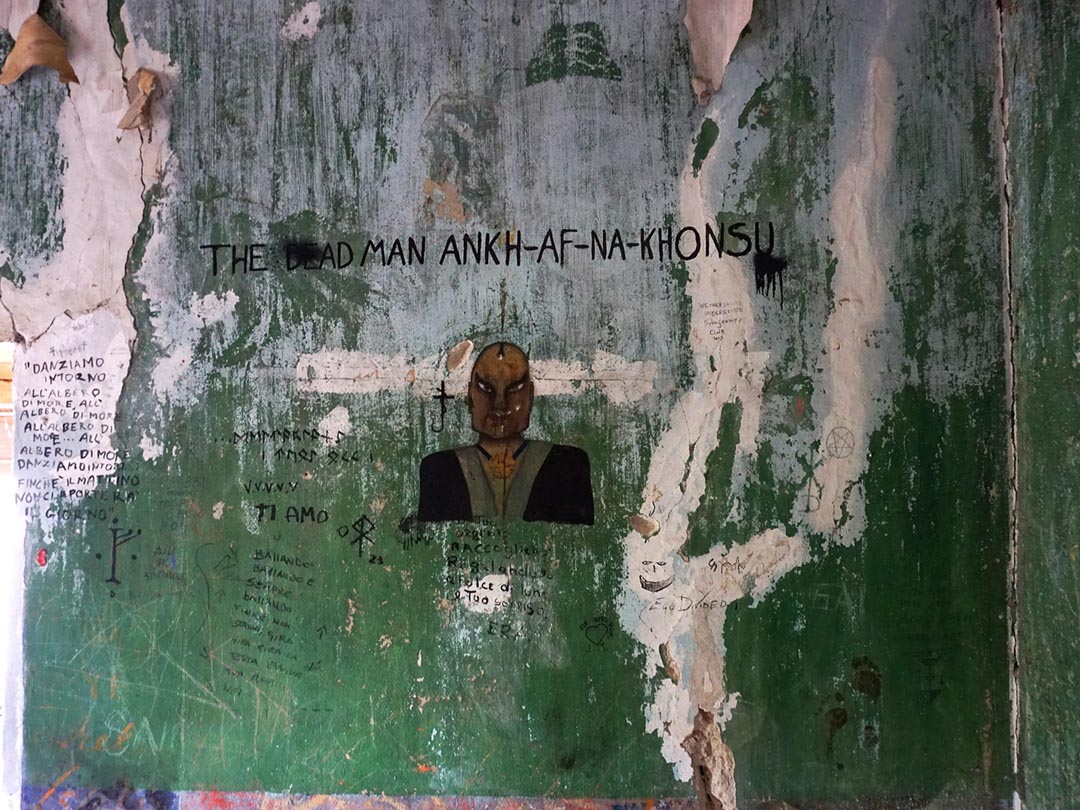
The interior, however, was anything but mundane. Crowley covered walls, doors and floors with paintings, magical symbols, naked bodies, strange creatures and explicitly sexual imagery. The most famous room was his own bedroom, which he called La Chambre des Cauchemars – the Chamber of Nightmares. Its walls were filled with grotesque faces, demons, erotic figures and fragments of Crowley's writing. The imagery was deliberately confrontational. Crowley wanted initiates to face things that produced fear, disgust or sexual discomfort until those reactions began to lose their power.
Some accounts describe initiates spending the night alone in the Chamber of Nightmares, sometimes after taking psychoactive substances, while Crowley's painted creatures surrounded them. Exactly how regularly such exercises were performed is difficult to establish, but the room itself certainly existed and surviving photographs show just how strange it looked. This was not tasteful occult decoration purchased for atmosphere. Crowley painted much of it himself, directly across the walls of the house he was sleeping in.
Not surprisingly, stories about the foreigners living outside Cefalù began circulating among local residents. Crowley was already notorious in Britain, where newspapers had portrayed him as a practitioner of black magic, sexual depravity and Satanism. The reality was more complicated. Crowley certainly practised sexual magick and ceremonial rituals and deliberately enjoyed offending conventional Christian morality, but describing Thelema simply as Satanism badly misrepresents what he actually believed. Unfortunately for Crowley, subtle distinctions in occult theology were not exactly what the tabloid newspapers were interested in.
The event that finally destroyed the community came in 1923 with the death of 23-year-old Raoul Loveday. Loveday had arrived at Cefalù with his wife, Betty May, who disliked Crowley intensely. In February, Loveday became seriously ill and died at the abbey. May returned to Britain with an extraordinary story: she claimed that her husband had participated in a ritual in which a cat was sacrificed and that he had been forced to drink its blood.
It was exactly the sort of story the British press wanted from Aleister Crowley's “black magic” commune, and it spread rapidly. There was, however, another version. Jane Wolfe, who cared for Loveday during his final illness, wrote that he had drunk from a contaminated local stream despite having been warned not to do so, after which he developed severe intestinal illness. Later biographers generally regard contaminated water and enteric fever as the more likely explanation for his death. Crowley himself was emphatic. When questioned under oath during a libel case in 1934, he denied the entire cat story: no sacrificed cat, no blood and no ritual drinking.
Betty May's accusations nevertheless helped create a press sensation. Crowley was portrayed as a depraved cult leader presiding over orgies, animal sacrifices and occult horrors in Sicily. British newspapers had already described him in terms such as “the wickedest man in the world”, and the scandal around Loveday gave them considerably more material. Stories spread internationally until Crowley's unusual little household became difficult for the recently established Fascist government of Benito Mussolini to ignore.
In April 1923, Crowley was ordered to leave Italy. His unconventional sexual arrangements, occult activities and growing public scandal all contributed to the authorities' interest in him, although later retellings often reduce the episode to Mussolini personally discovering a den of Satanists and throwing them out. The reality was bureaucratic rather than cinematic: the Fascist state simply decided that Aleister Crowley was an undesirable foreigner. Without him, the Abbey of Thelema quickly fell apart.
The villa was abandoned and Crowley's murals were eventually painted over or allowed to decay. For several decades the place seemed destined to become little more than a strange footnote in his biography. Then, in 1955, American experimental filmmaker Kenneth Anger, himself deeply influenced by Crowley's occult philosophy, travelled to Cefalù with sex researcher Alfred Kinsey. Anger scraped away layers of whitewash and uncovered parts of Crowley's original murals, restoring enough of them to reveal the extraordinary paintings beneath.
Anger also filmed the site for a documentary called Thelema Abbey. Rather appropriately for a place surrounded by lost knowledge and occult mythology, the film itself later disappeared and is now considered lost. Photographs from Anger's visit survive, however, and are important records of paintings that have deteriorated badly in the decades since. He returned Crowley's Chamber of Nightmares to view, at least temporarily, before damp, neglect, graffiti and collapsing sections of the building began taking their toll again.
The house still stands outside Cefalù today, although “stands” may be giving parts of it more structural confidence than they deserve. Much of the former abbey is badly deteriorated, and only fragments of Crowley's paintings remain visible among newer graffiti and damaged plaster. It is private property rather than an organised museum or occult attraction, and its condition has repeatedly raised concerns about preservation and collapse.
That ruined state somehow suits the Abbey of Thelema. For three brief years, an ordinary Sicilian house became Crowley's attempt to create a functioning community around one of the 20th century's strangest new religious movements. People came there to study magick, sleep beneath nightmare murals and attempt to discover their True Will. One young man died, newspapers transformed the place into a temple of depravity, Mussolini's government threw Crowley out, and within a generation most of the paintings had disappeared beneath whitewash.
Location: The Abbey of Thelema is located in Cefalù, Sicily, Italy.
Address: Cefalù, 90015, Palermo, Sicily, Italy
Category: occult, haunted, ruins, abondoned
Tags: Aleister Crowley, occult, haunted, Sicily
Darkness Level: ☠ ☠ ☠ ☠ ☠ ☠ ☠ ☠ ☠
Map: Open in Google Maps
Gallery