Swakopmund Genocide Museum
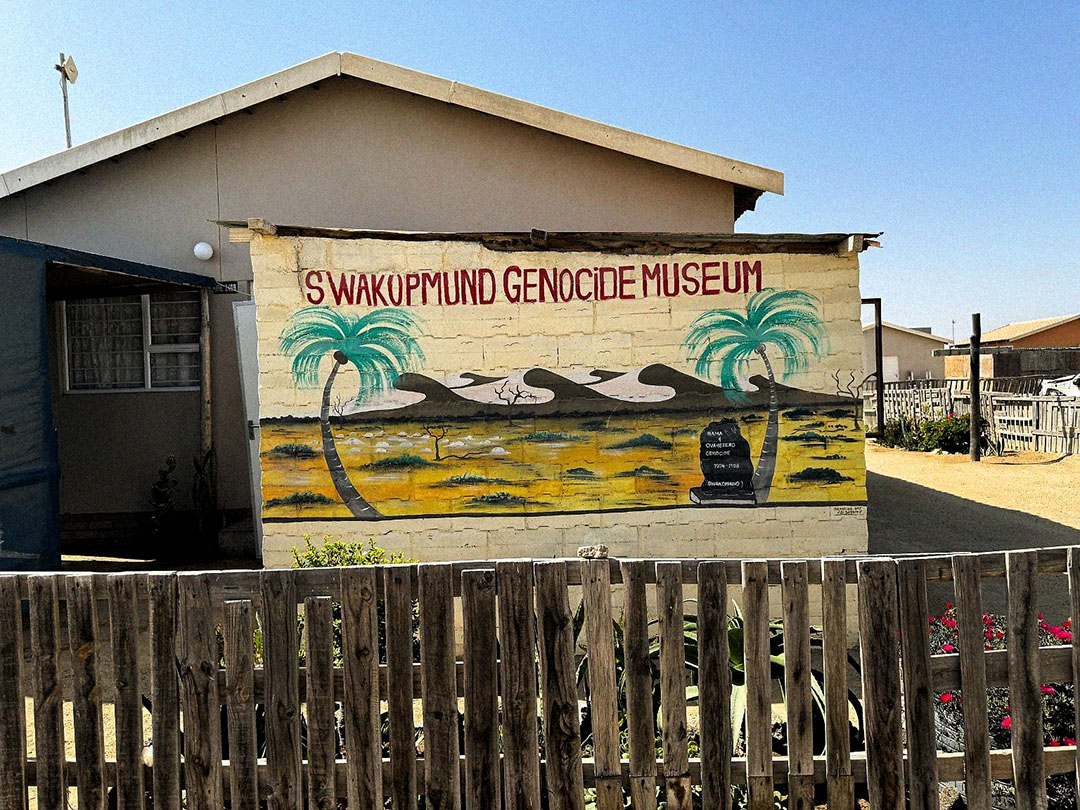
A profoundly moving, small-scale museum in Namibia dedicated to remembering the Herero and Nama genocide—often called the first genocide of the 20th century.
Swakopmund Genocide Museum, founded by Herero artist-activist Laidlaw Peringanda, stands as a solemn memorial to Namibia’s darkest colonial chapter: the German-led genocide of the Herero and Nama peoples from 1904 to 1908. Situated on the edge of Swakopmund, it aims to educate through stark imagery, survivor narratives, and tangible artefacts.
The museum is modest in size—just around 12 m²—but delivers a powerful impact. Inside, walls are lined with harrowing photographs, skeletal remains, and documentation of concentration camp atrocities, particularly those at Swakopmund and Shark Island.
Despite its scale, the museum is a crucial site of remembrance. Visitors engage directly with Peringanda’s passionate storytelling, confronting themes of colonial violence, mass burial, medical experimentation, and cultural erasure. As the Economist noted, “one of the smallest museums in Africa might be its most important”.
Visitors often arrive through Trip.com, confirming its growing reputation. Although privately run, it continues to gain local recognition—and even municipal support—in a town still dominated by colonial architecture.
Location: Located on the outskirts of Swakopmund, Erongo Region, Namibia.
Address: 2409 Deuteronomy Street, Swakopmund, Namibia
Category: museum, genocide memorial, colonial history, human rights
Tags: Swakopmund Genocide Museum, Herero and Nama genocide, German colonialism, Shark Island, remembrance, Namibia
Darkness Level: ☠ ☠ ☠ ☠ ☠ ☠ ☠ ☠ ☠ ☠
Map: Open in Google Maps
Gallery