Stasi Museum
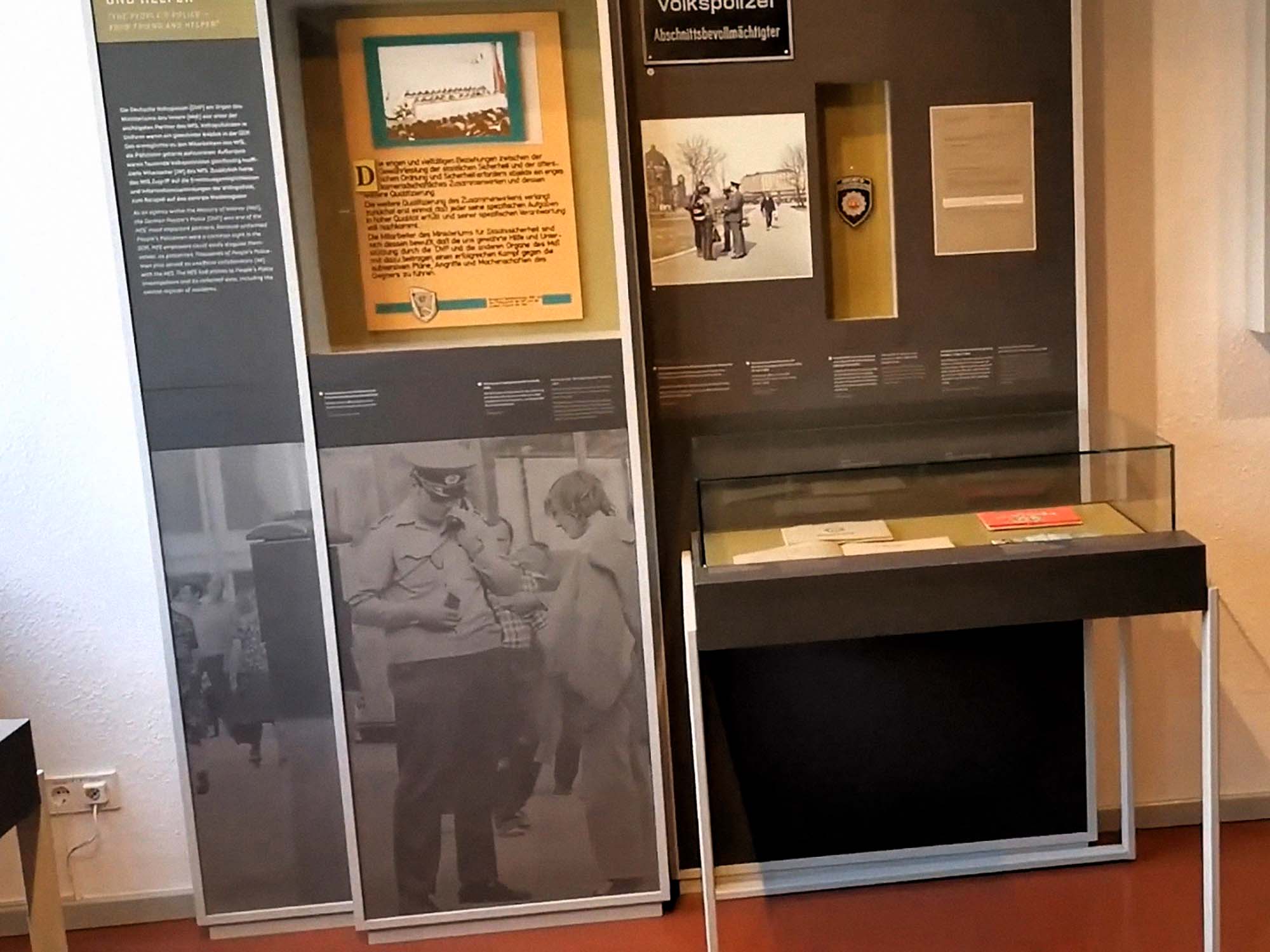
The preserved headquarters of East Germany's Ministry for State Security, where Erich Mielke directed one of the most extensive surveillance systems in the Eastern Bloc. His original office remains almost untouched, surrounded by exhibitions of hidden cameras, listening devices, secret files and the methods used to infiltrate families, destroy careers and psychologically break people regarded as enemies of the state.
Stasi Museum occupies Haus 1 of the former headquarters of the Ministry for State Security – Ministerium für Staatssicherheit, or MfS – in Berlin-Lichtenberg. From this sprawling complex, East Germany's secret police organised surveillance, political repression, espionage and counter-intelligence across the German Democratic Republic. The museum's centrepiece is the preserved office suite of longtime Stasi chief Erich Mielke, who worked here from the building's completion in 1960–1961 until the collapse of the regime in 1989.
The Ministry for State Security had been established in 1950, only months after the creation of the GDR. It described itself as the “shield and sword” of the Socialist Unity Party – SED, making its fundamental purpose explicit: the organisation existed not as a politically neutral intelligence service but to protect the ruling party and its monopoly on power. During its early decades the Stasi used arrests, physical violence, kidnappings, show trials and harsh prison sentences against people regarded as political enemies.
The organisation expanded enormously. By 1989, approximately 91,000 people worked full-time for the Stasi. Around 7,000 of them were employed at the headquarters complex in Berlin, spread through roughly fifty buildings. They were supported by an estimated 189,000 unofficial collaborators – Inoffizielle Mitarbeiter, or IMs – amounting to approximately one secret informant for every ninety citizens of the GDR.
Those informants were arguably more important than the Stasi's technical surveillance equipment. They operated inside workplaces, universities, churches, cultural organisations, sports clubs and opposition movements, but also within circles of friends and families. Some cooperated from ideological conviction, others for money or career advantages, while still others were pressured or frightened into participation. Reports could contain intensely personal information about relationships, private conversations, political opinions or behaviour that would otherwise never have attracted official attention.
The headquarters at Normannenstraße became the administrative centre of this system. Haus 1 was constructed specifically for Erich Mielke, who had become Minister for State Security in 1957. From offices on the second floor he controlled an organisation that eventually penetrated almost every area of East German life. His working rooms survive with their desks, telephones, filing cabinets, meeting rooms, wood panelling and institutional furniture largely as they appeared when the ministry ceased functioning.
Mielke's own history was already violent decades before he took control of the Stasi. In 1931, Berlin police officers Paul Anlauf and Franz Lenck were shot dead near Bülowplatz during an operation involving members of the Communist Party's armed self-defence organisation. Mielke fled Germany shortly afterwards with false papers and eventually reached the Soviet Union. More than sixty years later, in 1993, a Berlin court convicted him for his involvement in the killings and sentenced him to six years in prison, although the precise role he played in the shootings remains historically disputed.
He nevertheless became one of the most powerful men in East Germany. Under Mielke, the Stasi moved increasingly away from easily visible violence towards methods intended to make repression harder to recognise. Particularly from the 1970s onwards, surveillance was combined with a system known as Zersetzung – literally “decomposition” or “disintegration.” Instead of simply arresting a troublesome person, officers could attempt to destroy that person's life without revealing that the state was responsible.
Official Stasi guidelines described measures designed to damage reputations, undermine self-confidence and create professional and social failure. Anonymous rumours could be spread, friendships manipulated, careers blocked and groups encouraged to distrust their own members. Informants could enter opposition organisations and deliberately create jealousy, suspicion and internal conflict. Victims might understand that something was going wrong in their lives while having no way of discovering who was responsible.
The Stasi Museum documents these methods through surviving files, photographs and original surveillance equipment. The organisation concealed cameras inside everyday objects and photographed people without their knowledge, intercepted mail, listened to telephone conversations and maintained extensive records of personal activity. Such equipment can appear almost primitive beside modern digital surveillance, but its effectiveness depended on being combined with informants, bureaucracy and the state's ability to interfere directly with employment, travel, education and personal freedom.
One of the strangest Stasi practices was the collection of Geruchsproben – scent samples. Investigators preserved the body odour of selected people on pieces of cloth, often storing them in sealed glass jars. The samples could theoretically be used with tracking dogs if the person later needed to be followed or located. The practice became one of the most notorious physical symbols of the degree to which the security service attempted to catalogue even the most intimate traces of people it considered suspicious.
The museum should not be confused with the nearby Berlin-Hohenschönhausen Memorial. Political prisoners were interrogated and confined at Hohenschönhausen and other detention facilities; Haus 1 was primarily the administrative headquarters from which the security apparatus was directed. That distinction makes the building disturbing in a different way. There are no rows of prison cells here. Much of the repression was organised from ordinary-looking offices containing desks, telephones, meeting tables and filing cabinets.
The surviving paperwork gives some indication of the scale of that bureaucracy. Germany's Stasi Records Archive now preserves more than 111 kilometres of documents, together with more than 1.7 million photographs, films, audio recordings, microfiches and card indexes. About sixty kilometres of material was found unsorted in Stasi offices in 1989–1990, in addition to records already held in the ministry's formal archives.
That archive might have been considerably smaller. As the East German regime began collapsing in the autumn of 1989, Stasi employees started destroying documents. Papers were shredded, torn by hand or fed into equipment incapable of keeping pace with the volume. Citizens who realised what was happening began occupying regional Stasi offices in December, attempting to stop the destruction and preserve evidence of the state's surveillance system.
The confrontation finally reached the Berlin headquarters on 15 January 1990. Thousands of demonstrators gathered outside the enormous compound in Lichtenberg and eventually entered the site. The occupation brought civilians directly into a place that for decades had represented a largely invisible source of fear. A citizens' committee began overseeing the dissolution of the ministry and attempting to secure its remaining records that same evening.
Only a week later, the Central Round Table decided that Haus 1 should become a memorial and research centre dealing with Stalinism in East Germany. Government plans stalled during German reunification, so members of the citizens' committee and former East German civil-rights activists established the association Antistalinistische Aktion Berlin-Normannenstraße – ASTAK. Many of those involved had themselves been persecuted or imprisoned because of opposition to the regime.
The first visitors were shown through Haus 1 during 1990, and the Research Centre and Memorial at Normannenstraße began regular operation on 7 November 1990. It later became known as the Stasi Museum. The location is particularly significant because the institution responsible for preserving and interpreting this history emerged directly from the citizens who occupied the headquarters rather than from the organisation that once controlled it.
Mielke's preserved ministerial floor remains the most unusual part of the museum. Rather than recreating a stereotypical secret-police headquarters, the rooms reveal how bureaucratically ordinary the centre of the system could look. Visitors move through his office, conference room and private working areas surrounded by subdued furniture and government décor. Decisions affecting surveillance, arrests and political careers were discussed in spaces resembling those of almost any senior civil servant.
The museum's wider permanent exhibition, State Security in the SED Dictatorship, examines how the MfS operated, who worked for it and how surveillance was connected to the broader political structure of East Germany. Files and technical devices sit beside material explaining the human network behind them. This is important because the enduring image of the Stasi as an organisation of hidden microphones alone understates the system: its most powerful surveillance instrument was often another person.
The records also continue to affect people decades after the GDR disappeared. German law allows individuals to request access to files the Stasi compiled about them, subject to protections for other people's personal information. Since the archive opened, millions of applications and requests have been submitted by people trying to discover who watched them, what was recorded and sometimes which friends, colleagues or relatives supplied the information.
Location: In Haus 1 of the former Ministry for State Security headquarters in the Lichtenberg district of eastern Berlin.
Address: Normannenstraße 20, Haus 1, 10365 Berlin, Germany
Category: secret police museum, museum, Cold War site
Tags: Stasi, Ministry for State Security, MfS, East Germany, GDR, DDR, secret police, political repression, surveillance, espionage, informants, Inoffizielle Mitarbeiter, Erich Mielke, Zersetzung, psychological warfare, hidden cameras, listening devices, scent samples, political prisoners, SED dictatorship, Cold War, Peaceful Revolution, citizen occupation
Darkness Level: ☠ ☠ ☠ ☠ ☠ ☠ ☠ ☠ ☠
Homepage: stasimuseum.de
Map: Open in Google Maps
Gallery