Soviet Special Camp No. 7 / No. 1 in Sachsenhausen
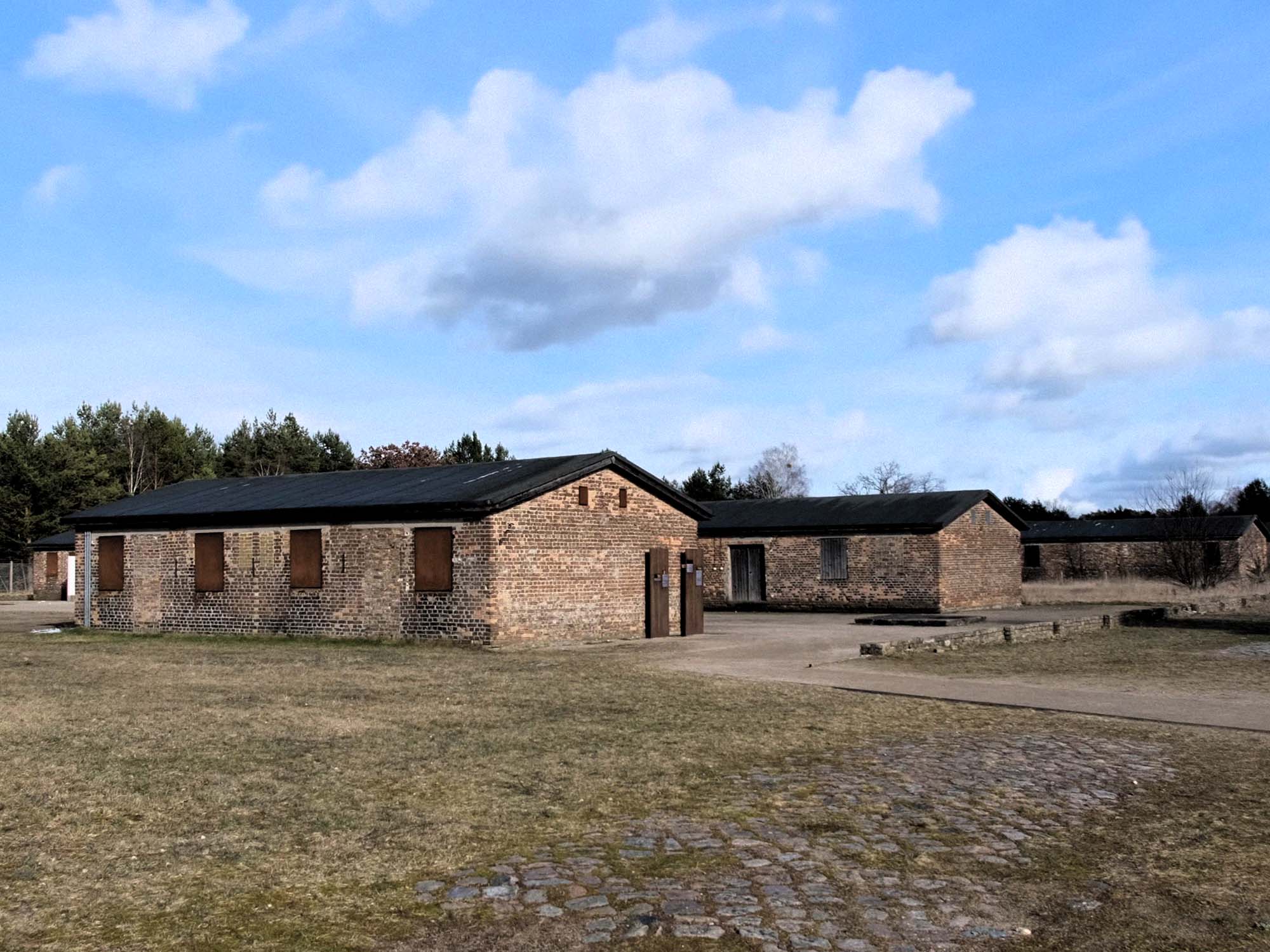
A Soviet detention camp established inside the former Sachsenhausen concentration camp only months after the defeat of Nazi Germany. Around 60,000 people were held here between 1945 and 1950, including Nazi functionaries, political opponents, arbitrarily arrested civilians and prisoners sentenced by Soviet military tribunals. Approximately 12,000 died from hunger and disease, many disappearing into anonymous mass graves while their families received no information about what had happened to them.
Soviet Special Camp No. 7 / No. 1 in Sachsenhausen operated from August 1945 until the spring of 1950 inside the core area of the former Sachsenhausen concentration camp at Oranienburg. The site had been liberated only months earlier after nine years of Nazi imprisonment, forced labour and mass murder. Instead of being immediately abandoned, much of the camp was taken over by the Soviet secret police and converted into the largest of the special camps established in the Soviet occupation zone of Germany.
The Soviet camp had begun elsewhere. In May 1945, the NKVD established Special Camp No. 7 at Weesow, northeast of Berlin. Conditions there were primitive, and in August more than 5,000 prisoners were forced to march over forty kilometres to Sachsenhausen. On the evening of 16 August 1945, the first large group entered the barracks of the former concentration camp. Further transports followed until Sachsenhausen had become the principal Soviet internment centre in the region.
The decision to reuse Sachsenhausen created one of the most uncomfortable historical layers at the site. From 1936 until 1945, the SS had operated the camp as a model concentration camp and training centre for the wider Nazi camp system. Tens of thousands of prisoners died there through murder, forced labour, starvation and disease. The Soviet camp that followed was not an extermination camp and did not operate according to the same system of racial persecution and industrialised killing. It nevertheless became a place of arbitrary imprisonment, starvation, isolation and mass death in its own right.
Approximately 60,000 people passed through the Soviet special camp between 1945 and 1950. They represented very different backgrounds, something that makes simple descriptions of the inmates as either “Nazis” or “political prisoners” misleading. The largest group, around 30,000 people, belonged to what the Soviet authorities called the special contingent. Many were lower- and middle-ranking officials connected with the Nazi state, including party functionaries, civil servants, police personnel, members of the SS and Gestapo and former concentration-camp guards.
Others had much weaker or no meaningful connection to Nazi crimes. Ordinary members of Nazi youth organisations were detained alongside people regarded as politically unreliable, suspected opponents of Soviet rule and civilians arrested on little more than denunciation or suspicion. Some prisoners spent years inside Sachsenhausen without ever receiving a formal court judgment.
The second major prisoner group consisted of approximately 16,000 men and women sentenced by Soviet Military Tribunals. They were kept separately in an area known as Zone II. Many had been accused of espionage, anti-Soviet activity or resistance to the occupation authorities. Investigations could involve brutal interrogation, torture and forced confessions before proceedings resembling show trials produced extremely long prison sentences.
Among those caught in this system was Leonore Fink, a young woman arrested in 1946 after a private letter she had written about conditions in her former home city of Königsberg fell into Soviet hands. Her mother was arrested two months later. Both were convicted of anti-Soviet propaganda and defamation of the Red Army and sentenced to five years. They survived Sachsenhausen and were released in February 1950. Other prisoners were never as fortunate.
A further 6,500 former Wehrmacht officers were held at Sachsenhausen. They had originally been prisoners in American custody before being transferred to Soviet control. More than 7,000 Soviet citizens and Russian émigrés also passed through the camp, including former Soviet prisoners of war, forced labourers from Nazi Germany and Red Army soldiers accused of offences. Sachsenhausen therefore served several Soviet security functions simultaneously rather than acting solely as a denazification camp.
Daily life was dominated by overcrowding, hunger and isolation. Prisoners slept packed together on wooden platforms in barracks that could hold dozens of people in spaces of roughly one hundred square metres. There was too little food, clothing, medicine and heating fuel, while poor hygiene encouraged epidemics. Unlike many Soviet labour camps, Sachsenhausen was not primarily organised around forced labour. Only a minority of prisoners received work assignments, leaving thousands confined to monotonous days of inactivity inside crowded barracks.
The psychological isolation was almost complete. All postal contact with the outside world was forbidden. Families could spend years without knowing where a relative had been taken, whether they were alive or why they had been arrested. For this reason the Soviet special camps became known among prisoners as Schweigelager – “silence camps.” Windows were painted over or otherwise obstructed, reinforcing the separation between those inside and the world beyond the perimeter.
Hunger became catastrophic during the winter of 1946–1947, when already inadequate food rations were reduced further. Disease spread through weakened prisoners, and deaths rose dramatically. Mortality reached its highest level in 1947. Unlike the deliberate killing operations carried out by the SS at Sachsenhausen before 1945, most deaths in the Soviet camp resulted from starvation, disease and the conditions of confinement. The distinction does not lessen the scale of the disaster: approximately one prisoner in five did not survive the five years of Soviet operation.
Those who died generally vanished without ceremony. Corpses were taken away and placed anonymously in three mass burial areas: near the former commandant's yard, at an area known as An der Düne and in the forest at Schmachtenhagen. The largest grave close to the camp contains at least 7,000 bodies. Families were not informed of individual burial locations, and no personal gravestones marked the dead.
Modern research has reconstructed this hidden death toll person by person. The Sachsenhausen Memorial's Book of the Dead contains the names and biographical information of almost 11,900 people known to have died in the Soviet camp system at Weesow and Sachsenhausen. Even this is not entirely complete. Children were born inside the camp, and some died there without either their birth or death being formally recorded by the administration.
One surviving story demonstrates how easily arbitrary arrest could destroy several years of a young life. Reinhard Wolff was imprisoned from 1945 until 1948 after being accused of belonging to the supposed Nazi underground organisation Werwolf. The allegation was false. Decades later he participated in educational work about the Soviet camps, describing how a teenager could simply disappear into preventive detention without any meaningful opportunity to prove his innocence.
The Soviet authorities gradually began releasing prisoners in the late 1940s. In the summer of 1948, more than 5,000 people were freed after a commission classified their alleged offences as comparatively minor. The same year, Sachsenhausen was reorganised and renamed Special Camp No. 1, producing the double designation by which it is now remembered.
The camp finally closed in the spring of 1950. More than 7,000 prisoners were released during the final liquidation, but thousands did not simply walk free. Around 4,800 prisoners were handed over to the newly established East German authorities to continue serving sentences. Another 721 internees who had been held without conviction were transferred to Waldheim prison.
There they became defendants in the notorious Waldheim Trials. Under heavy political influence from the ruling Socialist Unity Party, hundreds were rushed through proceedings in 1950. Many received long prison terms, while some were sentenced to death. For prisoners who had already spent years inside Soviet detention without trial, the closure of Sachsenhausen therefore did not necessarily mean the end of imprisonment.
The history of the Soviet camp was subsequently uncomfortable for the East German state. When the GDR created the Sachsenhausen National Memorial in 1961, the site was presented principally through an official anti-fascist narrative centred on communist resistance against Nazism. The Soviet occupation of the former concentration camp and the deaths of thousands of post-war prisoners were largely excluded from public commemoration.
The physical landscape was also altered. Buildings were removed and parts of the former camp redesigned to serve the new memorial. The Soviet mass graves remained, but their history was not publicly discussed in the same way as the Nazi period. It was only after the collapse of East Germany in 1989–1990 that systematic investigation of the Soviet camp and its burial grounds became possible on a large scale.
The present Museum Soviet Special Camp No. 7 / No. 1 in Sachsenhausen opened in 2001 at the northern edge of the former camp. Its location is significant: the museum stands where Zones I and II met and looks directly towards the largest mass grave. The exhibition documents the different prisoner groups, Soviet occupation policy and the conditions that produced such a high death toll.
Two original brick barracks form part of the museum. Their missing windows and doors have been replaced with steel elements rather than being reconstructed as if untouched, while the interiors demonstrate how tightly prisoners could be packed together. Testimonies from former inmates describe hunger, boredom, uncertainty and the complete absence of communication with relatives. The exhibition deliberately places individual biographies beside the broader political history so that the prisoners do not disappear behind a single category.
The mass cemetery beside the former commandant's yard has also become a central place of remembrance. Families may now place individual name plaques there for relatives whose actual position within the burial ground can no longer be established. Where the Soviet administration once buried thousands anonymously, names have gradually returned to the landscape through archival research and family commemoration.
Sachsenhausen is therefore a particularly difficult place of memory because two systems of political imprisonment occupied some of the same ground within only a few months of one another. Their crimes, objectives and methods were not identical and should not be collapsed into a single history. The Nazi concentration camp belonged to a system of racial persecution, forced labour and systematic mass murder. The Soviet special camp emerged from occupation, denazification and Stalinist security policy, but developed into a system in which people could be imprisoned for years without trial and thousands died through deliberate isolation, deprivation and catastrophic conditions.
Location: In the northern section of Sachsenhausen Memorial, occupying part of the core area reused by the Soviet secret police between 1945 and 1950.
Address: Straße der Nationen 22, 16515 Oranienburg, Germany
Category: prison camp, memorial museum
Tags: Soviet Special Camp, Speziallager Nr. 7, Speziallager Nr. 1, Sachsenhausen, NKVD, Soviet occupation, Stalinism, political prisoners, denazification, arbitrary arrest, Soviet Military Tribunals, torture, forced confession, Schweigelager, silence camp, starvation, disease, Winter of Hunger, mass graves, anonymous burial, Wehrmacht prisoners, political persecution, Waldheim Trials, East Germany, GDR, post-war Germany
Darkness Level: ☠ ☠ ☠ ☠ ☠ ☠ ☠ ☠ ☠ ☠
Homepage: sachsenhausen-sbg.de
Map: Open in Google Maps
Gallery