Saint Hovhannes Chapel
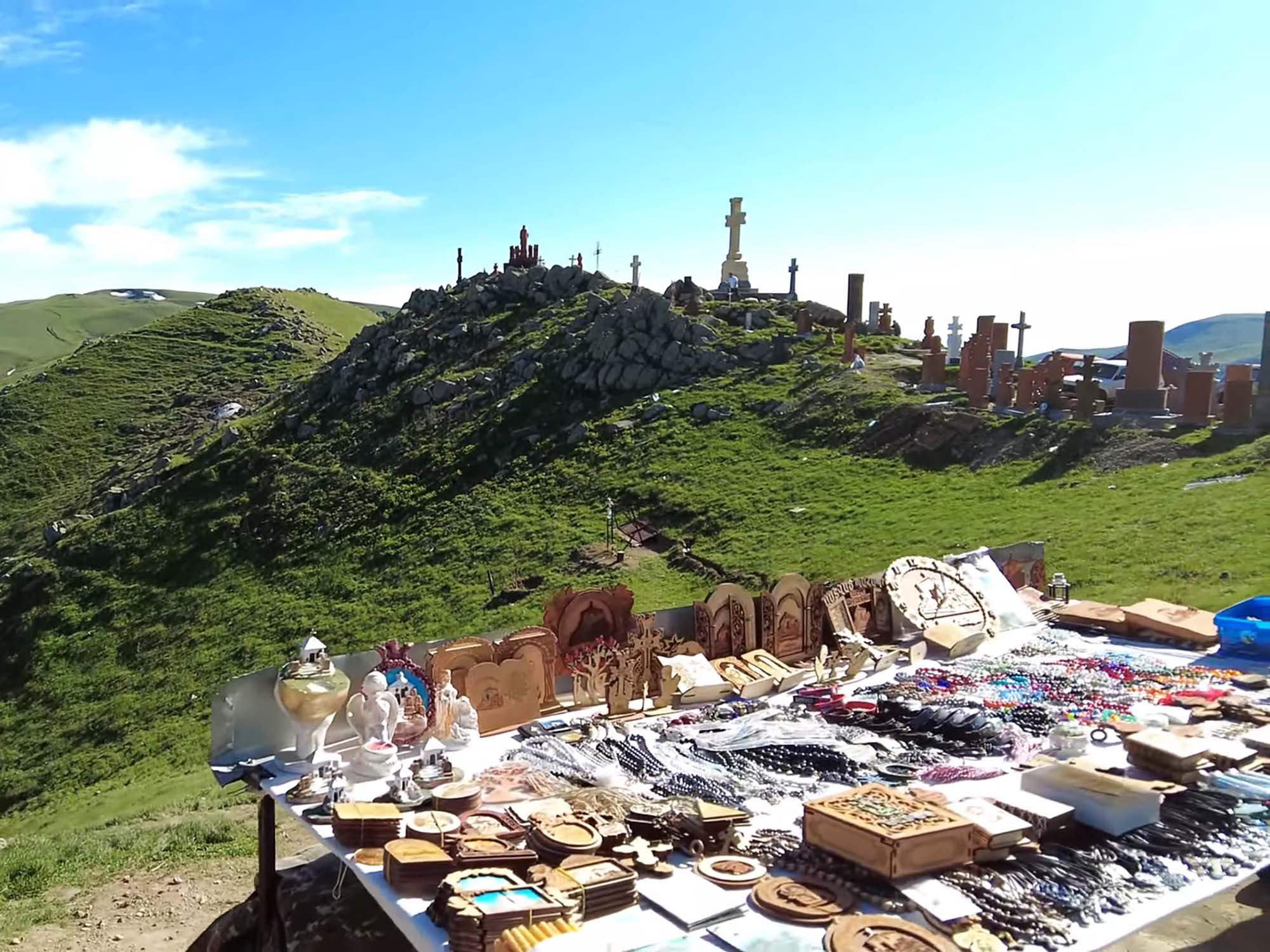
A remote Armenian pilgrimage chapel standing more than 2,100 metres above sea level, traditionally built over a relic of John the Baptist. Destroyed and rebuilt repeatedly during the Soviet period, the shrine is now surrounded by hundreds of khachkars left by pilgrims in gratitude for answered prayers, particularly by couples who believe the saint helped them to have children.
Saint Hovhannes Chapel is a small Armenian Apostolic shrine on the summit of Srbi Mountain in the Pambak range of northern Armenia. Standing approximately 2,157 metres above sea level, the whitewashed chapel overlooks the villages of Hartagyugh, Tsaghkaber and Mets Parni and is reached by a steep climb through exposed mountain terrain. Its modest appearance gives little indication of its importance: for generations it has been regarded as a place of pilgrimage, healing and answered prayers, and the surrounding hillside has gradually filled with hundreds of carved stone crosses.
The shrine is dedicated to Saint Hovhannes – Saint John the Baptist. Its origins are difficult to separate from religious tradition. According to the story preserved locally, relics of John the Baptist were brought to Armenia during the 13th century through the efforts of Armenian and Yezidi military commanders. A portion was supposedly buried on this mountain, where a cross was erected above the burial place. The historical authenticity of the relic has not been established, but belief in its presence became the foundation of the site's reputation as a sacred place.
Some modern descriptions consequently refer to Saint Hovhannes as a 13th-century chapel, but this can be misleading. The pilgrimage site is medieval, while the small building standing there today is much later. The original form of the shrine has not survived, and the present chapel dates from 1958. Historical accounts indicate that the site was already an important pilgrimage destination long before this reconstruction, particularly during celebrations connected with Vardavar, one of the major festivals of the Armenian Church.
The chapel's survival through the Soviet era is one of the more remarkable parts of its history. During the communist period, when churches and other religious institutions across Armenia were closed, repurposed or destroyed, Saint Hovhannes was reportedly blown up and burned three times. Each time, people from Hartagyugh rebuilt the shrine. The last reconstruction was completed in 1958, decades before restrictions on religious practice in the Soviet Union began to ease substantially. The repeated rebuilding became part of the chapel's own mythology of endurance.
The most striking feature today is not the chapel itself but the extraordinary concentration of khachkars surrounding it. These distinctive Armenian cross-stones combine the Christian cross with elaborate carved ornamentation and have a history extending back more than a thousand years. At Saint Hovhannes, however, many are very recent. Pilgrims began placing large numbers around the chapel from approximately 2005, usually as offerings of gratitude after a prayer or vow was believed to have been fulfilled.
Fertility has become particularly closely associated with the shrine. Armenia's official tourism organisation states that more than 80 per cent of the khachkars were erected by families who had previously been unable to have children. Couples travel to Saint Hovhannes to pray for a pregnancy, and those who subsequently have a child may return to place a cross-stone in thanksgiving. Local accounts similarly contain numerous stories of women becoming pregnant after visiting the mountain, alongside claims of recovery from illness and other apparently answered prayers. These remain matters of religious belief rather than medically documented miracles, but the sheer number of votive stones demonstrates how strongly the tradition continues.
The accumulation of khachkars has become so extensive that the Armenian Church has at times encouraged pilgrims to consider a different form of offering. In 2022, the Diocese of Gougark proposed that money which might otherwise be used to erect additional cross-stones should instead help construct steps on the difficult approach to the chapel. The suggestion reflected a practical problem created by one of the shrine's oldest characteristics: pilgrimage to Saint Hovhannes involves physically reaching an isolated and difficult summit.
Traditional practice at the chapel extends beyond leaving khachkars. Pilgrims light candles and pray among a dense collection of crosses and religious images inside the small building. Local accounts also describe worshippers walking around the chapel three or seven times after praying, adding a ritual element to the visit. As with many popular pilgrimage traditions, these customs combine formal Armenian Christianity with practices passed between generations of local worshippers.
The chapel has acquired a number of names. It is sometimes called Zoravor Surb Hovhannes, meaning Powerful Saint Hovhannes, or the Saint Hovhannes of Tsaghkaber. Another traditional name is Ghaltakhchi Surb, derived from the former name of Hartagyugh. Ghaltakhchi is generally explained as a Turkish-derived word connected with saddle-making, an occupation historically associated with inhabitants of the settlement.
The journey to the shrine remains demanding. From Hartagyugh, pilgrims traditionally climb approximately three kilometres up the mountain, commonly taking between one and two hours. Loose rock, steep sections and rapidly changing mountain weather make the route considerably more hazardous than its relatively short distance suggests. The difficulty has become more than a matter of pilgrimage tradition: rescuers are regularly called to the mountain after visitors fall, injure their legs or become unable to complete the descent.
The scale of the problem became clear in 2024. Figures supplied by Armenia's Rescue Service recorded 51 incidents involving 65 injured people at the chapel between the beginning of the year and 20 November. In 2023, 52 people had been injured in 37 registered incidents. Most suffered falls and injuries to the lower limbs, sometimes requiring rescuers to carry them down the mountain on stretchers. Authorities discussed constructing a staircase along the dangerous pedestrian route, but as of August 2026 the proposed steps had still not been built. Rescue operations continued in 2025 and 2026.
This produces an unusual contrast at Saint Hovhannes. Pilgrims climb the mountain because the place is believed to possess healing power, yet the journey itself has sent dozens of people into the care of emergency services. The physical hardship is not necessarily regarded as separate from the pilgrimage. For many worshippers, reaching the isolated summit is part of fulfilling a vow, and the difficult climb reinforces the sense that the chapel must be deliberately sought rather than casually visited.
The mountain setting also helps explain why the shrine has retained an atmosphere quite different from a conventional parish church. There is no large monastery complex surrounding Saint Hovhannes. Instead, the small white chapel stands amid exposed rock and an expanding field of red, grey and black khachkars. Some commemorate gratitude for children, others answered prayers or personal vows, creating a landscape in which individual stories have accumulated physically around the supposed resting place of a saint's remains.
Location: On the summit of Srbi Mountain in the Pambak range, above Hartagyugh in Armenia's Lori Province.
Address: Srbi Mountain, near Hartagyugh, Lori Province, Armenia
Category: chapel, pilgrimage site, religious site
Tags: John the Baptist relic, Armenian Apostolic Church, pilgrimage, sacred relic, khachkar, cross-stones, fertility, pregnancy, healing, miracles, answered prayers, religious ritual, Vardavar, Soviet religious persecution, destroyed church, rebuilt chapel, Ghaltakhchi, mountain shrine, folk belief
Darkness Level: ☠ ☠ ☠
Homepage: armenia.travel
Map: Open in Google Maps
Gallery