Poveglia Island
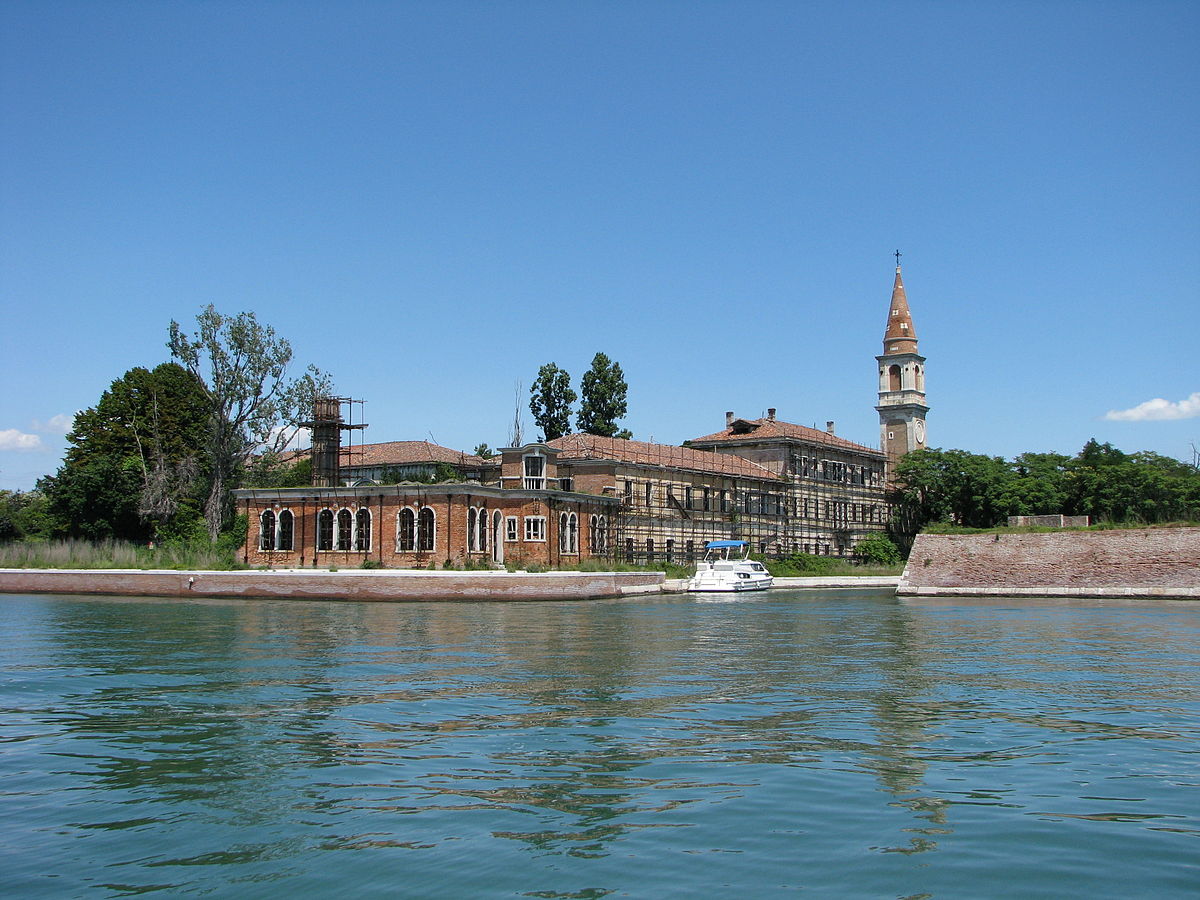
Poveglia Island, located near Venice, is one of the most haunted and forbidden places in the world, with a history of mass deaths, medical horrors, and restless spirits.
Poveglia is an abandoned island in the southern Venetian Lagoon, lying between the historic centre of Venice and the Lido close to the channel leading towards Malamocco. Dense vegetation now surrounds a collection of deteriorating hospital buildings, administrative blocks and other structures, while the old bell tower of San Vitale rises above the trees. Its appearance has helped give Poveglia an international reputation as one of Italy's most haunted places, but the documented history of the island differs considerably from the stories usually repeated about it.
Poveglia was not originally an island of disease and death. Settlement developed here after people from the mainland sought refuge in the Venetian Lagoon during the upheavals that followed the Lombard invasions of the sixth century. By the Middle Ages it had become a substantial community whose inhabitants lived from fishing, salt production and trade with other parts of the lagoon. In the 14th century, several hundred people lived on Poveglia under the protection of its own castle and the parish church of San Vitale.
This period ended violently during the War of Chioggia of 1378–1381, when Genoa and Venice fought for control of the northern Adriatic. The inhabitants of Poveglia were evacuated to Venice as enemy forces entered the lagoon, and the settlement was devastated during the conflict. Only a small population returned afterwards. Venetian authorities made several attempts over the following centuries to repopulate the island, but none succeeded, leaving most of the former community abandoned long before Poveglia acquired its later medical role.
This chronology is important because one of the most repeated stories about Poveglia claims that it became a dumping ground for plague victims during the Black Death of 1348. There is no good evidence for this. Poveglia was still an inhabited settlement at the time. Venice certainly suffered catastrophically from plague and developed an extensive system of isolation islands and lazarettos, but the principal early institutions were Lazzaretto Vecchio and Lazzaretto Nuovo. Poveglia entered this system much later.
The island was placed under the authority of Venice's health administration in the late 18th century. From 1782, its buildings were used to inspect people and merchandise arriving by sea and, when necessary, to isolate those suspected of carrying contagious disease. Its location close to the entrance at Malamocco made it particularly useful for keeping potentially infected ships away from Venice itself.
One of the best documented outbreaks occurred in 1793. The Ottoman vessel San Nicolò arrived from Nafplio carrying salted cheese after calling at ports in the eastern Mediterranean. It was ordered to quarantine at Poveglia, and within days one of the sailors developed symptoms identified as plague. The approximately thirty crew members were removed from the ship, temporary isolation facilities were established and the entire island was placed behind a sanitary cordon. Several members of the crew died, but the disease was successfully contained rather than spreading into Venice. Another plague-infected ship was isolated at Poveglia later in the decade.
Poveglia continued to serve as a maritime quarantine station throughout the 19th century and into the 20th. Its purpose was not simply to imprison sick people until they died. Ships, passengers, crews and cargo could be isolated while health authorities attempted to prevent epidemics from entering one of Europe's busiest ports. This history is grim enough without the enormous death tolls later attached to the island. Claims that 100,000 or even 160,000 plague victims were buried there, and that as much as half of the island's soil consists of human ash, are not supported by the historical record.
The surviving buildings largely belong to a later phase. Hospital pavilions were constructed during the first half of the 20th century, and from the 1920s the island was used for institutional medical care. Poveglia is routinely described in English-language accounts as having contained an infamous psychiatric asylum. The reality appears to have been less sensational. Italian heritage authorities identify its later function primarily as a geriatric convalescent facility, while other accounts indicate that psychiatric patients or a psychiatric department may also have been present. There is no documentation of an institution dedicated to secret experimentation on mentally ill prisoners.
This is where Poveglia's most famous horror story enters the picture. According to the legend, an unnamed doctor performed lobotomies and other experimental procedures on helpless patients, using crude instruments while ignoring their claims that the island was haunted. Eventually the doctor supposedly began seeing the same ghosts, lost his sanity and climbed the bell tower before falling or being pushed to his death. Some versions add that he survived the fall only to be strangled by a mysterious mist rising from the ground.
No evidence has been found that this doctor existed. Investigations by the Italian Committee for the Investigation of Claims on Pseudosciences found no newspaper report or historical source for the story before 2009, and doctors familiar with the former institution had no memory of such an event. The surviving tower also belonged originally to the parish church of San Vitale rather than to a purpose-built asylum. The church itself disappeared during the Napoleonic period, but its bell tower was retained and subsequently reused as a lighthouse. An old clock dating from 1745 remains on the tower, although its hands are now missing.
The transformation of Poveglia into a global paranormal legend owes much to television and the internet. In 2009, the American series Ghost Adventures filmed an episode on the island and presented it as an exceptionally dangerous haunted location populated by the spirits of plague victims and abused psychiatric patients. The programme repeated stories of mass graves, human ashes and the murderous doctor, and the same claims subsequently spread through paranormal websites, travel blogs and social media. Poveglia's genuine quarantine history gradually became almost inseparable from a much more elaborate fictional version of its past.
Reports of supernatural activity now include voices in empty buildings, screams, footsteps, shadow figures and apparitions among the ruins. Another frequently repeated story claims that Venetian fishermen avoid the waters around Poveglia because their nets sometimes bring up human bones. Such stories form an important part of the island's modern folklore, but they should not be confused with documented evidence. Poveglia certainly witnessed disease and death during its years as a quarantine station, but the enormous plague pits usually described in paranormal accounts are disputed by local historians and researchers.
The medical complex finally closed in 1968, after which the island passed to the Italian state. Agricultural use continued briefly, but the buildings were largely left to deteriorate. Roofs collapsed, vegetation entered the wards and corridors, and decades without regular maintenance created the abandoned hospital landscape now familiar from photographs. Italy's Ministry of Culture currently describes the overall condition of the historic complex as poor.
Poveglia actually consists of several distinct sections. Most of the ruined buildings occupy the central island, which is connected by a bridge to a largely undeveloped northern section formerly used for agriculture. Immediately beside them stands the separate Ottagono di Poveglia, an octagonal defensive work surrounded by brick revetments. Together the ruins preserve very different layers of Venetian history: medieval settlement, military defence, maritime quarantine, institutional medicine and eventual abandonment.
The island's future has been debated repeatedly. In 2014, an attempt by the Italian state to grant a long-term lease attracted international attention and helped prompt the formation of Poveglia per Tutti, a citizens' organisation campaigning to keep the island in public use. After more than a decade of negotiations and legal proceedings, the organisation received a six-year concession for the undeveloped northern portion beginning on 1 August 2025, with plans to create a public lagoon park and protect its natural environment.
This also means that the often repeated statement that Poveglia is completely forbidden to visitors is no longer accurate. As of 2026, landing and entry remain prohibited on the central built-up island containing the abandoned hospital complex, where deteriorating structures present genuine safety concerns. The northern section under the management of Poveglia per Tutti can be accessed by boat, although there is no regular public transport and facilities remain extremely limited.
Location: Poveglia Island is located in the Venetian Lagoon, Italy.
Address: Venetian Lagoon, near Lido di Venezia, Italy
Category: ghosts, island
Tags: haunted, ghosts, island, Italy
Darkness Level: ☠ ☠ ☠ ☠ ☠ ☠ ☠ ☠
Map: Open in Google Maps
Gallery