Ploutonion at Hierapolis
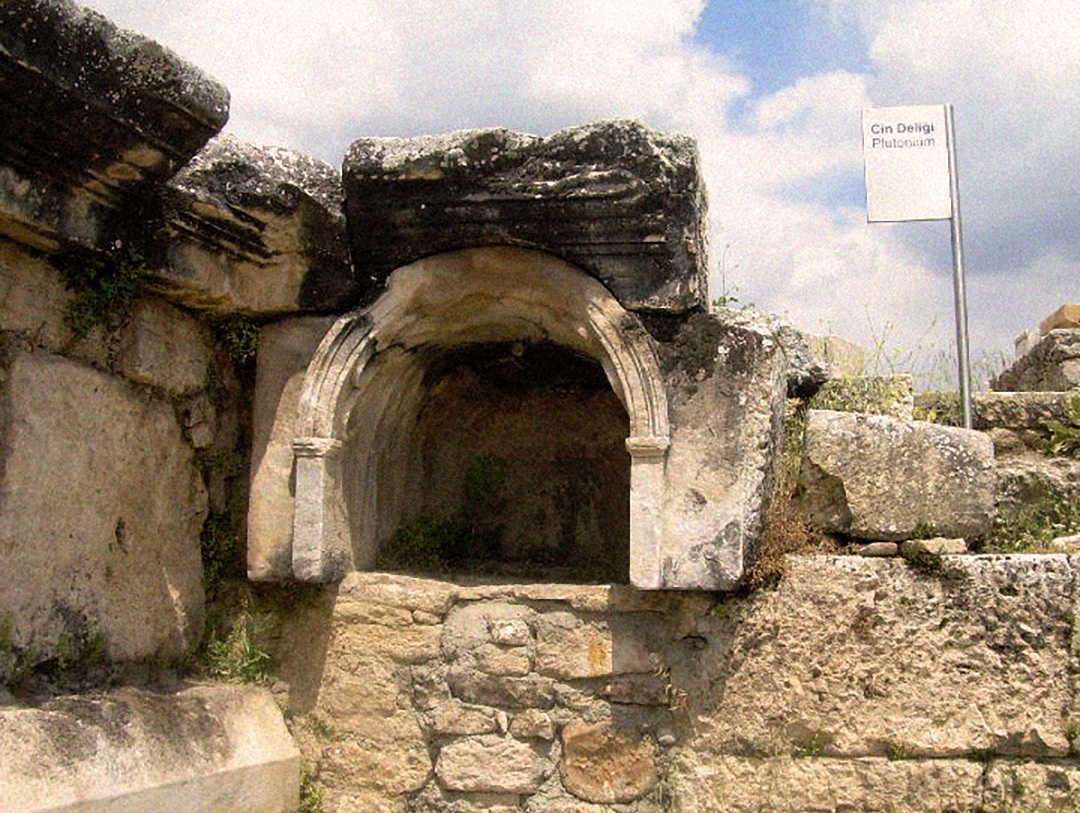
An ancient “gate to the underworld” in the ruins of Hierapolis, where deadly carbon dioxide still seeps from a fault and once killed sacrificial animals in full view of crowds.
The Ploutonion at Hierapolis (often called Pluto’s Gate) was a sanctuary dedicated to Pluto/Hades in the ancient city of Hierapolis near today’s Pamukkale. Ancient writers described it as a place where animals brought too close would drop dead almost instantly, while priests appeared to survive the rituals — feeding the belief that the cave was a literal entrance to the realm of the dead.
Modern research has shown that the “mystery” has a brutal, geological explanation: the Ploutonion sits on an active fault that releases high concentrations of volcanic carbon dioxide. The gas pools near the ground like an invisible lake, making smaller animals (and people who get too low) far more vulnerable, while standing adults can sometimes avoid the worst concentrations.
Part shrine and part death trap, the Ploutonion is one of the most unsettling ancient sites in the Mediterranean: a place where religion, theatre, and natural toxicity merged into a convincing vision of Hell. Even today, it is treated with caution because the gases can still be hazardous.
Location: In the archaeological site of Hierapolis (Pamukkale), Denizli Province, Turkey.
Address: Hierapolis Archaeological Site, Pamukkale, 20190 Denizli, Turkey
Category: archaeology, mythology, underworld
Tags: Ploutonion, Pluto’s Gate, Hierapolis, Pamukkale, Hades, underworld, carbon dioxide, fault line, Roman, Greek
Darkness Level: ☠ ☠ ☠ ☠ ☠ ☠ ☠ ☠ ☠
Homepage: muze.gov.tr
Map: Open in Google Maps
Gallery