Pitești Prison Memorial
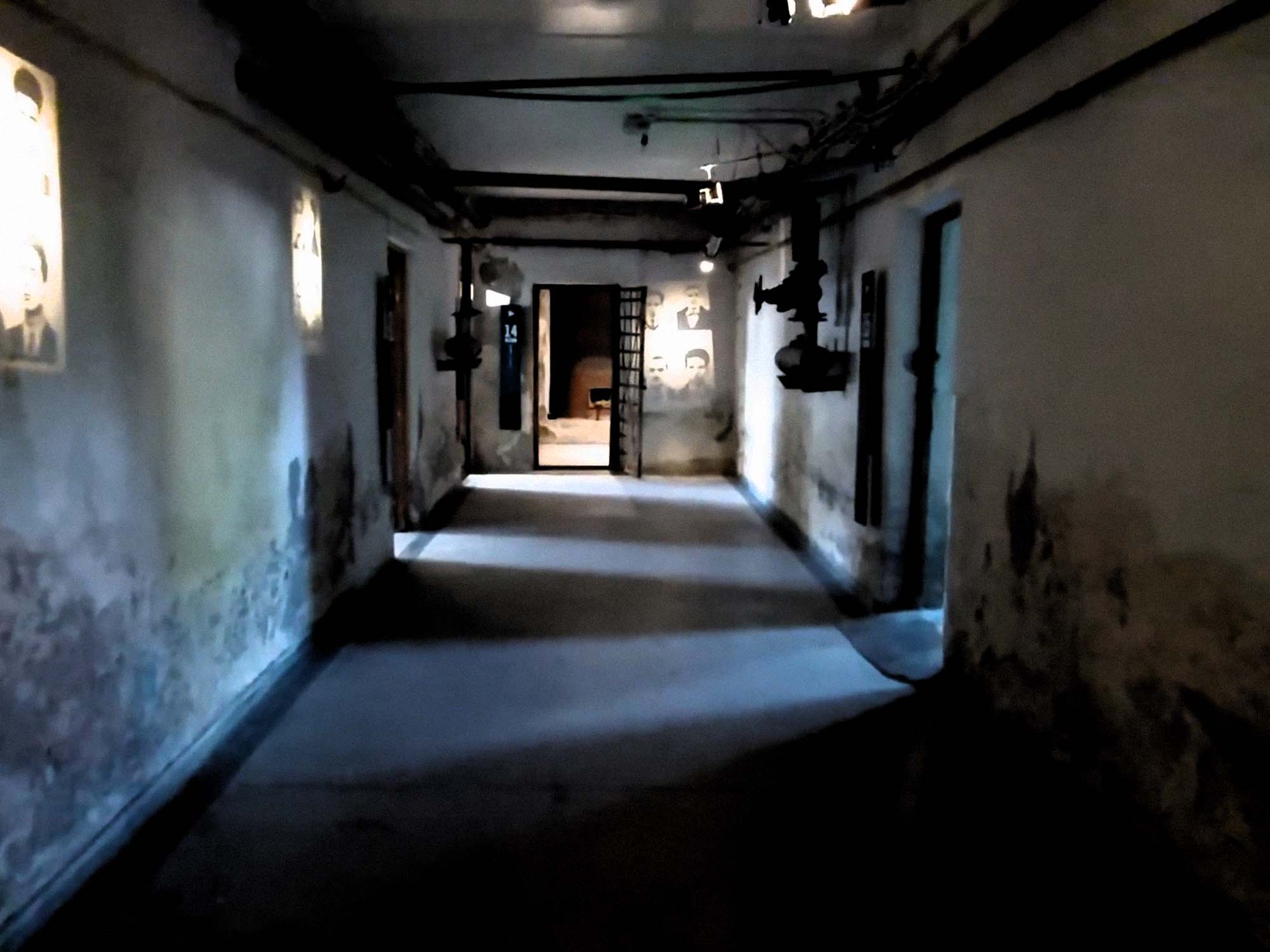
A former Romanian prison notorious for the Pitești Experiment, a programme of systematic physical and psychological torture in which political prisoners were beaten, humiliated, forced to denounce their families and beliefs, and ultimately pressured into torturing fellow inmates.
Pitești Prison Memorial occupies part of the former penitentiary in Pitești, Romania, a building permanently associated with one of the most extreme programmes of political repression carried out under the country's communist dictatorship. Between 1949 and 1951, hundreds of mostly young political prisoners were subjected to what became known as the Pitești Phenomenon or Pitești Experiment: a system designed not simply to extract information, but to destroy personal loyalties, religious beliefs and individual identity before turning victims against one another.
The present prison was constructed between 1937 and 1941, replacing an older jail that had stood in Pitești since the 19th century. At the time of its completion it was considered one of Romania's most modern prisons, with central heating, an infirmary and a chapel. Its grounds covered approximately 25,000 square metres behind a high perimeter wall, and because Pitești was considerably smaller than it is today, the complex originally stood on the edge of town surrounded largely by agricultural land.
The prison initially held ordinary criminals as well as some political detainees. Following the establishment of communist rule, however, political prisoners increasingly dominated its population. They came from very different backgrounds and included members or supporters of the National Peasant Party and National Liberal Party, monarchists, former police and gendarmerie personnel, politically unaffiliated prisoners and members of the Legionary Movement, Romania's pre-war fascist organisation. From August 1948, Pitești became a principal destination for political prisoners who had been students when they were arrested.
The system later associated with Pitești had developed in a less violent form at Suceava Prison in 1948. Among the prisoners involved there was law student Eugen Țurcanu, who had previously been connected with the Legionary youth movement before joining communist organisations after the war. While imprisoned, he began developing a network of informants. With support from the Securitate, Romania's communist secret police, Țurcanu and a group of prisoners close to him were transferred to Pitești in April 1949.
The method initially relied on deception. Newly arrived prisoners were placed with men who appeared sympathetic and trustworthy, sometimes former friends or university colleagues. Conversations encouraged them to discuss their political activities, organisations, families and information they had withheld during earlier interrogations. Once sufficient confidence had been established, the relationship changed abruptly. At a signal, prisoners working with Țurcanu produced concealed sticks and broom handles and attacked the others. The first such organised beating recorded by the Memorial took place in late November 1949 in Room 1 of the correction section.
The violence soon moved into the much larger Room 4 Hospital, a former infirmary that became the most notorious room in the prison. A major assault took place there around Christmas 1949, and subsequent groups of prisoners were brought into the room for what was officially described as “re-education.” Men elsewhere in the prison could hear screams without necessarily understanding what was happening behind the closed doors. Room 4 later became so closely identified with the Pitești Experiment that it is now one of the central memorial spaces within the surviving prison.
The beatings were only the beginning. Once a prisoner had been physically and psychologically exhausted, the process moved into what became known as “unmasking”. During the first stage, sometimes called the external unmasking, prisoners were forced to reveal anything they had previously concealed from investigators: names, organisations, conversations, political contacts and other information that could be used by the Securitate. Refusal or inconsistencies could result in further torture. Written statements were produced in an improvised office that Țurcanu was allowed to use inside a prison bathroom.
The internal unmasking was aimed at something more personal. Prisoners were ordered to renounce their families, friends, teachers, political convictions and religious beliefs in front of the other inmates. They could be forced to insult their parents or invent stories portraying people they loved as corrupt or immoral. For religious prisoners, blasphemy became another instrument of degradation. The intention was to attack the relationships and values by which the prisoner still understood himself as an individual.
Survivor testimony preserved by the Memorial describes particularly disturbing mock religious ceremonies staged in Room 4 Hospital. During Easter 1951, prisoners were reportedly assigned grotesque roles in parodies of Christian rituals and compelled to participate in blasphemous performances. Mihai Buracu later recalled a mock Palm Sunday procession and crucifixion in which religious symbols were replaced with objects intended to degrade the participants, while Aurel Vișovan remembered being forced to bow before obscene representations of sacred figures. These episodes are sometimes referred to in accounts of Pitești as the “Black Masses,” although the surviving descriptions come primarily from prisoner testimony rather than administrative records.
The final and perhaps most destructive stage was intended to erase the distinction between victim and perpetrator. Prisoners who had been broken through the process could be ordered to participate in the beating and humiliation of new victims. Refusal could mean returning to the position of victim themselves. Friends tortured friends and former cellmates attacked one another, creating a system in which responsibility for the visible violence could be shifted onto the prisoners even though the process operated with the knowledge and support of elements within the state security apparatus.
The Securitate maintained unusually tight control over information surrounding the operation. According to research presented by the Memorial, the prison's ordinary administration did not have unrestricted access to the cells in which the violence occurred. This helped preserve secrecy while creating the impression that the prisoners were simply attacking one another. The Securitate's prison intelligence service collected information produced through the torture, and material obtained from prisoners could subsequently contribute to further arrests outside the prison.
Determining the precise human cost has been difficult, particularly because later accounts sometimes combine victims from Pitești with those subjected to related programmes elsewhere. The Memorial's historical research identifies more than 600 students tortured at Pitești and at least eleven deaths resulting from the violence. Death was in some respects regarded as a failure of the system: prisoners were supposed to remain alive so that information could continue to be extracted from them. At least one prisoner, Gheorghe Vătășoiu, escaped the process through suicide in February 1950, throwing himself into the prison stairwell and dying immediately.
The experiment did not remain confined to Pitești. Prisoners who had undergone the process were transferred to other prisons and labour camps beginning in 1950, spreading similar methods to places including Gherla Prison and the Peninsula labour camp on the Danube–Black Sea Canal. The most intense phase at Pitești ended in May 1951, and the final group of student prisoners left in August. Violence connected with the same system continued at Gherla until later that year.
The communist authorities subsequently attempted to distance themselves from what had happened. Eugen Țurcanu and twenty-one other prisoners were put on trial in 1954, with the prosecution portraying the atrocities largely as the work of the prisoners themselves. Seventeen men received death sentences, while several others had death sentences commuted to forced labour for life. Țurcanu was executed at Jilava Prison in December 1954. A later trial in 1957 gave comparatively limited prison sentences to several members of the prison and security apparatus. Senior officials responsible for the Securitate were not prosecuted for the experiment.
Pitești continued operating as a prison long after the experiment ended. Political prisoners remained there during the 1950s, including people associated with armed anti-communist resistance groups, and prisoners staged protests over conditions in 1956 and 1957. Following the general release of political prisoners in 1964, the institution continued primarily as an ordinary penitentiary until it was finally closed in 1977.
The prison then underwent an unusually mundane transformation. The buildings were transferred to the state-owned Trust for Industrial Construction of Argeș and converted into offices, laboratories and storage spaces. After the organisation was broken up during the privatisations that followed the fall of communism, different portions of the former prison passed into private ownership. Some interiors were substantially altered, and the historical importance of the complex was in danger of being lost beneath ordinary commercial redevelopment.
The Pitești Prison Memorial Foundation was established in 2011 and opened part of the former prison to the public as a memorial museum in 2014. A permanent exhibition followed in 2018, combining archival documents, photographs, personal belongings and survivor testimony with the surviving architecture of the prison itself. The museum concentrates particularly on the Pitești Experiment while placing it within the wider history of communist repression and anti-communist resistance in Romania.
Perhaps the most striking transformation concerns Room 4 Hospital. The chamber where some of the worst torture and deliberate religious humiliation occurred is now an Orthodox chapel dedicated to the Ascension of the Lord. Services are held inside the room, creating an intentional contrast between its former function as a place of degradation and its present use as a memorial and religious space.
The survival of the prison complex itself was not guaranteed. In 2021, plans were initiated to demolish the former cell block and replace it with residential development. The Memorial Foundation campaigned for protection of the complete site, and in 2023 all three surviving sections of the former prison were designated a Category A historical monument of national importance. This extended protection beyond the part of the complex that had previously been listed.
Location: Inside part of the former Pitești Penitentiary in central Pitești, approximately 100 kilometres north-west of Bucharest.
Address: Strada Negru Vodă 30, 110069 Pitești, Argeș, Romania
Category: prison, museum
Tags: prison, communist repression, Pitești Experiment, Pitești Phenomenon, re-education, torture, psychological torture, political prisoners, Securitate, Eugen Țurcanu, Room 4 Hospital, forced confession, forced denunciation, religious persecution, anti-communist resistance, prison deaths, suicide, human rights, memorial museum, communism
Darkness Level: ☠ ☠ ☠ ☠ ☠ ☠ ☠ ☠ ☠
Homepage: inchisoareapitesti.org
Map: Open in Google Maps
Gallery