Ossuary Leuk
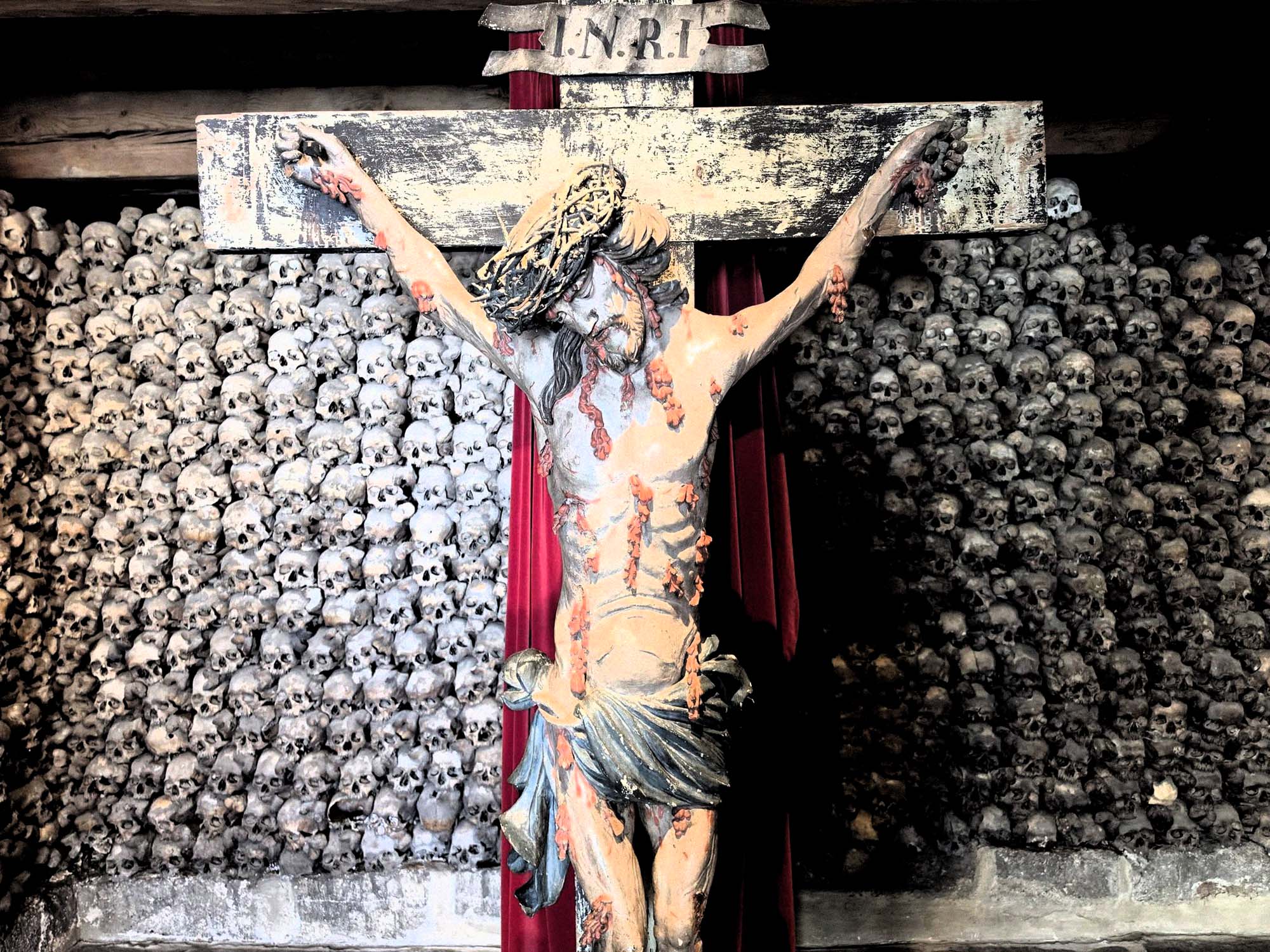
A 16th-century ossuary beneath the Church of St Stephen in Leuk, containing a 24-metre wall formed from the skulls and bones of approximately 22,000 people, together with a naturally preserved 17th-century mummy.
Ossuary Leuk, also known as the Leuk Charnel House or Beinhaus Leuk, is situated beneath the nave of the Church of St Stephen in the historic centre of Leuk. The chapel dates from the early 16th century and is generally associated with the year 1505. Its principal feature is a wall measuring approximately 24 metres in length and more than two metres in height, constructed from carefully stacked human skulls and other skeletal remains. Leuk Tourism estimates that the ossuary contains around 22,000 skulls.
The remains were transferred from the former cemetery surrounding the church. During the late Middle Ages, St Stephen’s served as the principal church for communities throughout the Leuk district, while the available burial ground was limited. Graves were therefore reused after approximately 25 years. The surviving bones, particularly the skulls, were removed and placed in the ossuary rather than discarded. The collection accumulated over several centuries and consists primarily of local residents rather than victims of a single epidemic, battle or mass death.
The wall stopped receiving new remains around 1860, when pressure on the cemetery had decreased. Repeated thefts of skulls were also reported, and the collection was eventually sealed behind walls and concealed from view. It remained hidden for more than a century. During restoration work at the Church of St Stephen in 1982, the enclosed chamber and its extensive collection of human remains were uncovered and made accessible again.
The ossuary contains a traditional memento mori inscription translated as: “What you are, we once were. What we are, you will become.” The statement reflects the medieval Christian use of human remains as a reminder of mortality, bodily decay and the equality of all people in death. Surviving wall paintings include scenes associated with the Danse Macabre, another common medieval representation in which death is shown claiming people regardless of their social position.
A further discovery made during the 1982 restoration was the naturally preserved body of an unidentified woman. The woman is believed to have died during the 17th century, but her identity and the circumstances of her burial remain unknown. Her mummified body is displayed in its wooden coffin within the complex and has become one of the ossuary’s most distinctive features.
The ossuary remains part of the Church of St Stephen and continues to serve a funerary function as well as being open to visitors. Together, the skull wall, medieval imagery and unidentified mummy preserve the historical burial practices of a community where limited cemetery space required generations of human remains to be exhumed and stored beneath the church.
Location: Beneath the Church of St Stephen in the historic centre of Leuk.
Address: Friedhofstrasse 21, 3953 Leuk, Switzerland
Category: ossuary, church
Tags: skulls, charnel house, ossuary, memento mori, Danse Macabre, burial history, medieval, crypt
Darkness Level: ☠ ☠ ☠ ☠ ☠ ☠ ☠ ☠ ☠
Homepage: leuk.swiss
Map: Open in Google Maps
Gallery