Namahage Museum
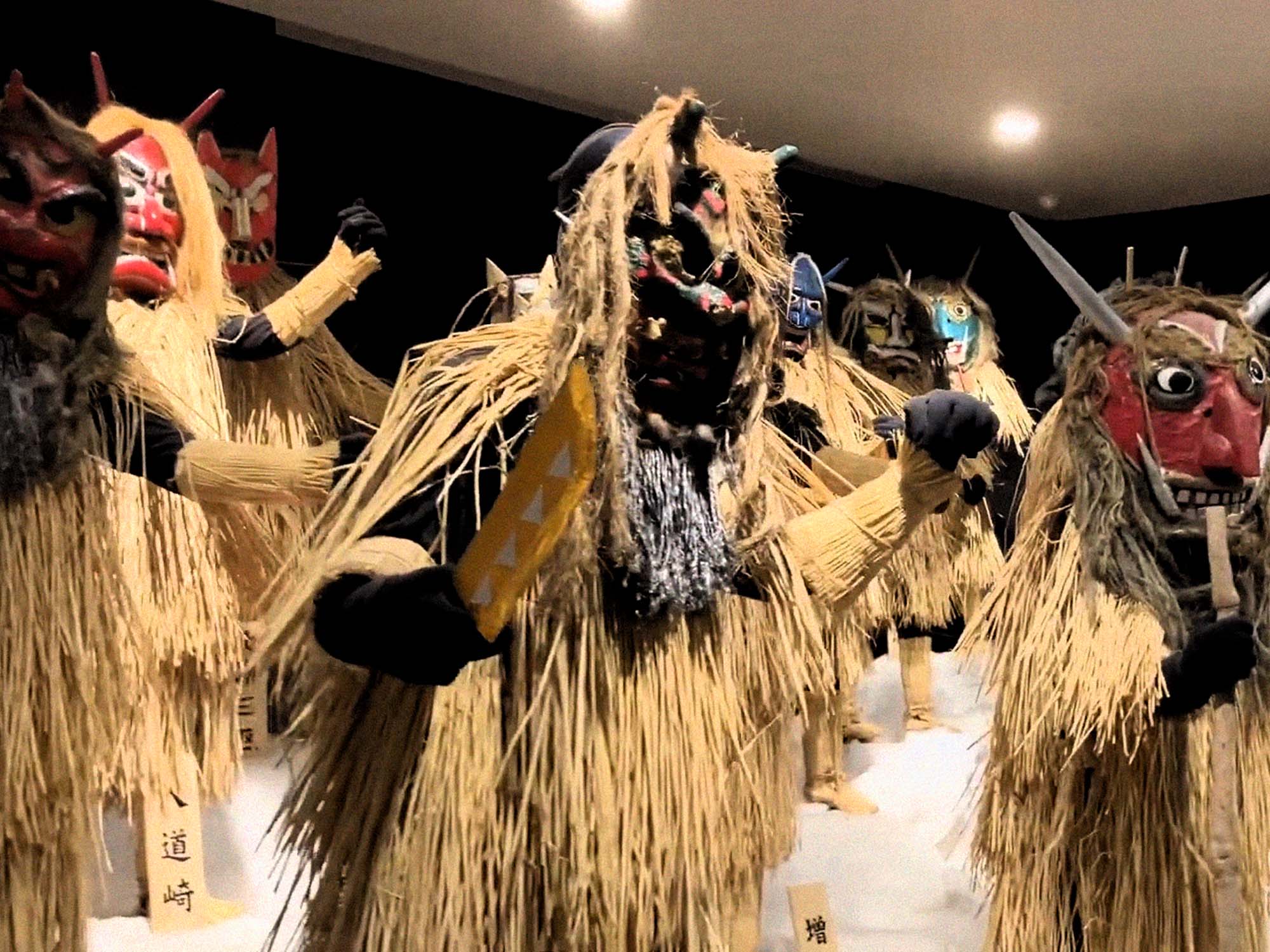
A museum on the Oga Peninsula devoted to the Namahage, fearsome masked visiting deities that enter local homes on New Year’s Eve to reprimand laziness and misbehaviour while bringing health, good fortune and successful harvests.
Namahage Museum is a cultural museum in the Shinzan district of Oga, Akita Prefecture. It documents the masks, costumes, legends and household rituals associated with the Oga no Namahage, one of northern Japan’s best-known folk traditions. Although their masks resemble demons or oni, Namahage are traditionally regarded as visiting deities or messengers of the mountain gods rather than evil beings.
On the evening of 31 December, participants wearing masks and heavy straw costumes known as kede travel between houses in communities across the Oga Peninsula. They enter with loud shouts, stamp their feet and demand to know whether there are crying children, disobedient children or lazy members of the household. The head of the family receives them according to local custom, offering food and sake and assuring them that everyone has behaved properly. Before leaving, the Namahage promise protection, good health and abundant crops and catches during the coming year.
The name Namahage is generally connected with the expression namomi-hagi, meaning the removal of namomi. These were marks or blisters believed to develop on the hands and feet of people who spent too much time sitting beside the hearth instead of working. The large wooden knives carried by some Namahage symbolically remove these signs of idleness. Other traditional objects include wooden buckets and staffs fitted with gohei, folded paper streamers indicating the sacred status of the visitor.
The museum’s principal display brings together more than 150 Namahage masks formerly used in communities across Oga. Their appearance varies considerably between districts. Some are carved from wood, while others are made from bark, papier-mâché, woven baskets covered with paper or more modern materials. Facial features, colours, horns, hair, costumes and the objects carried by the Namahage also differ according to local tradition and the materials available in each community.
Additional exhibitions examine the natural environment and everyday culture from which the tradition developed. Displays include agricultural and household tools, a traditional dugout boat and information about village life on the Oga Peninsula. The museum theatre regularly presents the documentary An Evening with the Namahage, showing preparations for the New Year’s Eve ritual and the arrival of Namahage inside a family home. Visitors can also use a digital transformation display and see examples of traditional mask carving.
The precise origin of the Namahage tradition is unknown, and several explanations have been proposed. These connect the figures with mountain deities, wandering ascetic monks, foreign castaways or local beliefs about spirits entering communities at the beginning of a new year. A well-known legend claims that five ogres brought to Oga by a Chinese emperor terrorised the surrounding villages. The inhabitants promised them young women if they could build one thousand stone steps to a shrine in a single night. When the ogres completed the 999th step, a villager imitated the crowing of a rooster, convincing them that dawn had arrived and causing them to abandon the task.
Oga no Namahage was designated an Important Intangible Folk Cultural Property of Japan in 1978. In 2018, it was included in UNESCO’s inscription of Raiho-shin, ritual visits of deities in masks and costumes, which covers several related traditions from different regions of Japan. The designation applies to the living ritual and its transmission within local communities rather than to the museum itself.
Beside the museum is the separate Oga Shinzan Folklore Museum, located in a relocated farmhouse dating from 1907. It presents live reconstructions of the Shinzan district’s New Year’s Eve visit, including the formal exchange between the Namahage and the head of the household. The two museums can be visited separately or with a combined admission ticket.
Location: In the Shinzan district of the Oga Peninsula, beside the Oga Shinzan Folklore Museum and close to Shinzan Shrine.
Address: Mizukuisawa, Kitaura Shinzan, Oga, Akita 010-0685, Japan
Category: museum
Tags: Japanese folklore, masked deities, ritual masks, ritual costumes, folk religion, New Year ritual, visiting deities, UNESCO intangible heritage
Darkness Level: ☠ ☠ ☠ ☠ ☠
Homepage: namahage.co.jp
Map: Open in Google Maps
Gallery