Mont-Saint-Michel
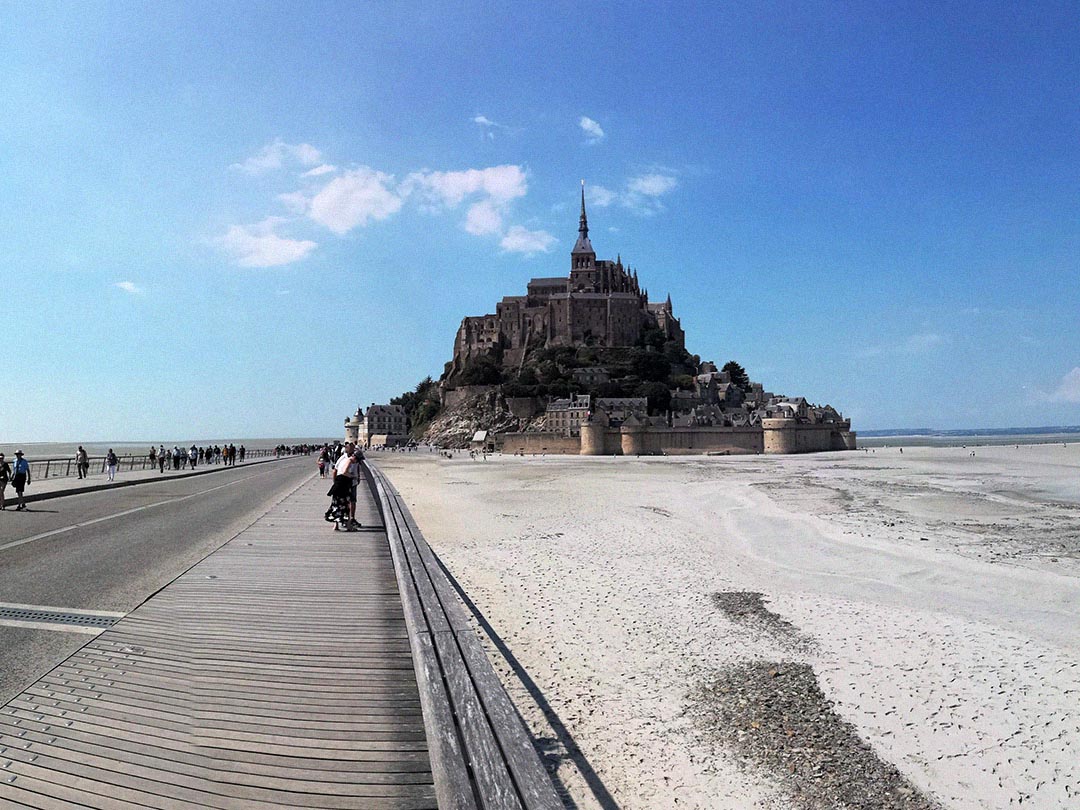
Mont-Saint-Michel is a fortified medieval abbey rising from one of Europe's most dangerous tidal bays, Mont-Saint-Michel has been a pilgrimage destination, besieged fortress and notorious state prison. Medieval pilgrims drowned or became trapped in the shifting sands, while later prisoners were confined behind the same walls in what became known as the “Bastille of the Seas”.
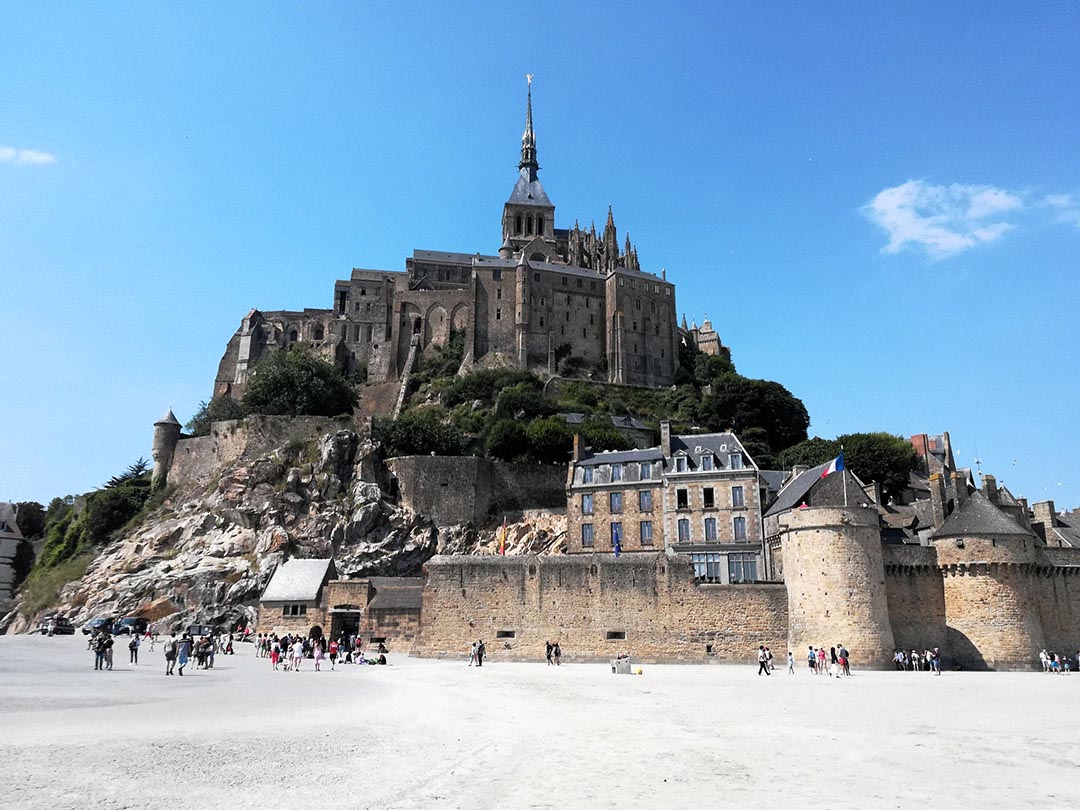
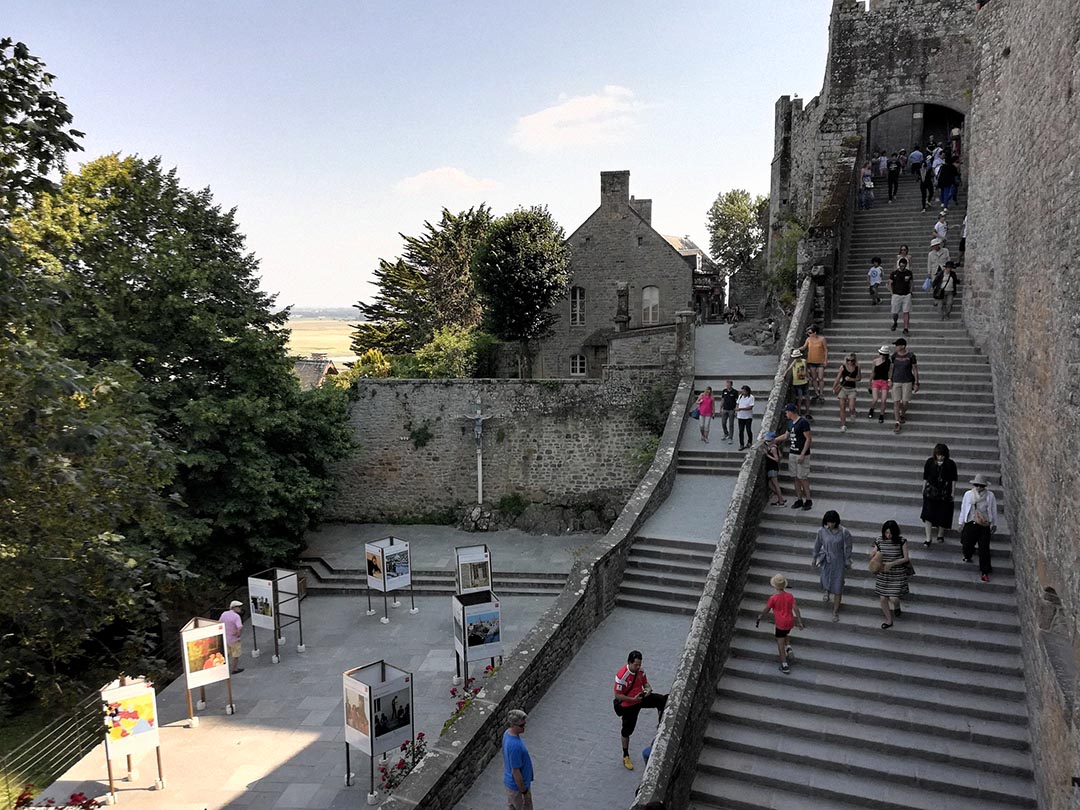
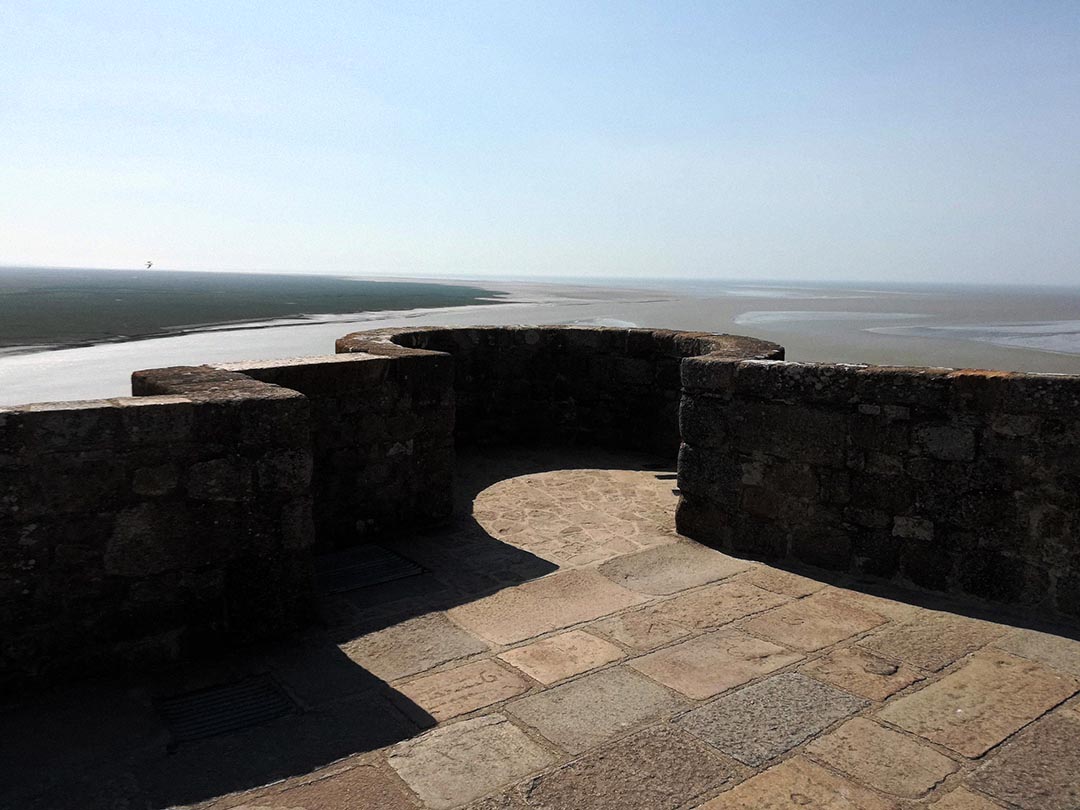
Mont-Saint-Michel rises from a granite tidal island off the coast of Normandy, surrounded by a vast bay where the difference between low and high tide can reach approximately 15 metres. Today it is one of France's most recognisable monuments, but its history combines religion, warfare, dangerous pilgrimage and more than two centuries of imprisonment. The abbey at its summit dominates a fortified village whose narrow streets and defensive walls developed around one of medieval Europe's most important shrines.
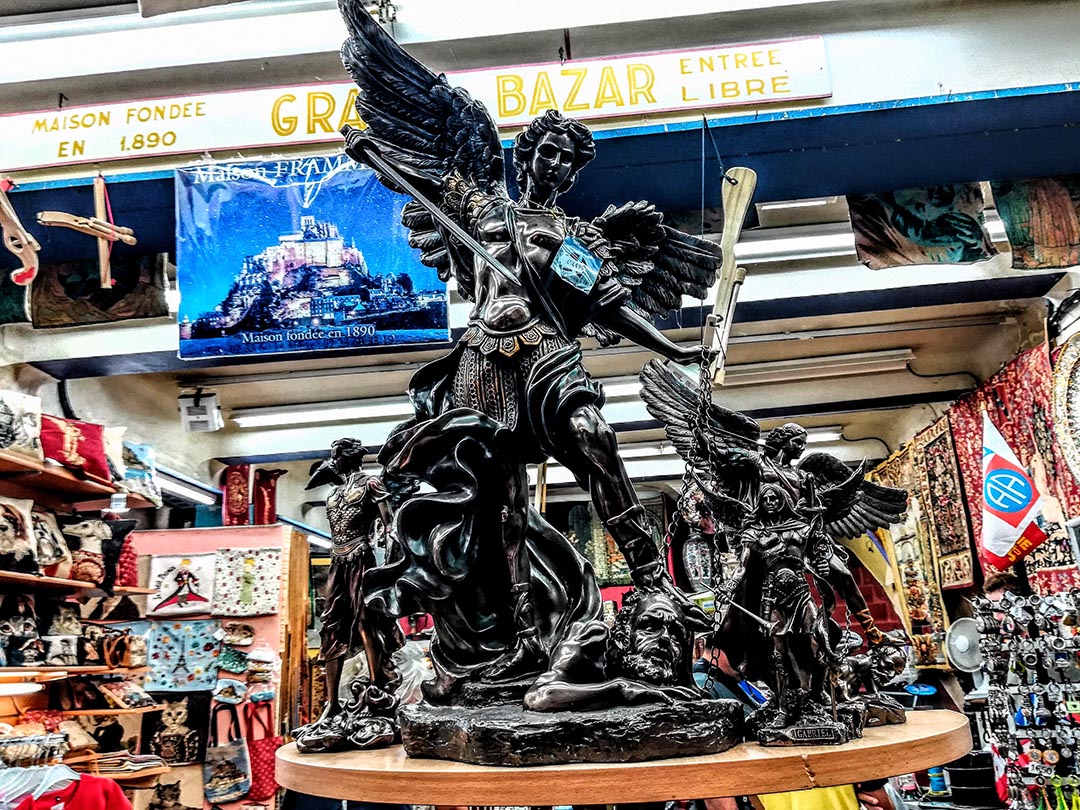
The story begins with a legend. In 708, Aubert, bishop of nearby Avranches, was said to have received repeated visions of the Archangel Michael ordering him to build a sanctuary on the rocky island then known as Mont-Tombe. According to the later version of the story, Aubert ignored the first two commands. On the third appearance, Michael pressed a finger into the bishop's skull hard enough to leave a hole, finally convincing him to obey.
A skull traditionally identified as that of Saint Aubert is still preserved in the Basilica of Saint-Gervais in Avranches, complete with a conspicuous perforation. Medieval monks interpreted the opening as the mark left by the archangel. Modern medical examination found a considerably less supernatural explanation – a benign epidermoid cyst – although carbon dating has placed the skull itself in the 8th century, making the relic unusual even if the miraculous explanation does not survive scrutiny.
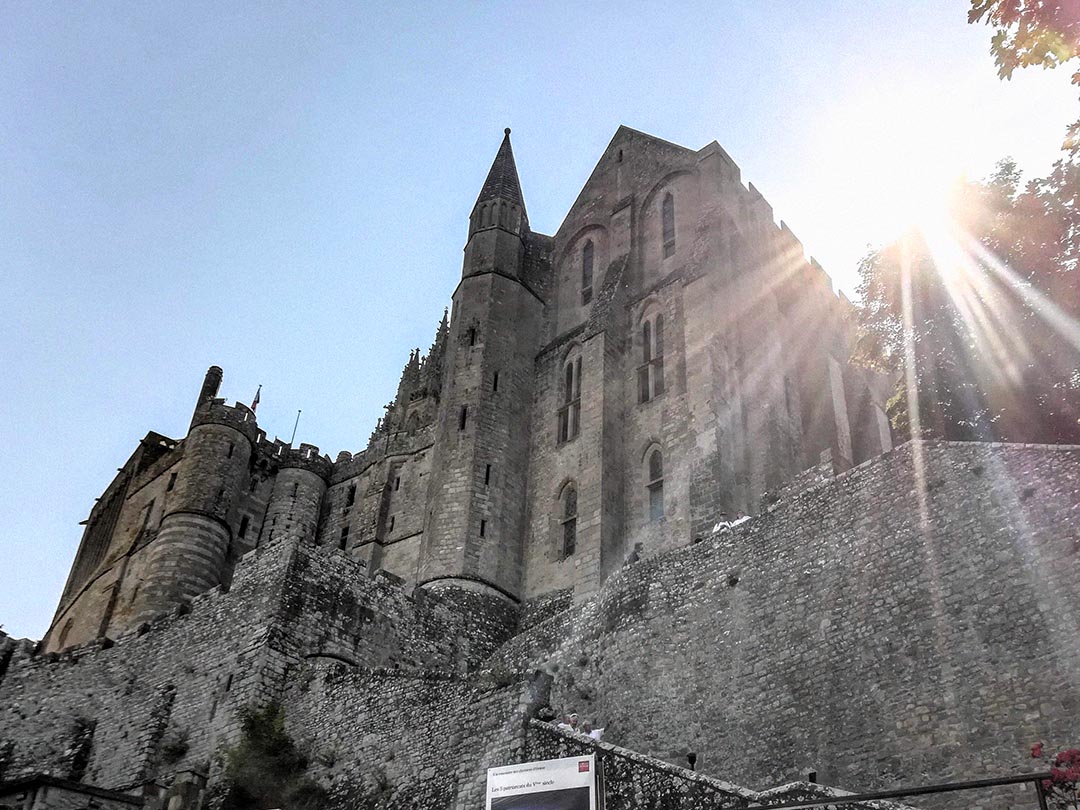
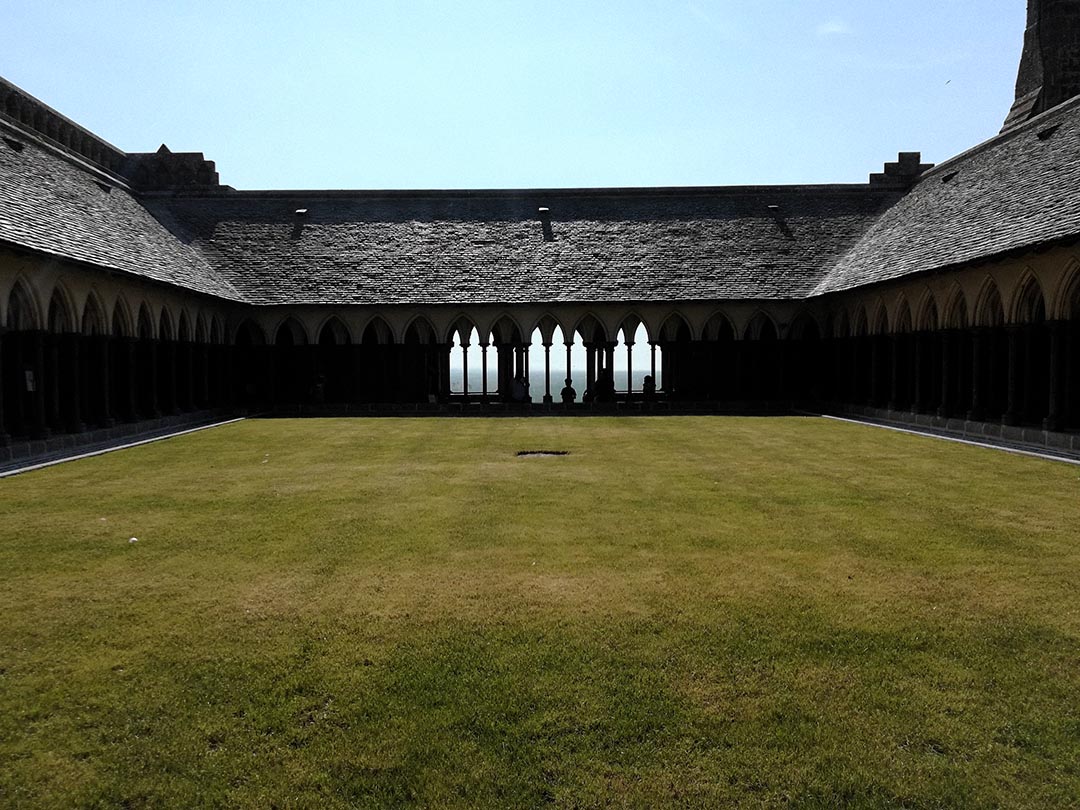
Benedictine monks settled on the Mont in 966, and construction of the great Romanesque abbey church began in the early 11th century. The restricted summit forced medieval builders to construct enormous crypts and supporting structures directly around the rock before raising the church above them. From 1204, the spectacular Gothic complex known as La Merveille was added on the northern side, containing the cloister, refectory and rooms used by monks and pilgrims.
Mont-Saint-Michel became one of the major pilgrimage destinations of medieval western Europe. Kings travelled there, but so did large numbers of ordinary pilgrims and even groups of children. Reaching the sanctuary could itself be dangerous. Before modern roads and bridges, visitors crossed kilometres of exposed sand during low tide, negotiating shifting channels, mud and areas of quicksand before the sea returned.
The danger was not simply part of later folklore. Medieval records preserve accounts of pilgrims drowning, becoming trapped in the sands or dying during crowded pilgrimages. The bay remains hazardous even today: strong tides, unstable river channels and genuine quicksand mean that organised crossings away from the modern causeway are officially recommended only with certified guides.
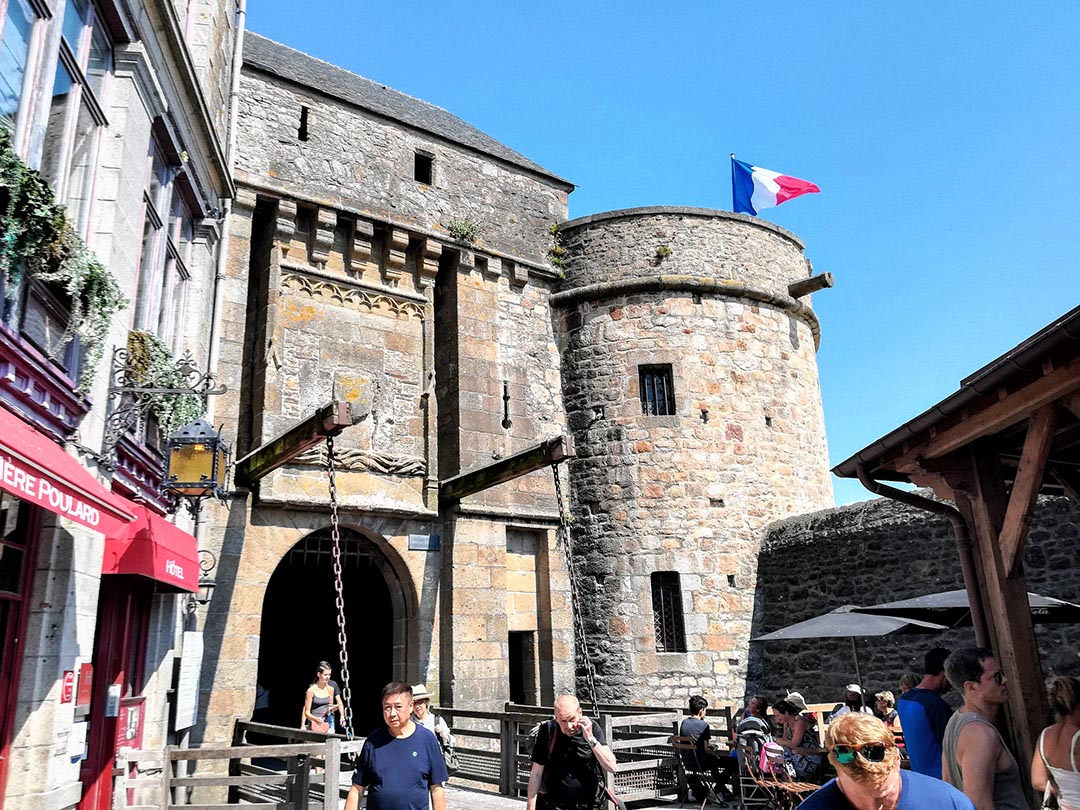
Religion did not prevent Mont-Saint-Michel from becoming a fortress. Its exposed position between Normandy and Brittany made it strategically important, and substantial ramparts and towers were constructed as warfare increasingly threatened the region. During the Hundred Years' War, most of Normandy fell under English control, but Mont-Saint-Michel remained French.
The English maintained pressure on the Mont for decades and used the nearby island of Tombelaine as a stronghold. In 1434, an assault reached the outer defences but was repelled. Mont-Saint-Michel was never conquered, and its survival became an important symbol of French resistance at a time when much of the surrounding territory had been lost.
The abbey's darker transformation began long before the French Revolution. By the 17th century, prisoners were already being sent to Mont-Saint-Michel under royal lettres de cachet, which allowed imprisonment by royal order without a conventional public trial. The isolated fortress acquired the nickname “Bastille des Mers” – the Bastille of the Seas. Monks still lived in the abbey, but increasing numbers of prisoners shared the same complex.
The French Revolution completed the transformation. Church property was nationalised, the remaining monks were expelled and in 1793 Mont-Saint-Michel became a prison for refractory priests who had refused to accept the revolutionary Civil Constitution of the Clergy. Several hundred priests were confined within buildings created for monastic life and pilgrimage.
Napoleon formalised the abbey's new function in 1811, converting it into a central house of detention and correction. Most inmates were ordinary criminal prisoners, but political opponents were also sent to the Mont. Among the best known were republican revolutionaries Armand Barbès and Auguste Blanqui, both opponents of the July Monarchy.
The prison could hold as many as 1,200 inmates at one time. Medieval halls, chapels and monastic buildings were subdivided and altered to accommodate cells, workshops and guards. Prisoners were expected to work for long hours in order to earn food and warm clothing, transforming parts of the former monastery into an industrial penal institution.
One of the most striking surviving objects from this period is the enormous wooden prisoner's wheel in the former monks' ossuary. Installed in the early 19th century, it operated as a human-powered hoist. Up to six prisoners could walk inside the wheel, turning it like an enormous treadmill to raise carts carrying food and other supplies up the steep side of the abbey. Fully loaded carts could weigh as much as two tonnes.
The physical isolation that had once made Mont-Saint-Michel attractive to monks and pilgrims also made it an effective prison. The fortress walls enclosed the prisoners, while the surrounding bay provided another barrier. Tides, mudflats and shifting channels made an unplanned crossing dangerous even for somebody who managed to escape the buildings themselves. Contemporary writers repeatedly remarked on the cruelty of imprisoning men within sight of an enormous open horizon they could not reach.
By the 19th century, the conversion had badly damaged the medieval complex. Floors had been inserted into large rooms, walls erected across ancient spaces and workshops installed within the abbey. Fires and heavy prison use further degraded the buildings. Yet the prison also had an unintended consequence: continued government use prevented the abandoned religious complex from simply being demolished for building materials after the Revolution.
Writers and preservationists increasingly campaigned against the prison during the 19th century. Victor Hugo, who visited in 1836, was particularly struck by the contradiction between the vast freedom of the surrounding sea and sky and the sight of prisoners behind barred windows. The prison finally closed by imperial decree in 1863. By then, approximately 14,000 prisoners had passed through Mont-Saint-Michel during its post-Revolutionary prison period.
The abbey was listed as a historic monument in 1874, beginning a long programme of restoration. Its appearance today is therefore not entirely medieval. Restoration campaigns repaired structures altered during the prison years, and the famous soaring spire crowned by a gilded statue of Saint Michael was completed only at the end of the 19th century. UNESCO added Mont-Saint-Michel and its bay to the World Heritage List in 1979.
Its history continues to attract film and television productions. Mont-Saint-Michel became the settlement known as the Nest in The Walking Dead: Daryl Dixon, with filming carried out at the actual site for the first two seasons. The production used the fortified island precisely because very few constructed sets could reproduce its combination of medieval architecture, isolation and vertical scale.
The Mont is also regularly connected with Minas Tirith from The Lord of the Rings, but the distinction is worth making carefully. There is no good evidence that J.R.R. Tolkien based his literary city on Mont-Saint-Michel. The resemblance belongs primarily to Peter Jackson's film adaptation, whose production design drew visual inspiration from the French tidal settlement among several other architectural influences.
Mont-Saint-Michel itself became a playable setting in Assassin's Creed: Brotherhood. Ubisoft added it as a multiplayer map in 2010, using the steep alleys, roofs, stairways and vertical architecture as part of the game's pursuit and assassination mechanics. The setting required less invention than might be expected: the real village already resembles the kind of layered fortified environment usually created specifically for a game.
Location: Located off the coast of Normandy, France.
Address: 50170 Mont Saint-Michel, France
Category: island, abbey, pilgrimage site, historical site, prison
Tags: Mont Saint-Michel, Normandy, tidal island, medieval abbey, France, games, filming location
Darkness Level: ☠ ☠ ☠ ☠ ☠
Homepage: ot-montsaintmichel.com
Map: Open in Google Maps
Gallery