Medieval Crime and Justice Museum
Rothenburg ob der Tauber , Germany
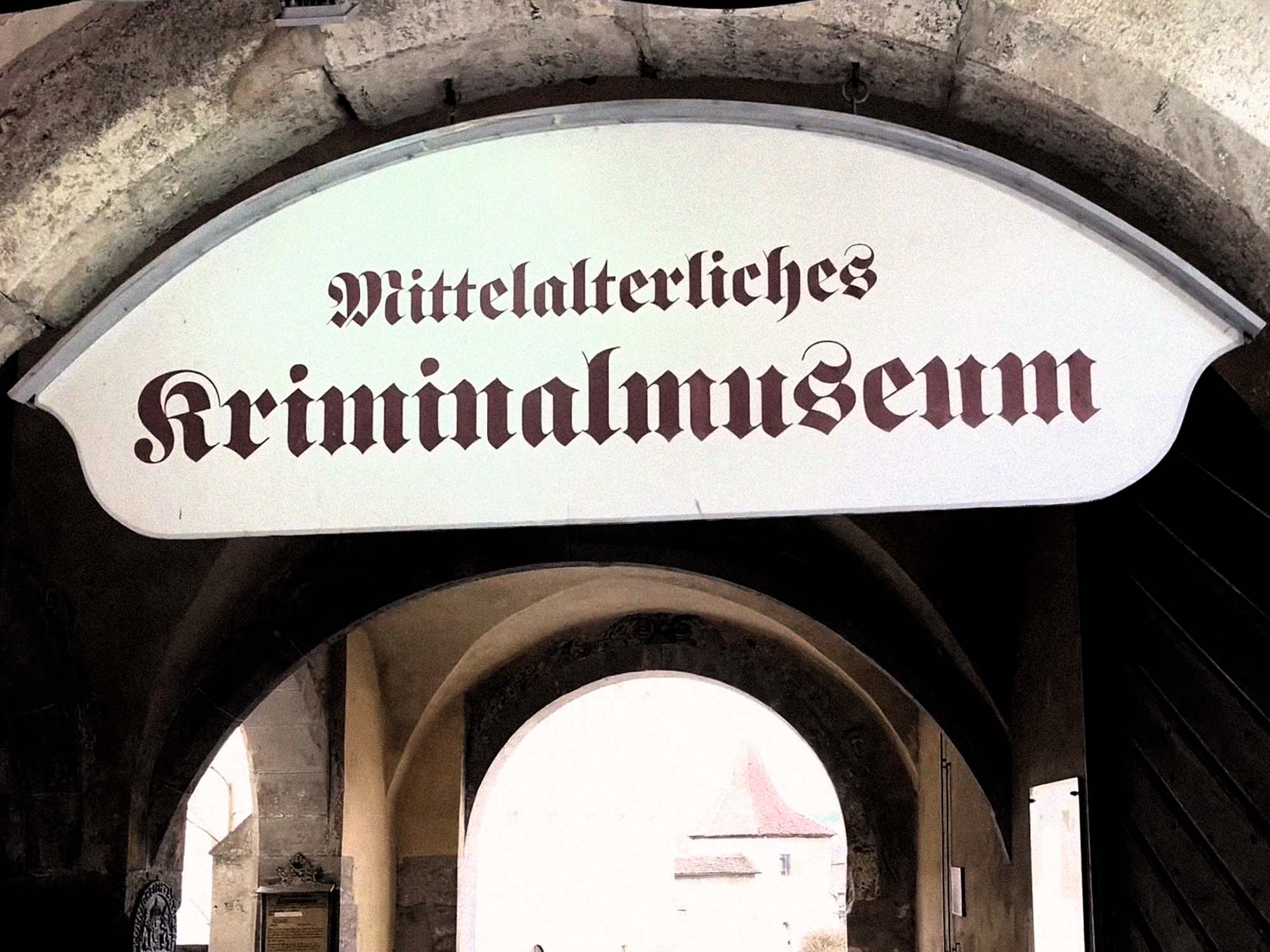
A major museum of European legal history in Rothenburg ob der Tauber, displaying instruments of torture and execution, shame masks, restraints, witch-trial material and documents illustrating more than a thousand years of crime, punishment and judicial practice.
Medieval Crime and Justice Museum, known in German as Mittelalterliches Kriminalmuseum, is located in the historic centre of Rothenburg ob der Tauber. Its collection comprises approximately 50,000 objects relating to more than one thousand years of German and European legal history. Although its name emphasises the medieval period, the exhibitions extend from early Germanic law through the Middle Ages and early modern period to the development of modern courts, policing and constitutional law.
The museum occupies the former Commandery of the Knights Hospitaller of St John, constructed between 1393 and 1410 together with the neighbouring St John’s Church. The building was remodelled in the Baroque style in 1718. Following secularisation in the early 19th century, it became government property and was used by Bavarian district authorities. The museum moved into the restored commandery in 1977.
The collection originated with publisher and archivist Karl Albrecht, who assembled a private group of legal and punishment-related objects around the end of the 19th and beginning of the 20th centuries. These were displayed as the Rothenburg Torture Chamber in a tower belonging to a hotel on Klostergasse. Artists Ernst Paul Hinckeldey and Marta Hinckeldey-Wittke later acquired and expanded the collection. Their son Christoph Hinckeldey and his wife Hildegard developed it into a broader museum of law and justice. In 1993, the principal building and parts of the collection were transferred to a public-law foundation.
The permanent exhibition follows the progress of a historical criminal case from accusation and investigation to judgement and punishment. The vaulted cellar covers the collection of evidence, interrogation and the regulated use of torture under the inquisitorial system. Displays include restraints and instruments associated with extracting confessions, accompanied by explanations of the legal conditions under which torture could be ordered and the gradual process through which it was abolished.
Other sections examine corporal punishment, execution and the public humiliation of offenders. The collection includes executioners’ equipment, punishment devices and shame masks designed to ridicule people accused of offences such as gossiping, drunkenness, dishonesty or disruptive behaviour. Public punishments were intended not only to penalise the offender but also to damage social standing and present a warning to the surrounding community.
One of the museum’s best-known exhibits is the Iron Maiden of Nuremberg. The museum uses it to address misconceptions about medieval torture. There is no reliable evidence that iron maidens lined with spikes were used as medieval torture or execution devices. The spikes in the Nuremberg example were added later, and the object developed into a supposed torture machine through 19th-century exhibition culture, sensational literature and later horror imagery. It is therefore displayed as evidence of how myths about historical punishment can become accepted as fact.
The museum also holds an important collection concerning witchcraft accusations and witch trials. Books, legal documents, illustrations and trial material examine the development of belief in sorcery and the large-scale persecutions of the 16th and 17th centuries. The displays clarify that the major European witch hunts largely belonged to the early modern period rather than the Middle Ages. They also cover witch trials in Franconia and Rothenburg, the roles of secular and religious authorities and the legal procedures that allowed accusations to develop into imprisonment, torture and execution.
The collection extends beyond violent punishment. Separate sections examine marriage, sexual conduct, women before the law, guild regulations, religious and imperial law, school discipline, policing, passports, superstition and unusual criminal cases. The museum also covers historical trials involving animals, reflecting periods when animals could formally be accused, prosecuted and punished within European legal systems.
The neighbouring St John’s Barn, donated to the museum foundation by the town, was restored during the 1990s and is used for temporary exhibitions, conferences and educational programmes. Together with the main building, it forms one of Europe’s largest museums devoted specifically to the history of crime, punishment and law.
Location: On Burggasse in Rothenburg’s historic old town, beside St John’s Church.
Address: Burggasse 3–5, 91541 Rothenburg ob der Tauber, Germany
Category: museum
Tags: crime and punishment, legal history, torture, executions, corporal punishment, public humiliation, shame masks, witch trials, executioners, Iron Maiden
Darkness Level: ☠ ☠ ☠ ☠ ☠ ☠ ☠ ☠
Homepage: kriminalmuseum.eu
Map: Open in Google Maps
Gallery