Ludlow Castle
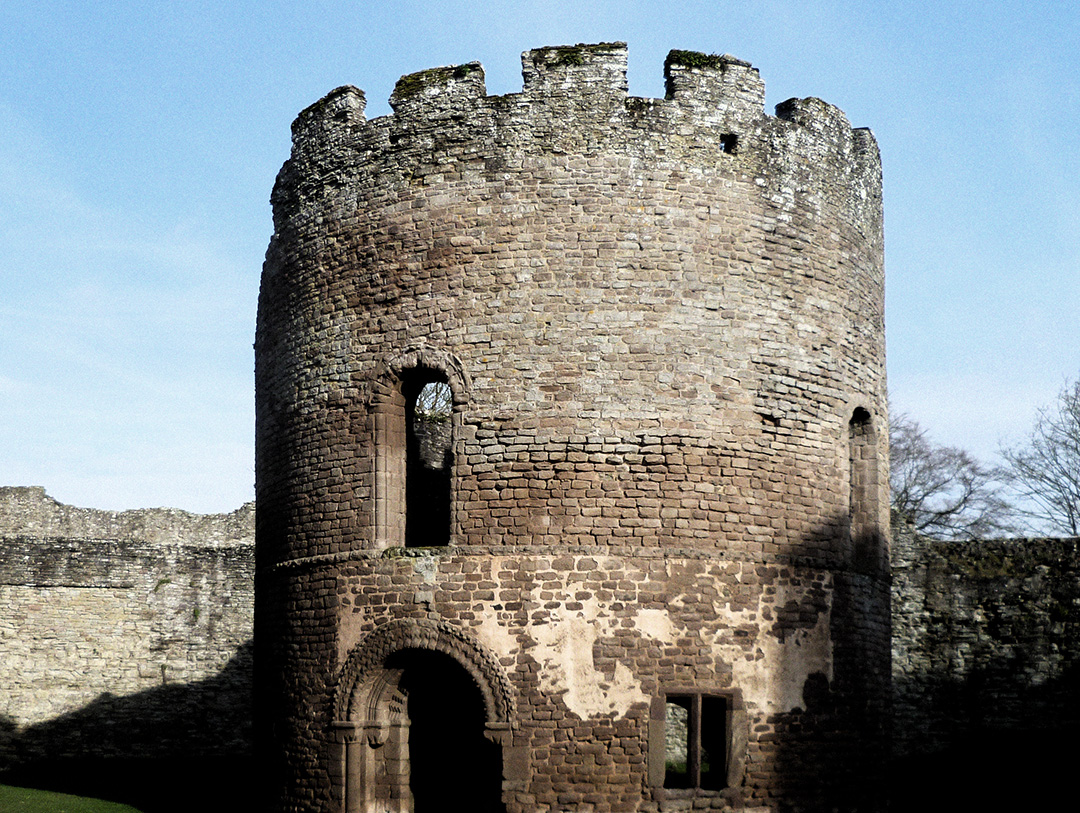
A major medieval castle ruin in Ludlow, built as a Marcher stronghold and later used as an administrative and judicial centre, with a long history linked to conflict, imprisonment, and local ghost folklore.
Ludlow Castle is a large medieval fortress overlooking the town of Ludlow in Shropshire. It originated in the late 11th century as part of the Marches castle system established after the Norman Conquest, intended to secure control along the Welsh border. The site expanded over centuries into a substantial fortified complex with an inner and outer bailey, strong gatehouses, towers, a great hall, and domestic ranges. Its position and scale reflect long-term strategic importance during periods of border conflict and internal political instability.
From the late 15th century the castle’s role shifted towards administration and law. Ludlow became the seat of the Council of the Marches of Wales, a body that exercised governing and judicial authority over Wales and the border counties. This period reinforced the castle’s function as an institutional centre, with spaces used for official residence, record-keeping, and legal process. Elements of detention and punishment were also part of the site’s practical history, consistent with its role as a seat of authority.
After the abolition of the Council in the late 17th century, the castle declined and gradually became a ruin. It is now maintained as a visitor site, with surviving masonry and exposed interiors that document centuries of military architecture, government use, and the logistical realities of power exercised from a fortified complex.
The castle is associated with a widely repeated ghost tradition known as the White Lady, commonly identified in local lore as Marion de la Bruyere. In the best-known version of the story, set during the 12th century, Marion is described as a woman living within the castle household who falls in love with a knight named Arnold de Lys (also recorded in variants as de Lisle). The knight is portrayed as aligned with forces hostile to the castle’s lord, and Marion is said to have secretly admitted him at night by lowering a rope from the battlements or a window. The legend’s central event occurs when the rope is left hanging, allowing armed men to climb into the castle and seize it. In some versions, the entry results in killings within the fortress. The story ends with Marion realising the betrayal, killing her lover with his own sword, and then leaping to her death from the castle. They say in Ludlow, that Marion's ghostly figure might still be seen in the ruins at dusk. And on the anniversary of her suicide, you can still hear her scream as she plummets to her death.
Location: Overlooking the town centre of Ludlow, on a promontory above the River Teme.
Address: Ludlow Castle, Castle Square, Ludlow SY8 1AY, England
Category: castle, ruins, museum, historical site
Tags: castle, ruins, medieval, fortress, Welsh Marches, Council of the Marches, court, prison, ghost lore, White Lady
Darkness Level: ☠ ☠ ☠ ☠ ☠ ☠ ☠ ☠
Homepage: ludlowcastle.com
Map: Open in Google Maps
Gallery