Littledean Jail
A Grade II*-listed former House of Correction dating from 1791, now housing an extensive private museum collection devoted to crime, punishment, serial killers, executions, witchcraft, the occult and other controversial subjects.
Littledean Jail is a former House of Correction in the village of Littledean, near the Forest of Dean. It was built between 1788 and 1791 as part of a wider programme of prison reform led by Gloucestershire magistrate Sir George Onesiphorus Paul. The building was designed by the prison architect William Blackburn and completed under William Hobson following Blackburn’s death. It was one of four new Houses of Correction established in Gloucestershire during this period and is considered the best-preserved example of the group.
The institution was intended primarily for people serving short sentences, prisoners awaiting trial and those convicted of relatively minor offences. Men, women and children were all confined there. The original reforming system provided each prisoner with two cells: one for sleeping and another for work during the day. The cells were designed with extensive ventilation, although the shuttered windows initially had no glass. The first recorded prisoner was nineteen-year-old labourer Joseph Marshall, admitted on 18 November 1791 and sentenced to three months for stealing a spade.
The original principles of separation and controlled labour gradually deteriorated as prisoner numbers increased. By around 1820, inmates generally had only one cell each. A treadwheel was installed in 1840 for male prisoners and boys over the age of fourteen. Up to seven prisoners could be placed on it simultaneously, working for as long as nine hours a day during summer and six hours during winter. Major alterations in 1844 included enlarging the ground-floor cells, relocating the chapel and adding an upper floor to the rear section for an infirmary. Several original cell doors, barred corridors, iron grilles and wooden sleeping platforms remain within the building.
Littledean ceased operating as a House of Correction in 1854, although people awaiting trial continued to be held in its cells. The building was subsequently used as a police station, headquarters for the county’s mounted police and, from 1874, a petty sessions court. During the Second World War it served as an air-raid precautions centre and as secure storage for archives from Gloucestershire. The police station closed in 1972, while the final court session was held on 24 October 1985. The building was then used by the Ecclesiastical Insurance Group as an archive, computer facility and disaster-recovery centre.
The former courtroom is associated with the unusual prosecution of Ellen Hayward, a herbalist and local wise woman known as Old Ellen. In 1906 she appeared before the Littledean magistrates under legislation that criminalised pretending to exercise witchcraft. Hayward conducted her own defence and was supported by local people who testified to her work as a healer. The magistrates dismissed the case. She is often described as the last woman in Gloucestershire to have faced a charge involving witchcraft.
The property was purchased by collector Andy Jones in 2003 and subsequently opened to visitors as the home of the Crime Through Time Collection. The museum occupies former cells, corridors and other parts of the historic prison. Its displays cover capital punishment, policing, prisons, organised crime, serial killers, terrorism, wartime atrocities, political extremism, witchcraft, paganism, occult traditions and horror-related popular culture.
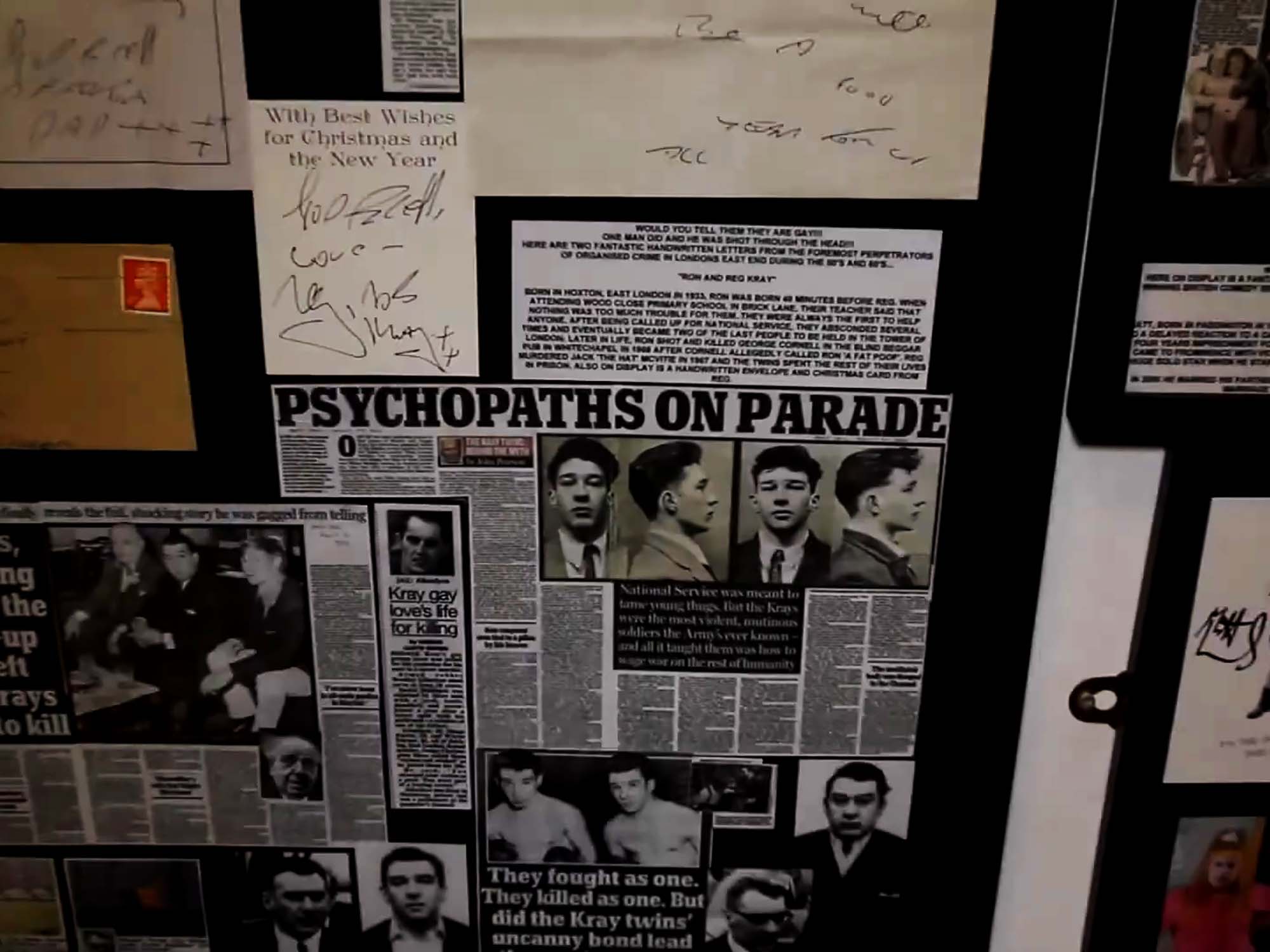
Among the objects presented by the museum are execution equipment and restraints, police uniforms and weapons, prison artefacts and material connected with British murder cases. The collection includes objects attributed to serial killers Fred and Rose West, who committed murders in nearby Gloucester, as well as a noose presented as the one used during the failed execution of John “Babbacombe” Lee in 1885. Other sections contain human remains, murderabilia, Nazi and fascist material, occult objects, ceremonial items and displays relating to historical executioners. Much of this material belongs to the privately assembled museum collection and has no direct connection with prisoners formerly held at Littledean.
The museum also contains collections devoted to Quadrophenia, the Mods and Rockers subculture and British punk. These sit alongside true-crime and occult exhibits, giving the museum a broader focus than the history of the jail itself. Some displays contain graphic imagery, human remains, extremist symbols and material connected with violent crimes, and the museum warns that the attraction may not be suitable for children or visitors of a sensitive disposition.
Littledean Jail was used as a principal filming location for the British horror film House of Whipcord, released in 1974. The film used both the exterior and interior as a privately operated prison in which young women are subjected to corporal and capital punishment. The surviving cells and institutional architecture remain recognisable in the film.
Location: On Church Street in the village of Littledean, near the Forest of Dean.
Address: Church Street, Littledean, Cinderford GL14 3NL, England
Category: museum, prison
Tags: true crime, murderabilia, serial killers, capital punishment, execution, human remains, witchcraft, occult, oddities, prison history, police history, treadwheel, House of Whipcord
Darkness Level: ☠ ☠ ☠ ☠ ☠ ☠ ☠ ☠ ☠
Homepage: littledeanjail.com
Map: Open in Google Maps
Gallery