Jack the Ripper Museum
A true-crime museum in London’s East End devoted to the unsolved Whitechapel murders of 1888, using reconstructed crime scenes, Victorian interiors, police material, autopsy photographs and original objects connected with the investigation.
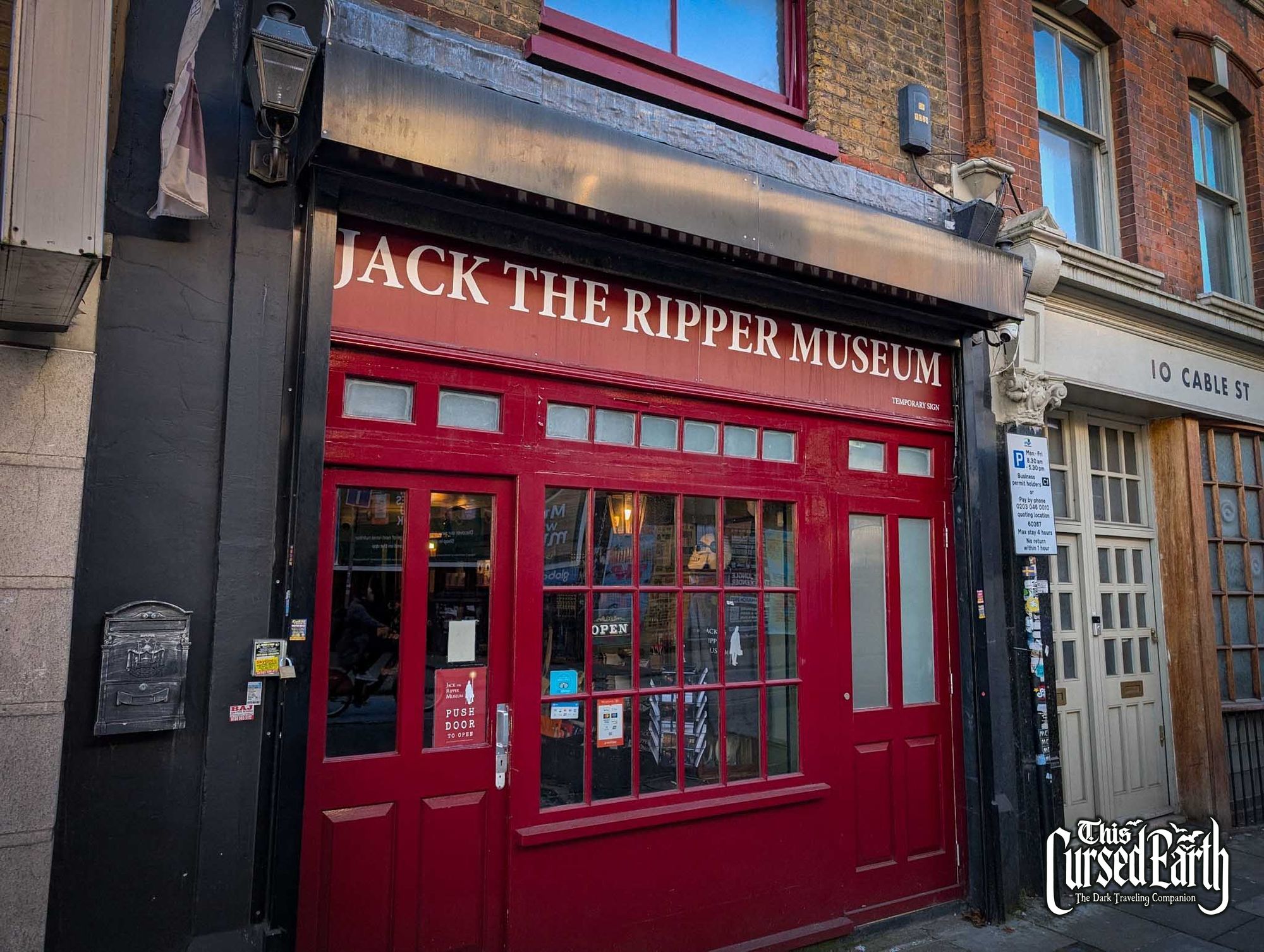
Jack the Ripper Museum is a privately operated museum at 12 Cable Street in London’s East End. It opened in August 2015 and examines the series of murders traditionally associated with the unidentified killer known as Jack the Ripper. The principal crimes took place in Whitechapel, Spitalfields and the City of London during 1888. The museum building itself was not connected with the murders and should be understood as an exhibition space rather than a surviving crime scene.
The museum’s Cable Street location do have a genuine connections with people involved in the Whitechapel murders, although not with the building itself. Two blue plaques mounted on the façade commemorate these associations. One is dedicated to George Chapman, born Seweryn Kłosowski, and describes him as “The Cable Street Dandy” and a Jack the Ripper suspect. Chapman operated a barber’s shop at 126 Cable Street and is listed at that address in an 1889 London directory, making it probable that he was living and working on the street during at least part of the Ripper murders in 1888. He later became a convicted serial murderer, poisoning three women, and was hanged in 1903. His possible involvement in the Whitechapel murders has been debated for more than a century, but no evidence has established him as Jack the Ripper.
The second plaque commemorates Elizabeth Stride, murdered in Dutfield’s Yard off Berner Street during the early hours of 30 September 1888. At approximately 4:30 that morning, her body was taken to the St George-in-the-East Mortuary, situated in the churchyard of St George in the East close to Cable Street. Her post-mortem examination was subsequently conducted there by doctors George Bagster Phillips and Frederick Blackwell, and the jury examining her death also viewed her body at the mortuary. The surviving former mortuary building remains in St George’s Gardens a short distance east of the museum.
The museum concentrates particularly on the five women generally described by historians of the case as the canonical five: Mary Ann Nichols, Annie Chapman, Elizabeth Stride, Catherine Eddowes and Mary Jane Kelly. They were murdered between 31 August and 9 November 1888. Their deaths formed part of the wider Whitechapel murder investigation, which included additional killings whose relationship to the same murderer remains uncertain. No person was ever convicted of the canonical murders, and the identity of Jack the Ripper has never been conclusively established.
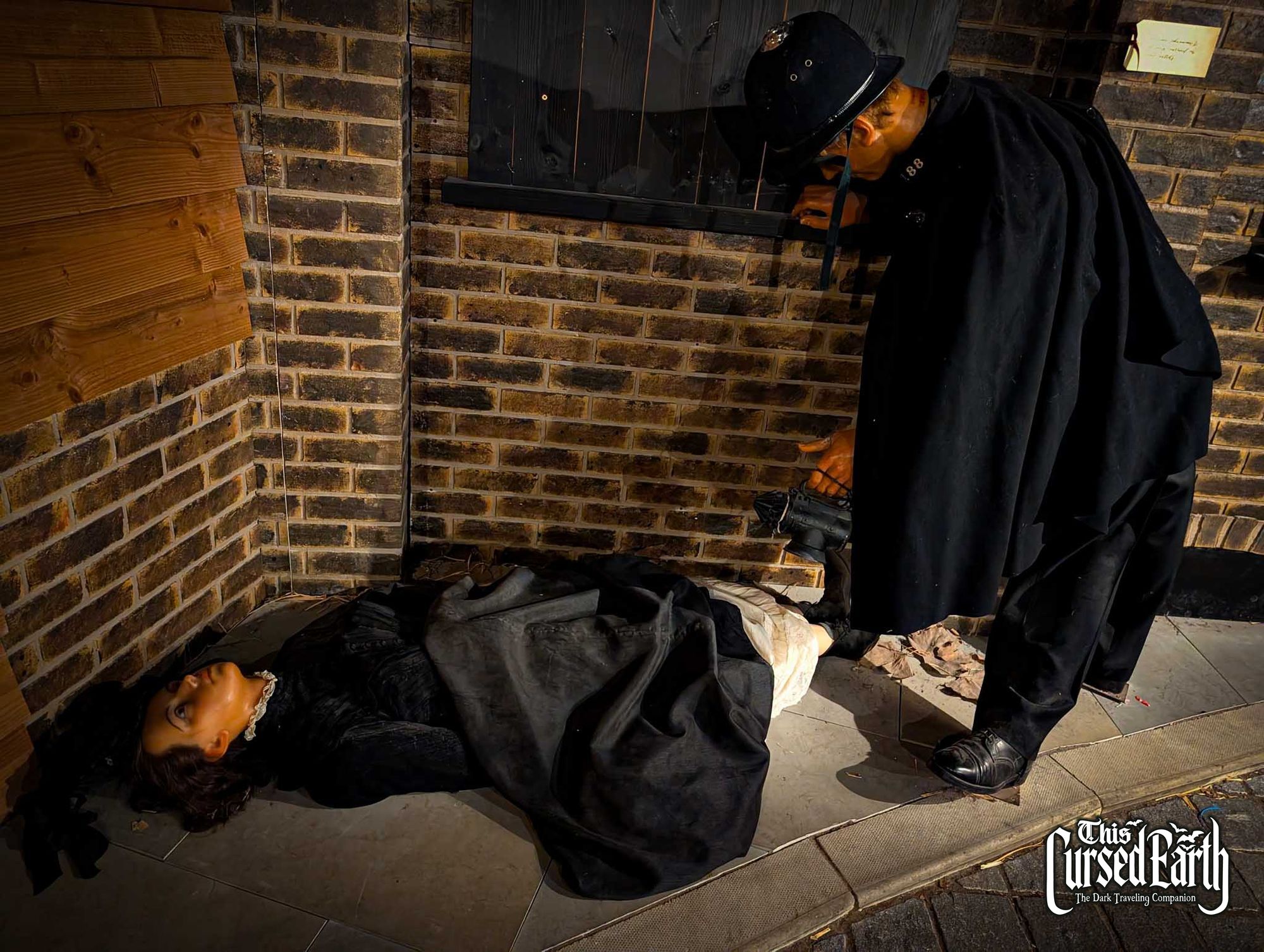
The exhibition is arranged across several floors, with each level recreating a different aspect of the investigation and Victorian East End. One major installation represents Mitre Square, where Catherine Eddowes was murdered during the early hours of 30 September 1888. A life-sized figure of City of London Police constable Edward Watkins is shown discovering her body during his regular patrol. Eddowes had been killed less than an hour after Elizabeth Stride was found dead in Dutfield’s Yard, resulting in the night becoming known as the Double Event.
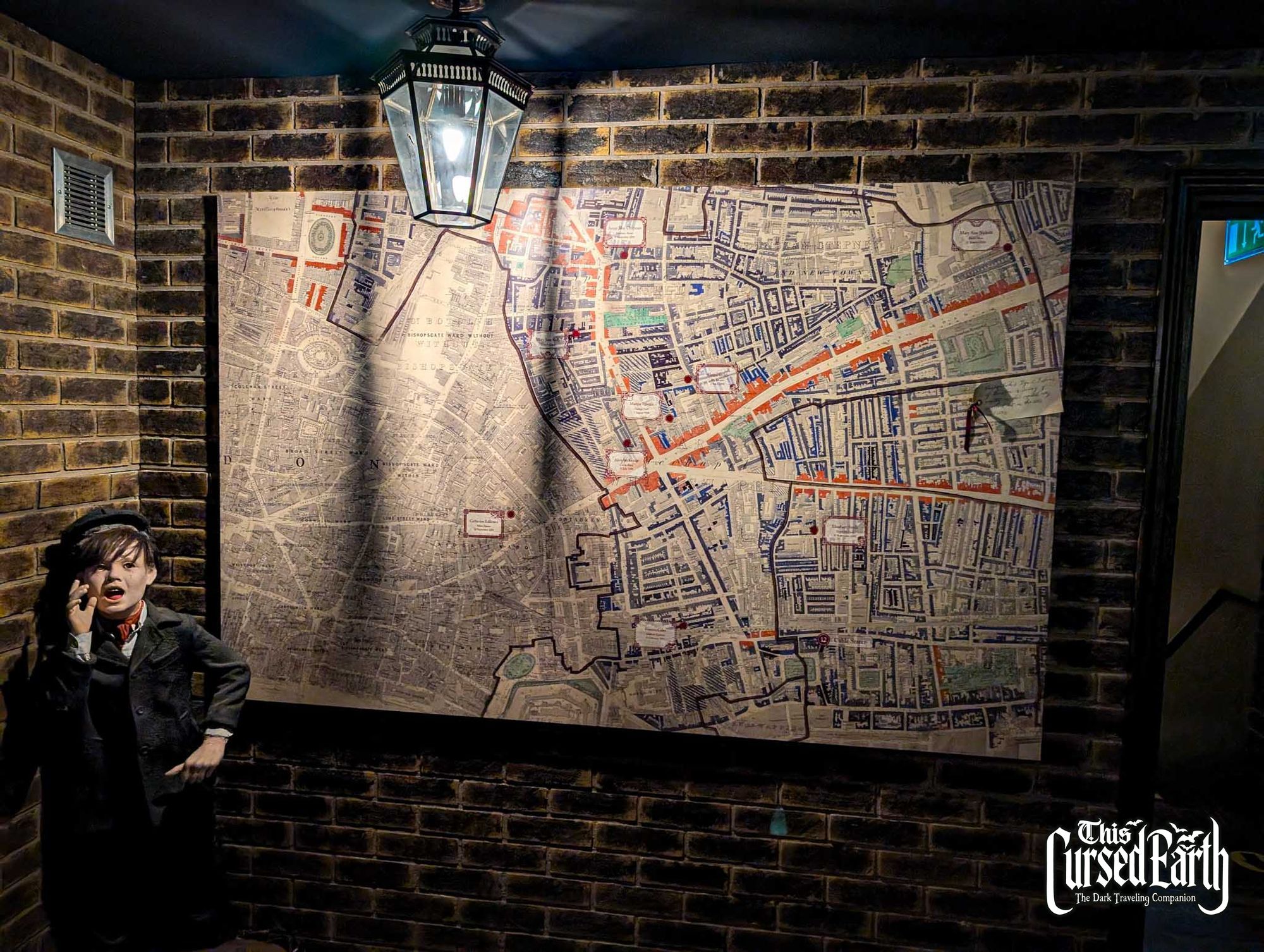
The police section recreates the atmosphere of Leman Street Police Station, one of the principal stations involved in the Whitechapel murder investigation. Maps, newspaper reports and displays examine the detectives, witnesses and numerous suspects proposed during and after the investigation. Among the museum’s most important original objects are items belonging to PC Edward Watkins, including the whistle he used to summon assistance after finding Catherine Eddowes, together with his truncheon and notebook case.
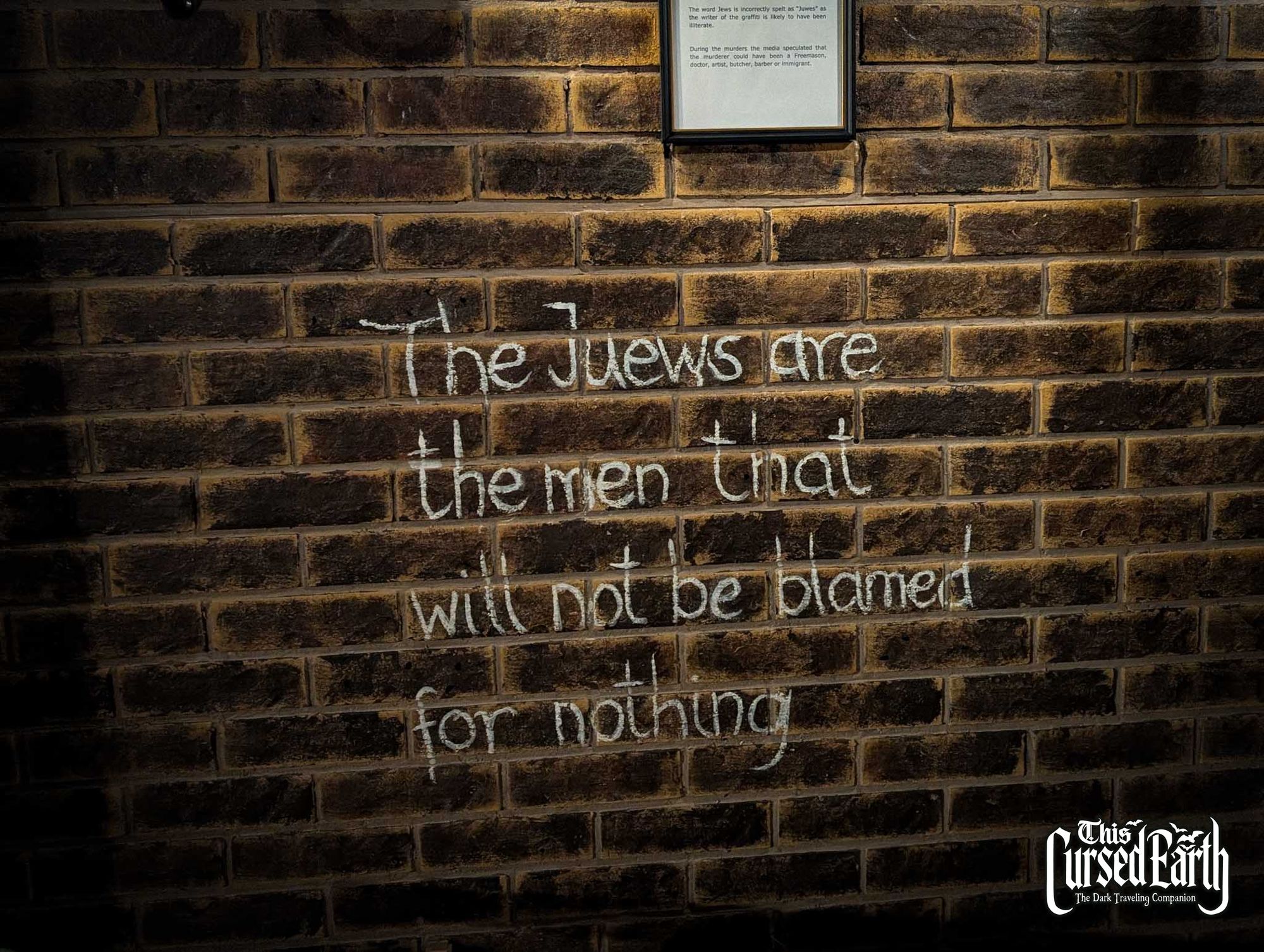
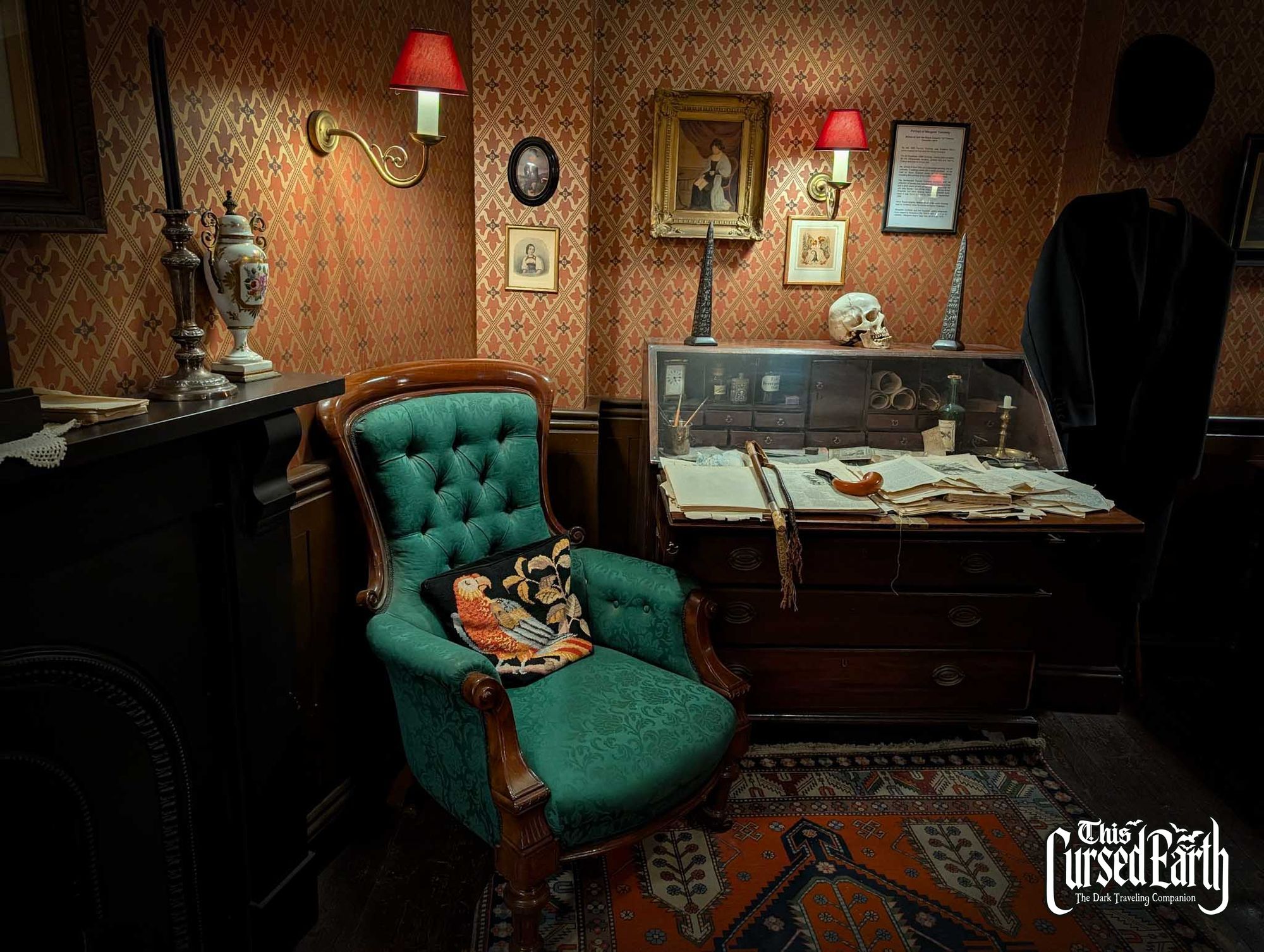
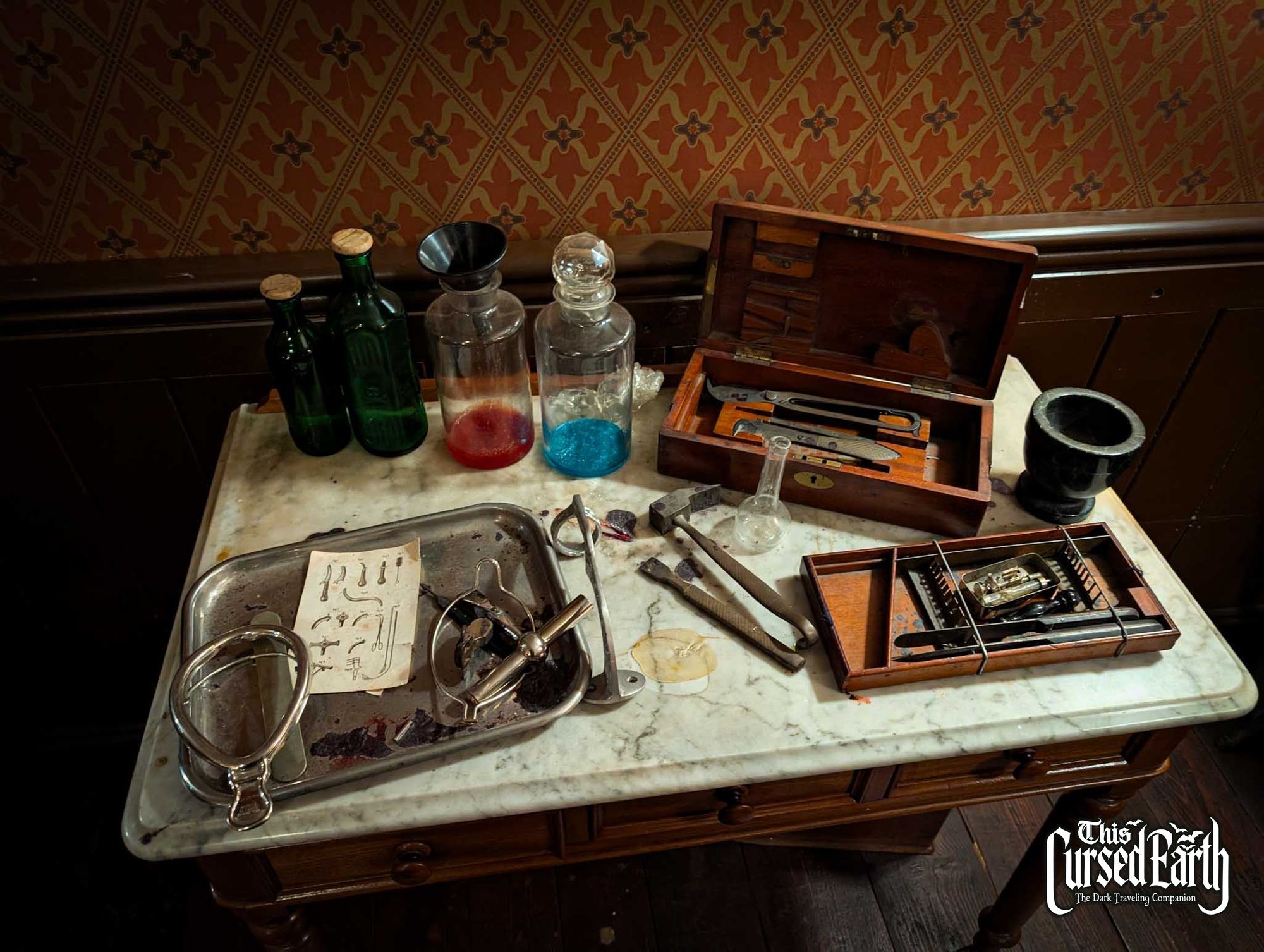
Another floor presents an imagined sitting room belonging to Jack the Ripper. This is deliberately speculative: because the murderer was never identified, there is no known Ripper residence that could be reconstructed accurately. The room instead brings together objects and imagery based on theories surrounding the killer, including medical instruments, knives, contemporary newspapers, correspondence attributed or allegedly connected to the murderer and references to suspects proposed over the following decades. It therefore represents the mythology and investigation surrounding Jack the Ripper rather than a documented historical interior.
A further reconstruction represents the modest living conditions experienced by women in the East End and includes a room based on the accommodation of Mary Jane Kelly. Kelly was murdered in her room at 13 Miller’s Court, off Dorset Street, on 9 November 1888. Unlike the other canonical victims, whose bodies were discovered outdoors, Kelly was killed inside her lodgings. Her murder involved extensive mutilation and became the final killing generally included among the canonical five.
The basement is arranged as a Victorian mortuary. Displays contain medical reports and surviving post-mortem and crime-scene photographs connected with the Whitechapel murders. The section commemorates Nichols, Chapman, Stride, Eddowes and Kelly while also discussing other women associated with the wider series, including Emma Elizabeth Smith, Alice McKenzie and Frances Coles. Some of the historical photographs are graphic and show the actual injuries suffered by the victims.
The museum also displays an original sign from the Ten Bells, the historic pub on Commercial Street opposite Christ Church Spitalfields. The Ten Bells has long been associated with the Jack the Ripper story because several of the murdered women lived, drank or worked in the surrounding streets, although later claims about particular victims regularly drinking there are not always supported by contemporary evidence. The pub nevertheless became one of the most recognisable surviving locations associated with Ripper tourism in the East End.
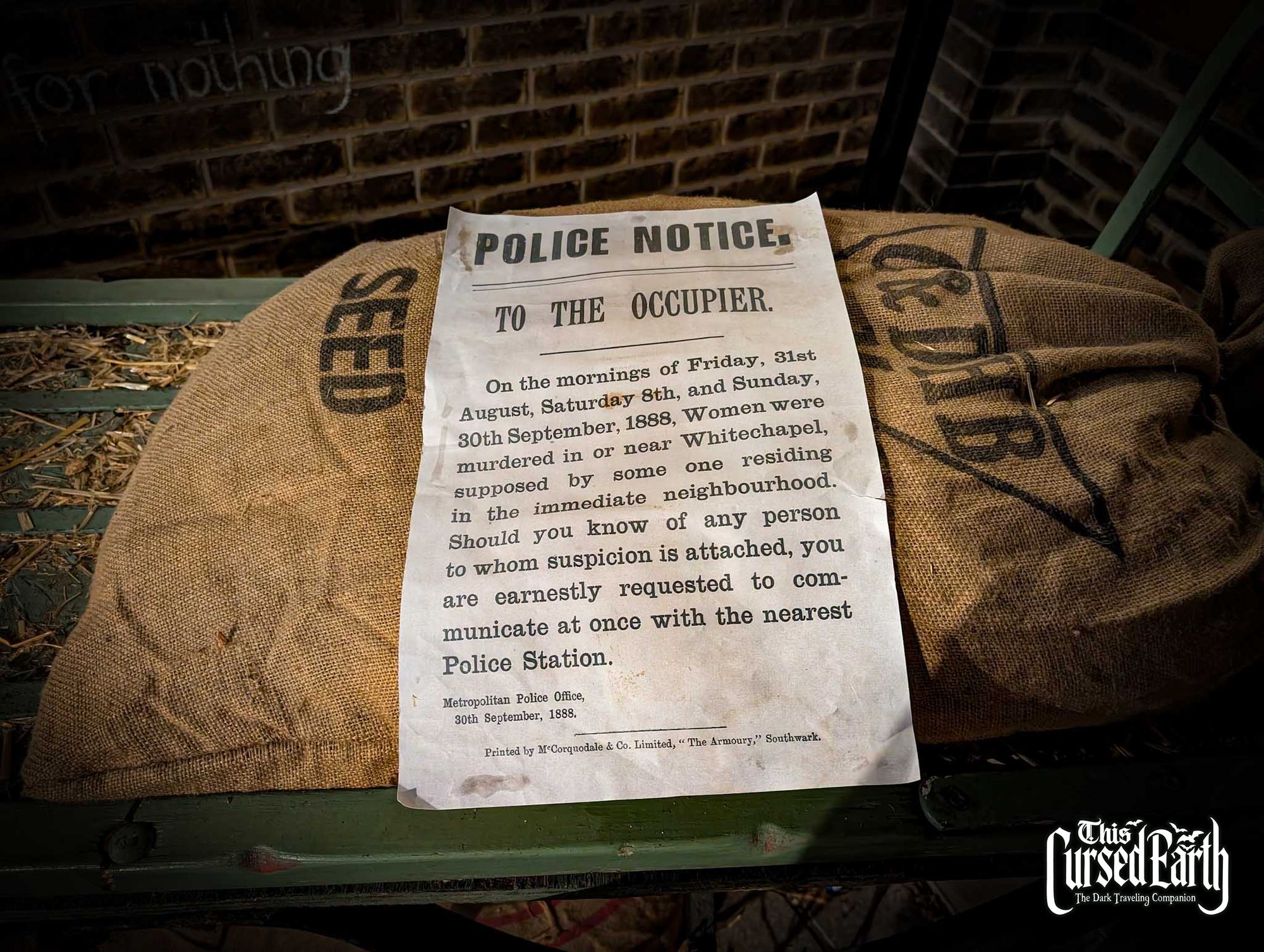
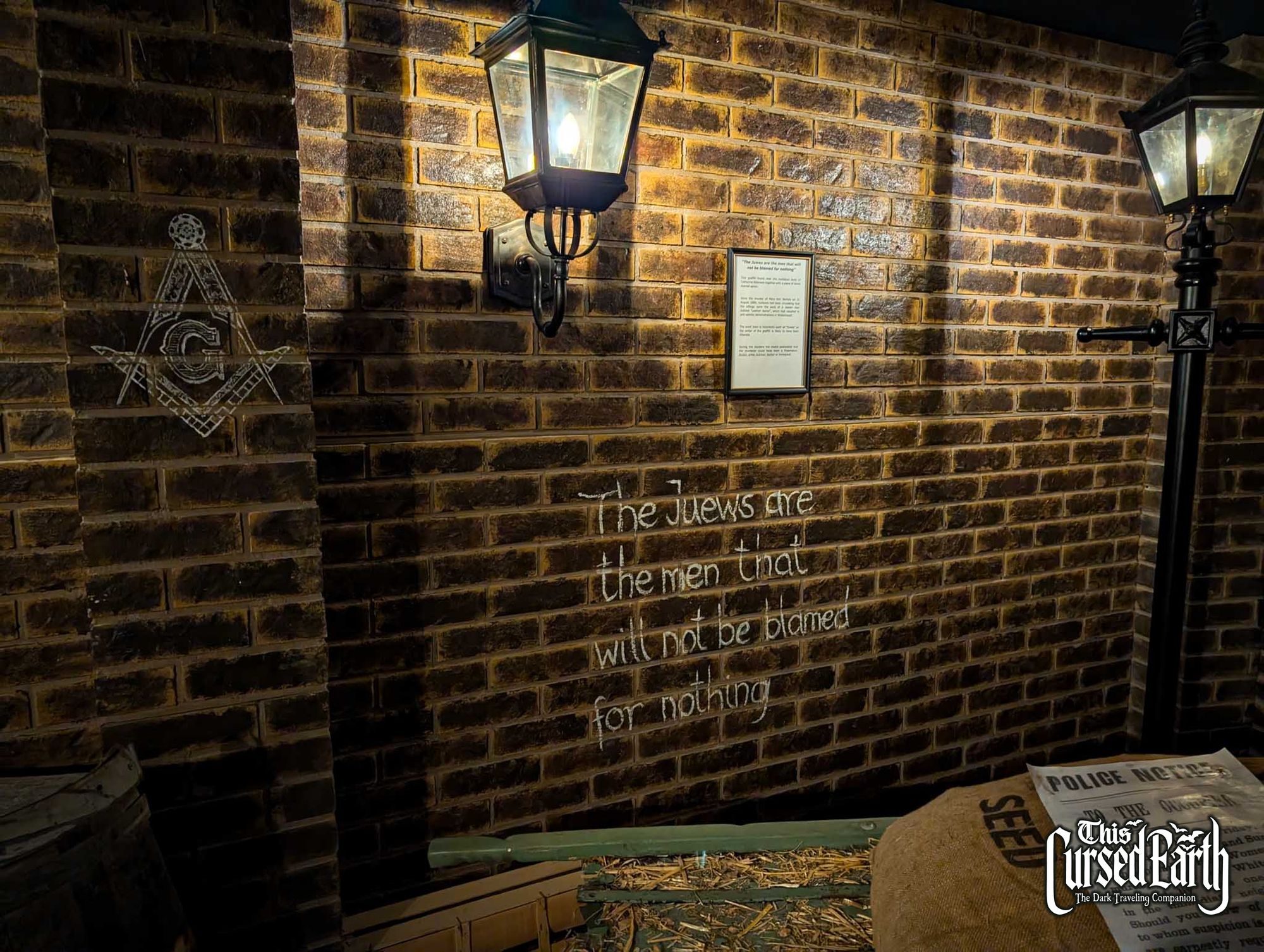
Newspaper reporting forms an important part of the exhibition. The Whitechapel murders coincided with the rapid growth of inexpensive mass-circulation newspapers, and sensational coverage helped transform an unidentified murderer into the figure known as Jack the Ripper. Reproductions of contemporary reports and illustrations are displayed throughout the stairways, together with the names, ages and murder locations of the victims. The museum also discusses famous letters sent to newspapers and police, including correspondence signed with the name Jack the Ripper. Most such letters are generally considered hoaxes, and none has been conclusively demonstrated to have been written by the murderer.
The museum itself has a controversial history. The planning application submitted for the Cable Street property in 2014 described a proposed Museum of Women’s History intended to examine the social and political history of women in London’s East End. When the building was unveiled in 2015, local residents and the architects involved discovered that it had instead become the Jack the Ripper Museum. The change resulted in protests and criticism from local campaigners, historians and women’s organisations. Founder Mark Palmer-Edgecumbe stated that the concept had developed towards telling the Ripper story from the perspective of the murdered women, while Tower Hamlets Council said that the information supplied during the planning process had presented the project as a museum of women’s history.
The museum continues to operate as a self-guided attraction, with an optional audio guide and organised walking tours of locations connected with the Whitechapel murders. Its displays combine genuine historical material with reconstructed environments and deliberately speculative sections, allowing the documented police investigation, the lives of the victims and more than a century of theories surrounding Jack the Ripper to be presented within the same exhibition.
Location: On Cable Street in London’s East End, south of Aldgate and Whitechapel.
Address: 12 Cable Street, London E1 8JG, England
Category: museum
Tags: Jack the Ripper, Whitechapel murders, true crime, serial murder, Victorian crime, murder victims, police history, autopsy photographs, crime scene reconstruction, canonical five
Darkness Level: ☠ ☠ ☠ ☠ ☠ ☠ ☠ ☠ ☠ ☠
Homepage: jacktherippermuseum.com
Map: Open in Google Maps
Gallery