Horsens State Prison
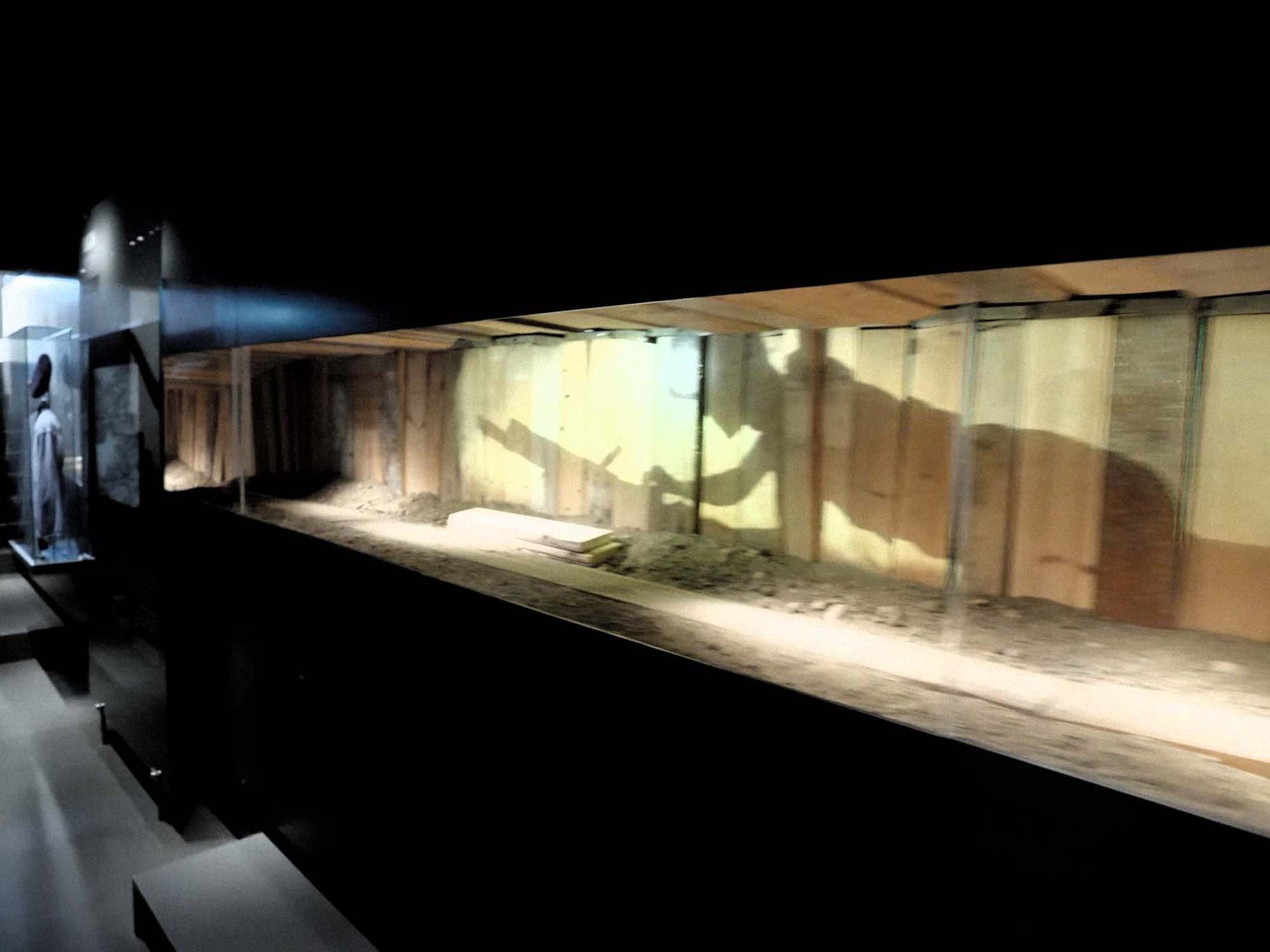
A former Danish state penitentiary that operated from 1853 to 2006, now preserved as a major prison museum with original cell blocks, punishment areas, an execution site and the reconstructed escape tunnel used by Carl August Lorentzen in 1949.
Horsens State Prison (Horsens Statsfængsel), originally known as Horsens Straffeanstalt, opened in 1853 as a penitentiary for prisoners serving long sentences. Work formed an important part of the original prison regime, and some of the first inmates were employed in completing the prison itself. Prisoners generally worked together in workshops during the day and were confined individually at night. The original night cells measured only around 3.2 square metres and had no heating, window or toilet, containing little more than a bed with a straw mattress and a chamber pot.
The prison was expanded over time as ideas about incarceration changed. In 1875, a four-storey cell block known today as Gammel Celle was completed with 48 cells arranged around an open central space based on the panoptical principle, allowing guards to supervise several levels from relatively few positions. Other surviving areas document the disciplinary system used during the late 19th and early 20th centuries. The former punishment cellar, now presented as the exhibition Underverdenen, contains cells without daylight and examples of punishment equipment including the cat-o'-nine-tails, straitjackets and devices known as the Lion Cage and the Cold Maiden.
One of the prison's most significant events took place on 8 November 1892, when prisoner Jens Nielsen was executed in the inner courtyard. Nielsen had a long history of theft and arson and was serving a 16-year sentence when he repeatedly attacked prison officers in attempts to receive a death sentence. After his third attempt to kill a prison employee, the sentence was carried out. Nielsen was beheaded with an axe by executioner Theodor Seistrup while prisoners and staff witnessed the execution from the surrounding building. It was the only execution carried out at Horsens Prison, the last execution by beheading in Denmark and the last execution in the country for a crime committed during peacetime. The location and Nielsen's story are now included in the museum's exhibition on capital punishment.
During the German occupation of Denmark from 1940 to 1945, part of Gammel Celle was designated by the German authorities for Danish resistance members convicted by German courts. After the liberation, the prison population changed again as collaborators, German personnel and convicted war criminals were imprisoned during the post-war legal purge. The museum now has a dedicated exhibition dealing with both the occupation and the subsequent judicial reckoning.
The prison's most famous escape occurred on 23 December 1949. Professional thief and habitual escapee Carl August Lorentzen had spent approximately eleven months secretly digging from his cell through the foundations and beneath the prison yard. Working largely alone and with improvised tools, including a large darning needle, he created a tunnel approximately 18 metres long. After crawling through the completed passage and escaping beyond the prison wall, Lorentzen left a note at the tunnel entrance stating: “Where there is a will, there is a way.” He was recaptured several days later, but the escape became one of the best-known prison breaks in Danish history. A full-scale reconstruction of the tunnel can now be entered as part of the museum.
Horsens State Prison remained operational until 2006, giving the institution a continuous history of 153 years. After the last inmates were transferred elsewhere, the complex was preserved and redeveloped rather than demolished. In 2012 it reopened as FÆNGSLET, a cultural complex centred on the Prison Museum. Exhibitions occupy the original prison buildings and use cells, personal belongings, photographs, recordings and reconstructed environments to document life for both prisoners and staff from the 19th century through the final years of operation. The museum holds one of the world's largest collections relating to prison history.
Large sections of the former institution have also been adapted for other uses. Visitors can stay overnight in former cells at SleepIn FÆNGSLET, while workshops and exercise areas are used for exhibitions, conferences and cultural events. The former prison grounds have become a major concert venue and have hosted artists including Metallica, Rammstein and Foo Fighters. Despite these new functions, much of the original prison structure remains intact, including cell blocks, barred corridors, the prison church, punishment areas and spaces directly connected with the execution of Jens Nielsen and Lorentzen's escape.
Location: On Fussingsvej, west of central Horsens.
Address: Fussingsvej 8, 8700 Horsens, Denmark
Category: prison, museum
Tags: execution, death penalty, beheading, Jens Nielsen, prison, Carl August Lorentzen, escape tunnel, punishment, World War II, Danish resistance, Nazi occupation
Darkness Level: ☠ ☠ ☠ ☠ ☠ ☠ ☠ ☠ ☠
Homepage: faengslet.dk
Map: Open in Google Maps
Gallery