Hill of Crosses
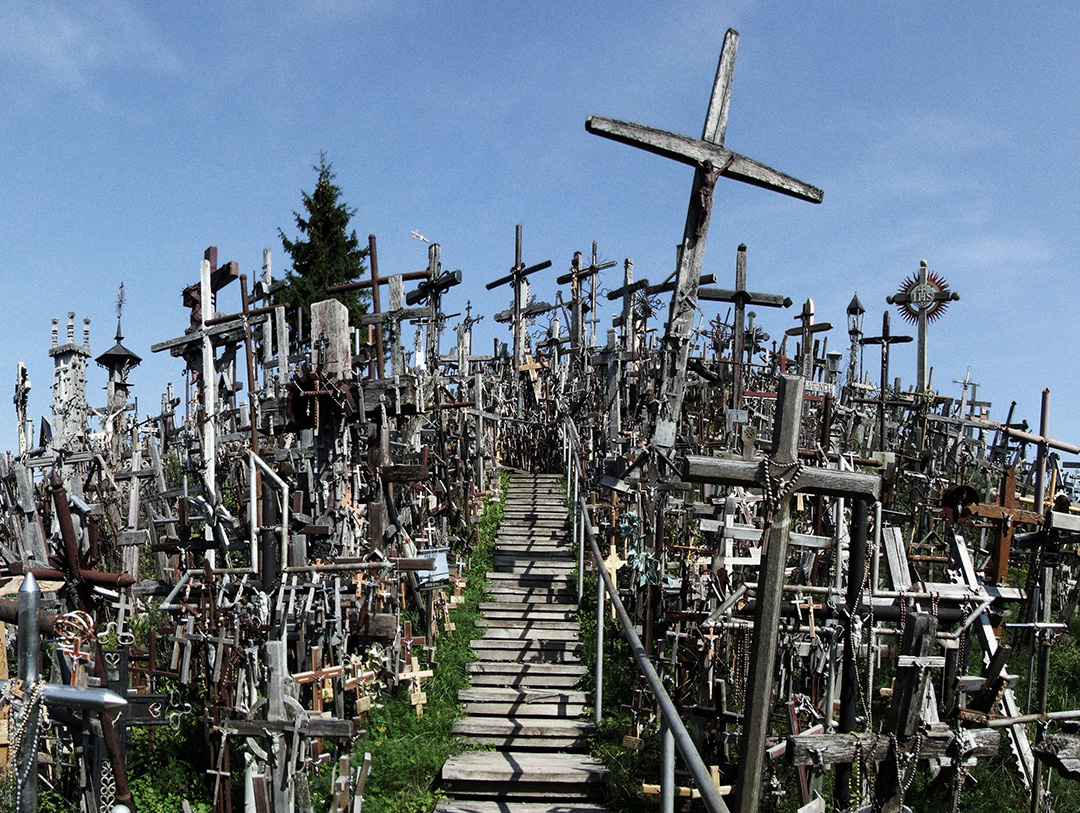
A pilgrimage hill near Šiauliai covered in tens of thousands of crosses, born from grief and resistance and repeatedly destroyed under Soviet rule.
Hill of Crosses (Lithuanian: Kryžių kalnas) is one of the most unsettling and powerful sites in the Baltics: a small mound in northern Lithuania that has become a dense forest of crosses, crucifixes, rosaries, and memorial plaques. Its origins are tied to loss and defiance. After uprisings against the Russian Empire in the 19th century (notably 1831 and 1863), families who could not recover the bodies of the dead began placing symbolic crosses here — turning the hill into an unofficial grave, and a place where mourning became public resistance.
During the Soviet era, the Hill of Crosses gained an even darker meaning. Authorities attempted to erase it by bulldozing and burning the crosses (including a major destruction in 1961), yet new crosses kept appearing—quietly placed at night, despite surveillance, penalties, and the risk of arrest. The hill became a living monument to survival through oppression: a site that refused to stay “cleansed.”
Today, the hill is both devotional and eerie. The sound of wind through hanging rosaries, the tight corridors between thousands of wooden and metal crosses, and the sheer weight of accumulated prayers and grief create an atmosphere that feels like a mass grave without bodies. It is not “haunted” in the theatrical sense — it is haunted by history.
Location: About 12 km north of Šiauliai, northern Lithuania.
Address: Hill of Crosses (Kryžių kalnas), Jurgaičiai, Šiauliai District Municipality, Lithuania
Category: pilgrimage, memorial, dark history
Tags: Hill of Crosses, Kryžių kalnas, Šiauliai, Lithuania, pilgrimage, Soviet repression, resistance, memorial, Catholic
Darkness Level: ☠ ☠ ☠ ☠ ☠ ☠ ☠ ☠
Homepage: kryziukalnas.lt
Map: Open in Google Maps
Gallery