Halloween Museum of Salem
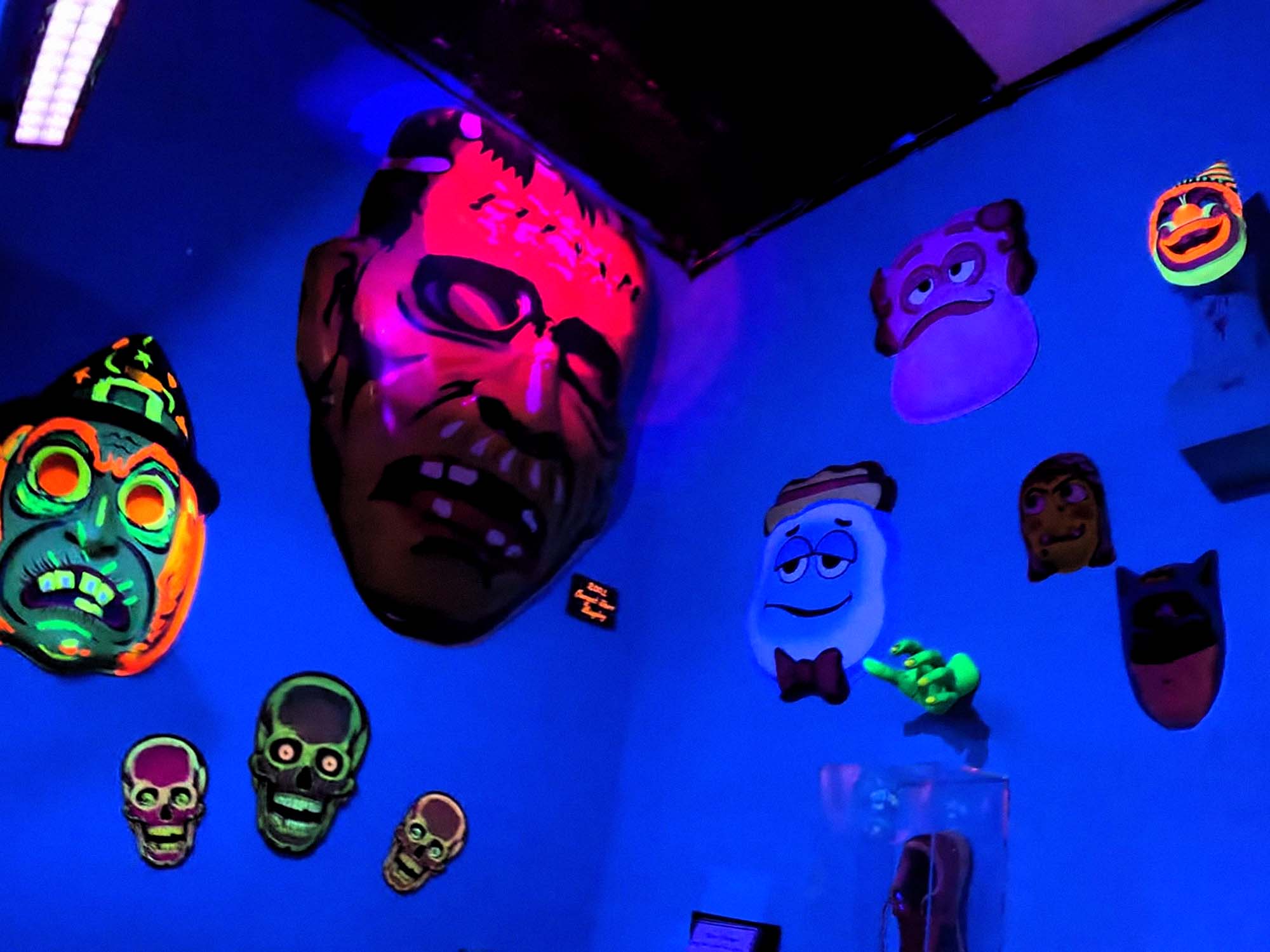
A year-round museum dedicated to Halloween rather than the Salem witch trials, combining vintage masks, toys and decorations with Salem memorabilia, horror-film props and a deliberately lurid blacklight presentation. Opened in 2019, the museum also documents how Salem transformed its grim association with the witchcraft executions of 1692 into one of the largest modern Halloween celebrations in the world.
Halloween Museum of Salem is a small museum on Essex Street in Salem, Massachusetts, devoted to the history, imagery and popular culture of Halloween. It should not be confused with the city's numerous museums about the Salem witch trials. Although those events inevitably form part of the background, the collection is primarily concerned with what Halloween became centuries later: costumes, masks, candy, monsters, supernatural folklore, horror films and the enormous seasonal celebration that now takes over Salem every October.
The museum opened in May 2019, replacing an earlier attraction called the 3D Salem Time Machine at the same address. It is operated by Histrionic Academy LLC, the company behind several other Salem businesses and tours associated with Tim Maguire. From the beginning, the idea was to create a place where the city's Halloween identity could be experienced throughout the year rather than disappearing when October ended.
The presentation is deliberately unlike that of a conventional historical museum. The self-guided route passes through ten rooms covered in fluorescent paint and illuminated by ultraviolet blacklights. Optional 3D glasses exaggerate the effect, causing painted cobwebs, skeletons, pumpkins and other details to appear to project from the walls. The visual style was inherited in part from the building's previous 3D attraction, but the rooms were completely redesigned when the Halloween Museum took over the space.
Beneath the fluorescent surroundings is a collection of genuine Halloween ephemera spanning several generations. Displays have included vintage masks, greeting cards, costumes and decorations, together with objects that will be more familiar to people who grew up during the 1980s and 1990s. Among them are McDonald's Halloween McBoo Pails and McNugget Buddies, Halloween-themed dolls and toys, cereal and food packaging, and other mass-produced objects that show how thoroughly Halloween became embedded in American childhood and consumer culture.
Salem itself forms another part of the collection. Items displayed over the years have included banners from earlier editions of Salem Haunted Happenings, memorabilia associated with the city's modern witch community and a plate formerly owned by Laurie Cabot, the prominent Salem witch who became one of the most visible figures in the city's occult revival during the second half of the 20th century. Another unusual object reported in the original collection was a decorative pumpkin depicting the Salem Witch Museum that had previously been displayed at the White House.
The connection between Salem and Halloween is relatively modern. The real witchcraft crisis occurred in 1692, when accusations spread through Salem Village and neighbouring communities and ultimately led to the execution of nineteen people by hanging, while Giles Corey was pressed to death and others died in jail. For much of Salem's later history this was remembered primarily as a tragedy and an embarrassment rather than a basis for seasonal entertainment. The city's transformation into America's unofficial Halloween capital developed gradually through 20th-century tourism, popular representations of witchcraft and the emergence of a modern Witch and Pagan community.
A decisive moment came in 1982, when the Salem Chamber of Commerce and Salem Witch Museum organised the first Salem Haunted Happenings. Conceived as a weekend of family-oriented Halloween events, it attracted approximately 50,000 people in its first year. What began with activities such as pumpkin carving, costume events and seasonal entertainment eventually expanded into an entire month of parades, ghost tours, psychic readings, haunted attractions, markets and performances. By the 21st century, October crowds were being measured in the hundreds of thousands and, in some years, around a million visitors.
The Halloween Museum preserves pieces of this transformation. Its older decorations and Haunted Happenings material effectively document how the imagery of witches, black cats, ghosts and jack-o'-lanterns moved from seasonal decoration into a defining part of Salem's modern identity. This creates an occasionally uncomfortable contrast with the history underlying the city's witch symbolism: the people prosecuted in 1692 were not practitioners of the modern occult traditions now associated with Salem, but victims of a judicial and religious panic in which accusations of witchcraft could be fatal.
Film and television memorabilia form another significant part of the museum. Items connected with productions displayed over the years have included material from Hocus Pocus (1993) and Hubie Halloween (2020), both of which used Salem extensively as a filming location. Hocus Pocus in particular became inseparable from the city's modern Halloween image, with locations such as Old Town Hall, Pioneer Village and the Ropes Mansion attracting fans decades after the film's original release.
The collection has also included objects identified as film props from several productions associated with Tim Burton and gothic cinema. Among the earliest reported displays were a pumpkin described as having been used in Sleepy Hollow (1999) and a strange spider-like pumpkin attributed to The Nightmare Before Christmas (1993). More recent visitors have reported material connected with The Nightmare Before Christmas, Corpse Bride (2005) and The Haunted Mansion (2003). As with many privately collected film props, detailed public provenance is not available for every object, so the museum's attribution of individual pieces should be distinguished from independently documented production records.
The museum also contains less famous pieces of local Halloween history. One early display included a genie costume belonging to Brandon “The Shapeshifter” Clarke, a Salem costumer and street performer known for elaborate transformations during the Halloween season. Objects such as this are important to the museum's broader subject because Salem's modern Halloween culture was not created solely by commercial attractions. For decades, elaborate costumes, street performers, witches, horror enthusiasts and ordinary visitors have collectively turned the centre of the city into a continuously changing spectacle during October.
Unlike a haunted house, the Halloween Museum is not principally designed to frighten people. There are no claims that the building itself is haunted, and its skeletons and monsters belong much more to the visual language of Halloween than to paranormal investigation. Its darker interest lies instead in the way death, ghosts, witchcraft and monsters have gradually been transformed into entertainment, toys and nostalgic childhood imagery. A grotesque mask that once frightened a child can decades later become a collectible displayed behind glass.
The museum also illustrates how quickly the meaning of Halloween artefacts can change. Cheap plastic buckets, cardboard decorations and fast-food toys were manufactured as disposable seasonal objects, yet surviving examples now function as reminders of particular childhoods and decades. They sit beside older masks, Hollywood props and Salem memorabilia, linking domestic trick-or-treating with the much larger horror industry that grew around the holiday during the late 20th century.
Today, Halloween Museum of Salem remains a compact attraction rather than a large institutional museum. The official route is self-guided and can be completed relatively quickly, although the densely packed cases contain considerably more detail for anyone interested in vintage Halloween material. Its significance to This Cursed Earth lies less in any single supposedly supernatural object than in the collection as a whole: a colourful archive of how ghosts, witches, skeletons, graveyards and monsters became part of an American holiday, displayed in the city where the boundary between historical tragedy and Halloween mythology is particularly difficult to ignore.
Location: On Essex Street in the historic centre of Salem, close to the Peabody Essex Museum and several of the city's witchcraft and occult attractions.
Address: 131 Essex Street, Salem, MA 01970, United States
Category: Halloween, museum
Tags: Halloween, Halloween history, vintage Halloween, masks, costumes, monsters, ghosts, witches, Salem witch trials, Haunted Happenings, horror films, movie props, Hocus Pocus, Hubie Halloween, Sleepy Hollow, The Nightmare Before Christmas, Corpse Bride, The Haunted Mansion, Tim Burton, Laurie Cabot, blacklight museum, 3D museum, pop culture, horror memorabilia
Darkness Level: ☠ ☠ ☠ ☠
Homepage: halloweenmuseumsalem.com
Map: Open in Google Maps
Gallery