Halifax Gibbet
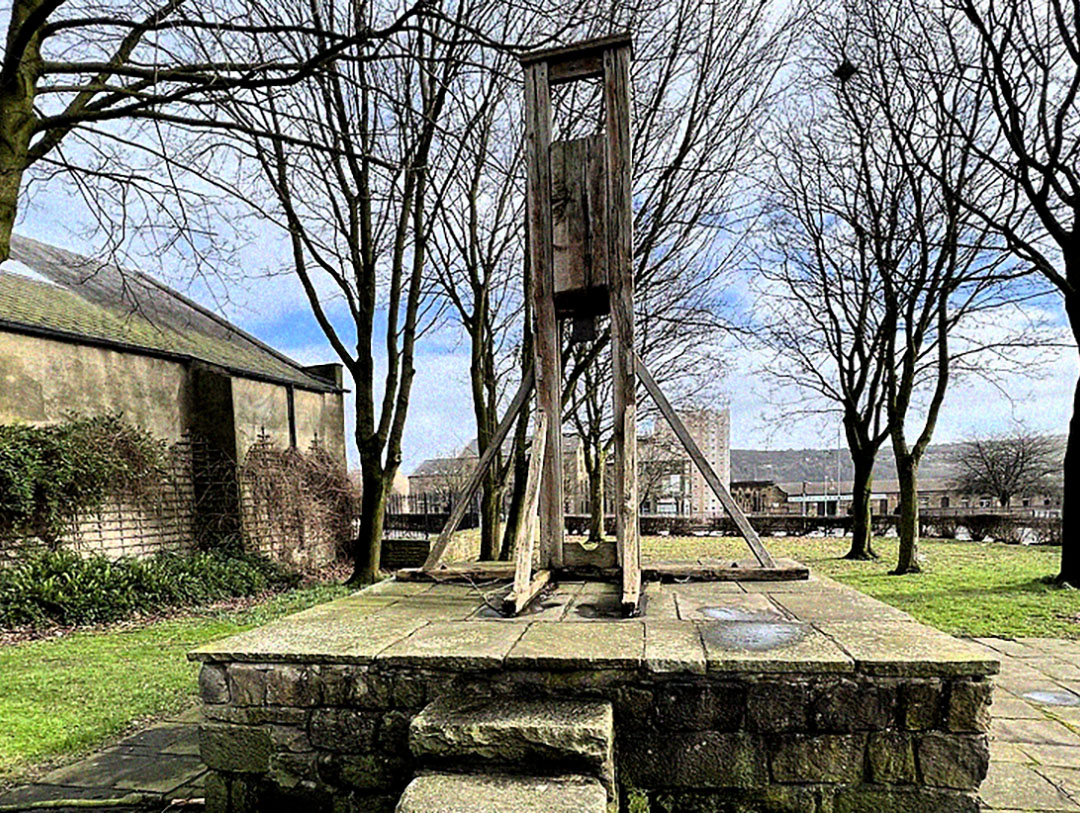
A reconstructed execution device in Yorkshire marking the site where thieves and murderers were beheaded long before the guillotine.
The Halifax Gibbet stands on Gibbet Street in the English town of Halifax, West Yorkshire — a grim reminder of one of Britain’s earliest and most notorious execution sites. The original gibbet, first recorded in the 13th century, was a guillotine-like device used to behead criminals centuries before the French Revolution made such machines infamous.
By local law, anyone caught stealing goods worth more than 13 pence within the parish could be executed. The condemned were marched through the streets to the gibbet, where a heavy axe blade, raised between wooden uprights, was released by cutting a rope — decapitating the victim instantly. Records show that more than 60 people were executed here before the practice was abolished in 1650.
The current structure is a modern reconstruction marking the spot of the original scaffold. Visitors can stand on the hill where crowds once gathered to witness public executions and imagine the brutal justice of the past. Though peaceful today, the Halifax Gibbet remains a chilling monument to the severity of medieval law and the dark history of capital punishment in England.
Location: Located in Halifax, West Yorkshire.
Address: Gibbet Street, Halifax HX1 5LE, England
Category: execution site, history, monument
Tags: Halifax Gibbet, Halifax, execution, beheading, guillotine, punishment, medieval law, England
Darkness Level: ☠ ☠ ☠ ☠ ☠ ☠ ☠ ☠ ☠
Homepage: calderdale.gov.uk
Map: Open in Google Maps
Gallery