Greyfriars Kirkyard
One of Edinburgh’s oldest burial grounds, established in the 16th century and known for the Covenanters’ Prison, the tomb of “Bloody” George Mackenzie, body-snatching history, Greyfriars Bobby and one of the city’s most persistent modern ghost legends.
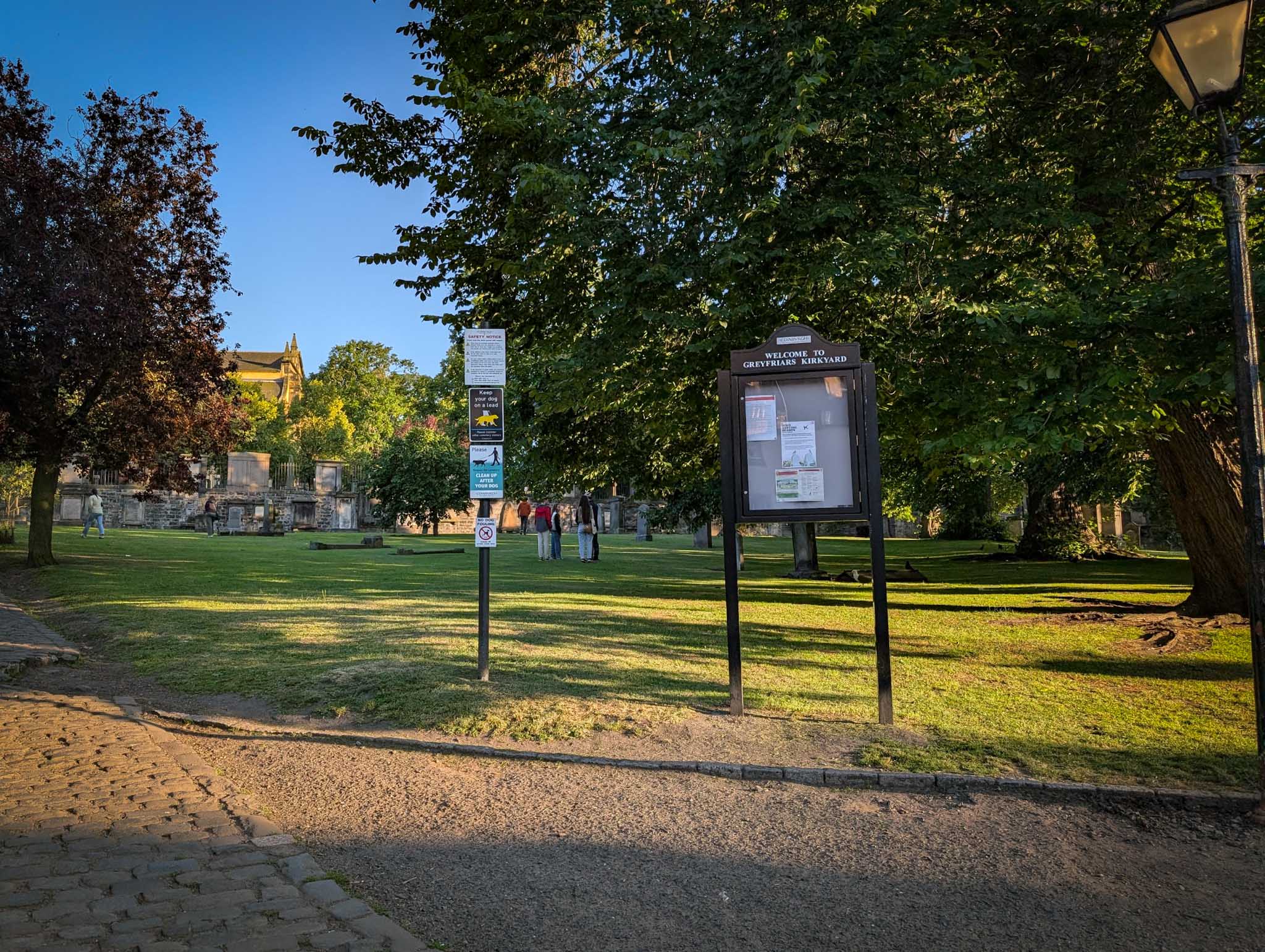
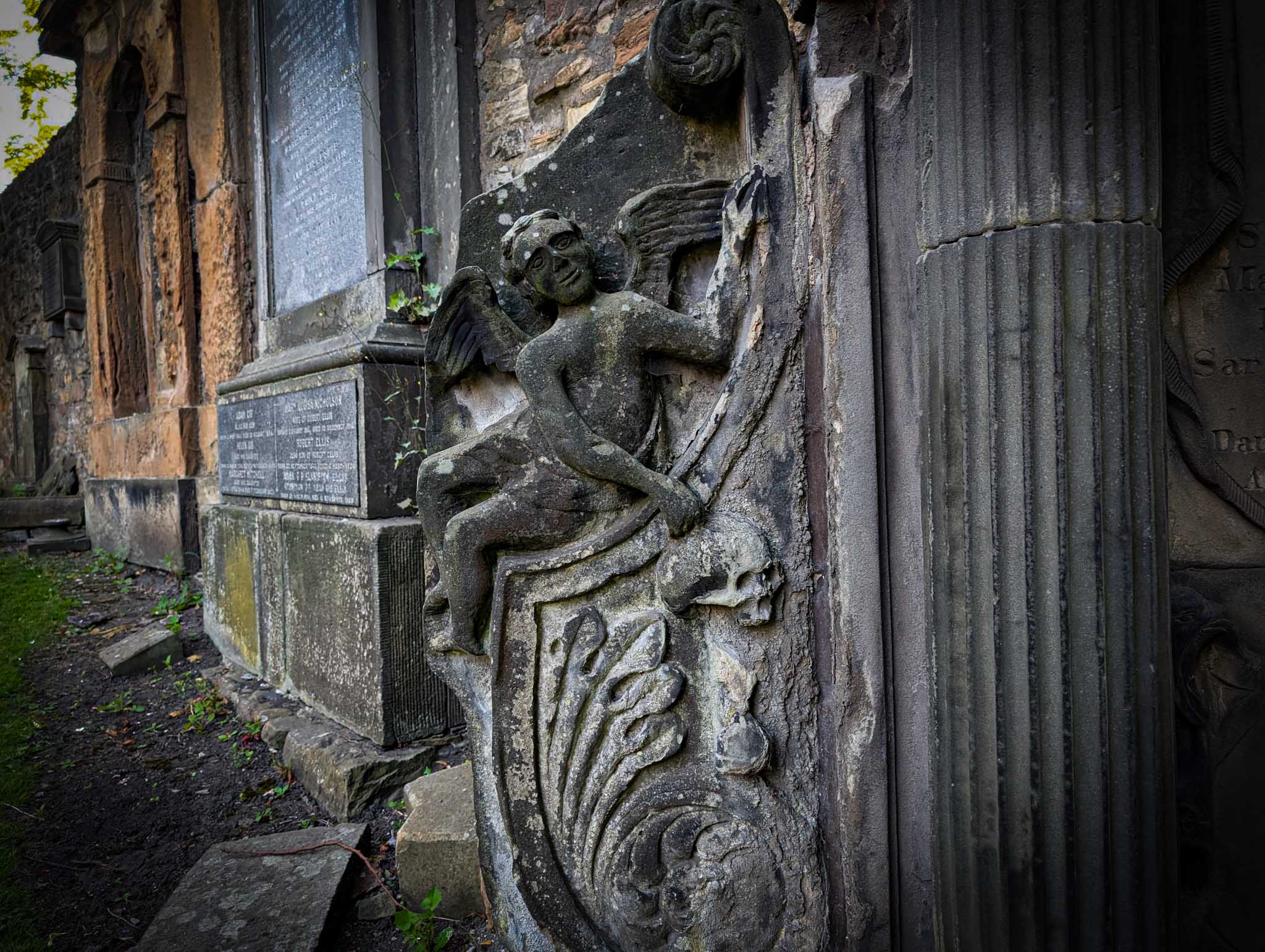
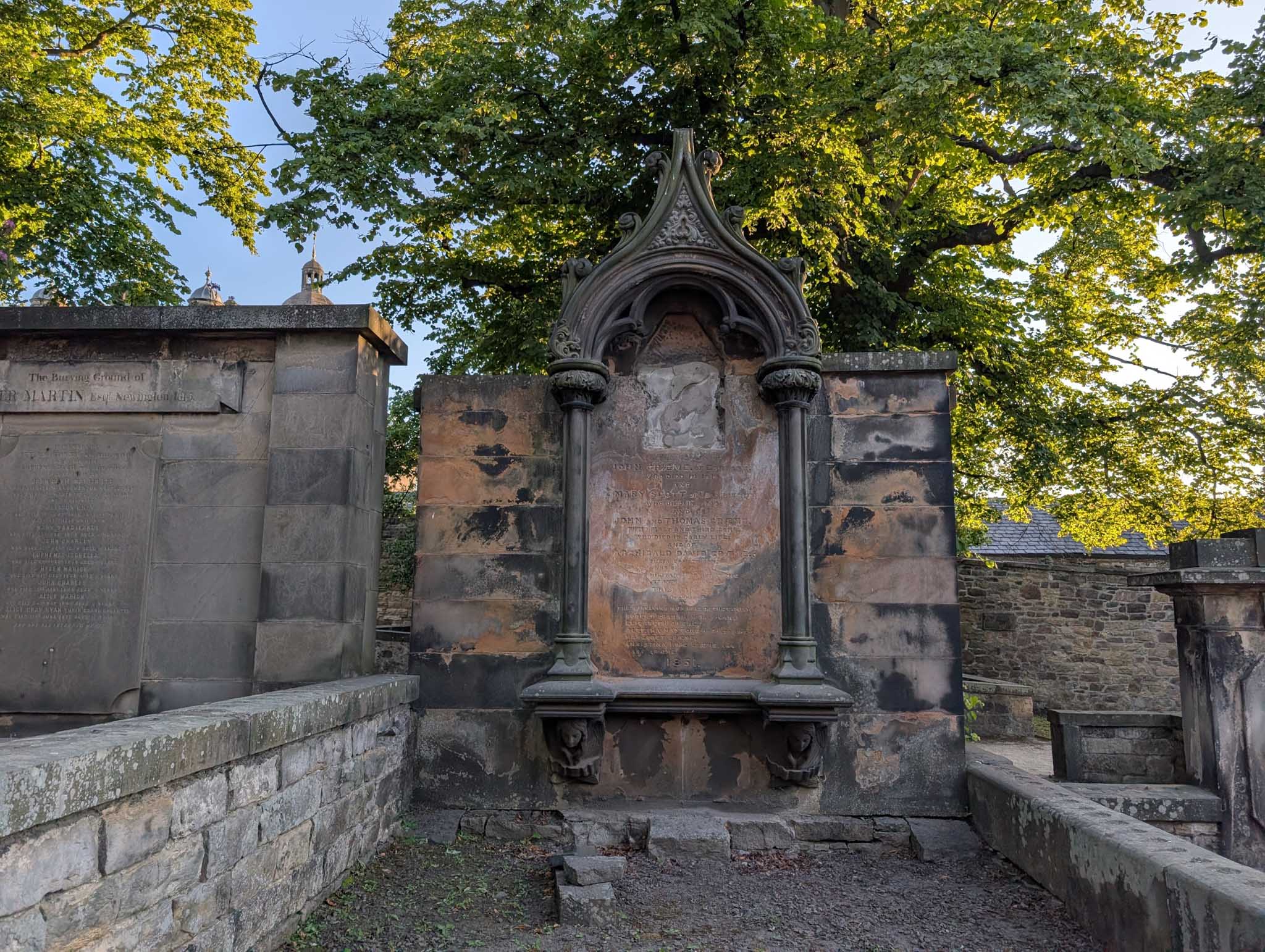
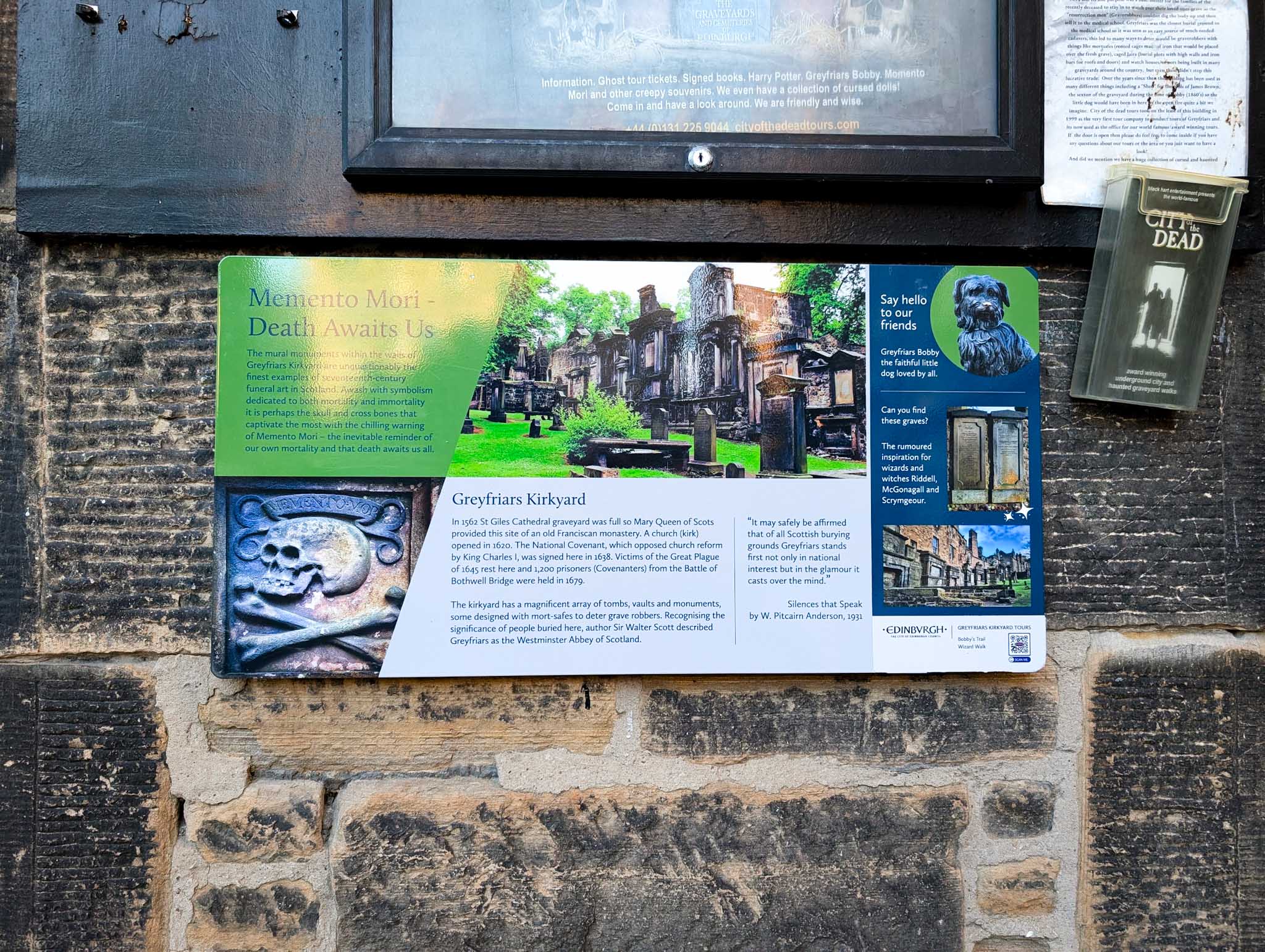
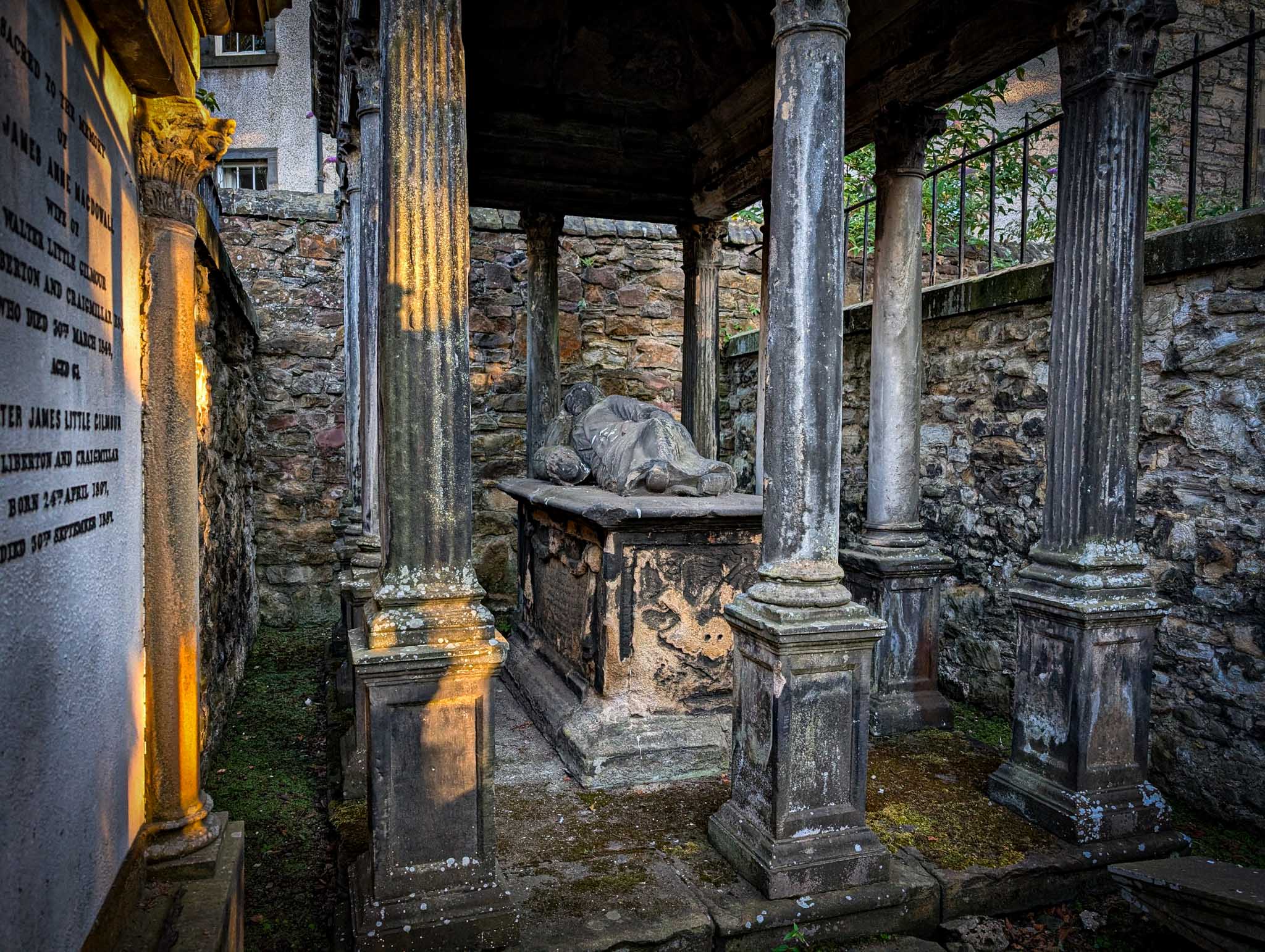
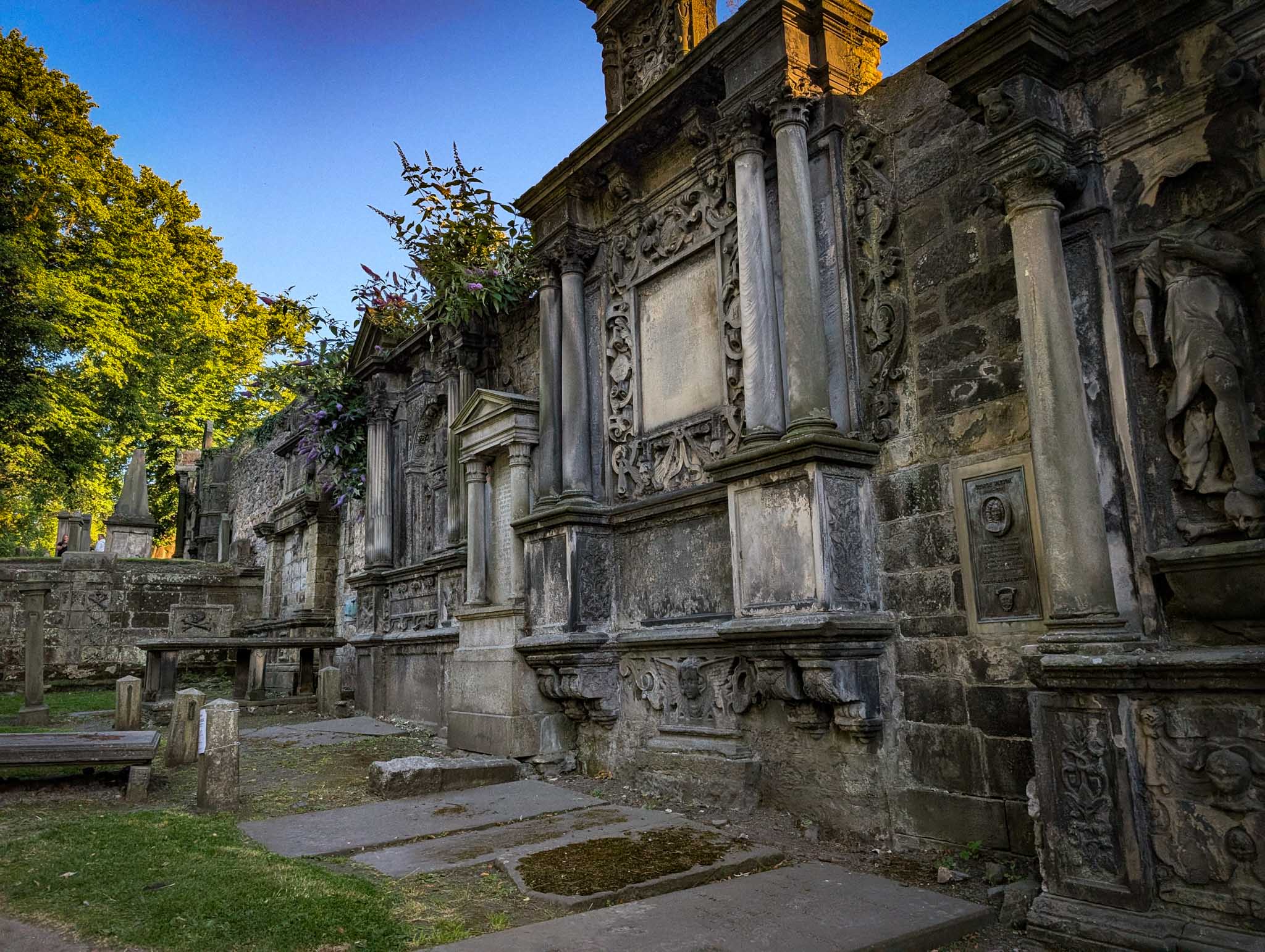
Greyfriars Kirkyard is a historic burial ground surrounding Greyfriars Kirk in Edinburgh’s Old Town. The cemetery predates the church itself. Following the Scottish Reformation, Mary, Queen of Scots granted the former Franciscan friary grounds to Edinburgh for use as a burial ground, and the kirkyard was established in 1562 as pressure increased on the existing burial space around St Giles’. Greyfriars Kirk was later constructed between 1602 and 1620. The kirkyard contains several centuries of monuments, mausoleums and carved gravestones, many decorated with skulls, skeletons, hourglasses and other traditional symbols of death.
Greyfriars played an important role in the history of the Scottish Covenanters. The National Covenant was signed at Greyfriars in 1638, opposing attempts by the Crown to impose religious changes on the Presbyterian Church of Scotland. More than forty years later the site became associated with the violent suppression of the same movement. Following the defeat of the Covenanters at the Battle of Bothwell Brig on 22 June 1679, more than one thousand prisoners were brought to Edinburgh and confined in an enclosed field immediately south of the kirkyard.
The area became known as the Covenanters’ Prison. The prisoners were kept outdoors for more than four months with no permanent shelter and extremely limited food. Some died during their confinement, others were executed for treason, escaped or were released after agreeing to a bond of loyalty to the Crown. In November 1679, 257 remaining prisoners sentenced to transportation were taken to Leith and placed aboard a ship bound for the American colonies. The vessel was wrecked off Orkney and most of the prisoners drowned; only 48 survived. Part of the former prison area was later incorporated into the expanded burial ground, and a locked section of the kirkyard still carries the name Covenanters’ Prison.
Beside this area stands the large mausoleum of Sir George Mackenzie of Rosehaugh, who died in 1691. Mackenzie served as Lord Advocate during the reigns of Charles II and James VII and became closely associated with the prosecution of Covenanters during the period later known as the Killing Time. His reputation earned him the enduring nickname “Bluidy Mackenzie” or “Bloody Mackenzie”. His domed mausoleum was designed by architect James Smith and has become one of the most recognisable monuments in Greyfriars.
The mausoleum is also the centre of the modern legend of the Mackenzie Poltergeist. Visitors and participants on ghost tours have reported scratches, bruises, fainting, unexplained sensations and other alleged physical phenomena in and around the Covenanters’ Prison. These accounts have been heavily promoted since the late 20th century and remain paranormal claims rather than documented historical events. Access to the locked prison area is normally restricted, although authorised ghost tours are permitted to enter sections not accessible to general visitors.
A very real incident involving Mackenzie’s tomb occurred in 2003, when two teenagers entered the mausoleum through an opening at the rear, broke into coffins in the burial vault and removed a skull. Police arrived after the pair had reportedly been playing with the skull outside the tomb. They were subsequently prosecuted for violation of sepulchres, an old Scottish offence that had rarely been used in modern times.
Greyfriars also preserves evidence of Edinburgh’s fear of body snatchers during the late 18th and early 19th centuries. The city’s internationally important anatomy schools created a large demand for fresh corpses, leading so-called resurrection men to steal recently buried bodies and sell them for dissection. A surviving mortsafe in Greyfriars illustrates one method used to protect graves: heavy iron structures were placed over new burials until decomposition made the body useless to anatomists. Grave watching and other forms of physical protection were also used in Edinburgh until the Anatomy Act of 1832 changed the legal supply of bodies for medical study.
The kirkyard is additionally connected with Greyfriars Bobby, the Skye Terrier traditionally said to have remained close to the grave of his owner, John Gray, for approximately fourteen years following Gray’s death in 1858. Bobby died in 1872 and was buried near the entrance to the kirkyard. A memorial stone now marks his burial place, while his well-known bronze statue stands immediately outside the cemetery on Candlemaker Row.
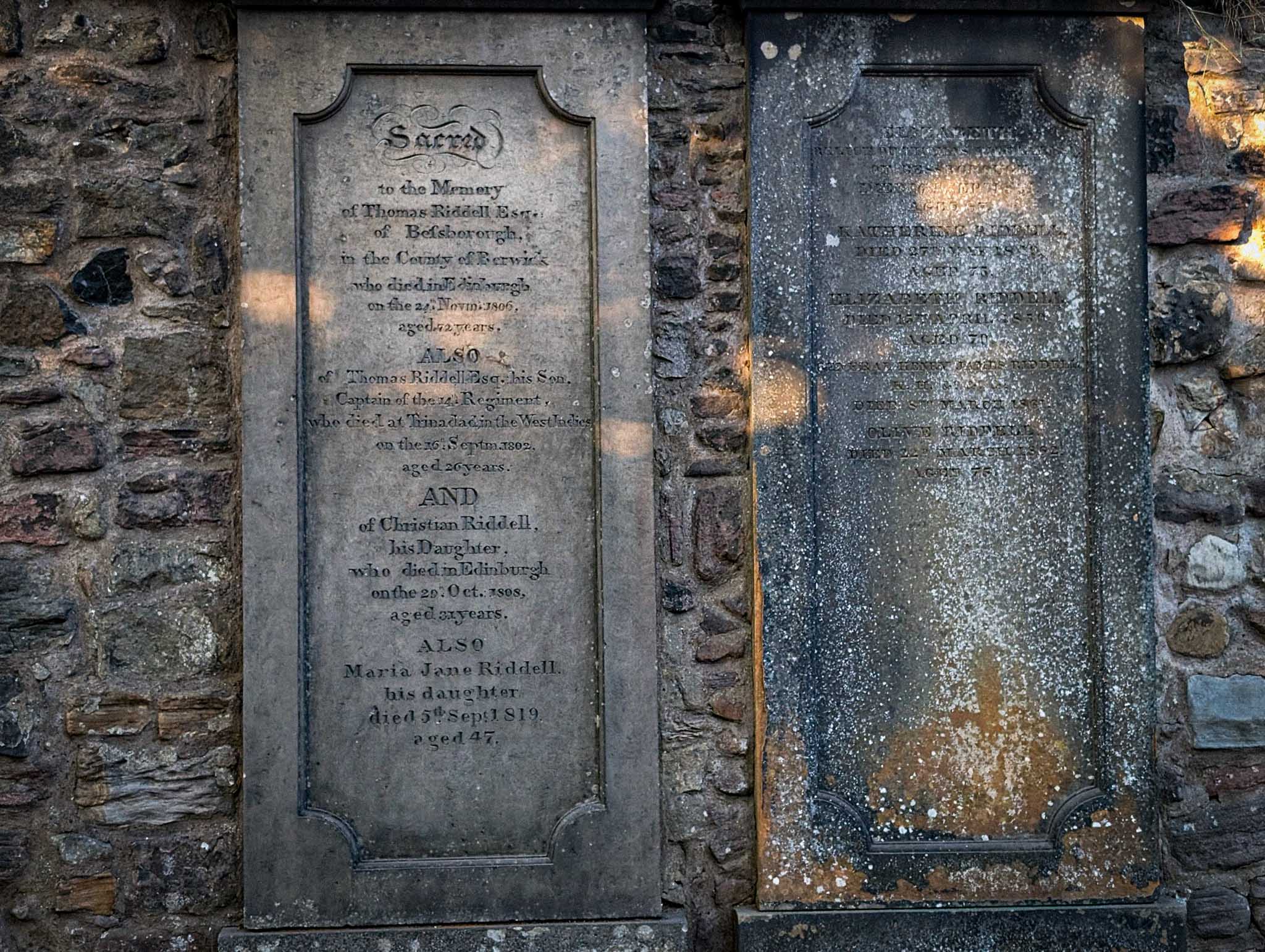
Among the many other people buried or commemorated at Greyfriars are politicians, scholars, clergy and figures from Edinburgh’s civic history. James Douglas, 4th Earl of Morton, Regent of Scotland, was buried here after being executed by the Scottish beheading machine known as the Maiden in 1581. The combination of centuries of burials, the Covenanters’ Prison, Mackenzie’s mausoleum, surviving anti-body-snatching measures and extensive ghost folklore has made Greyfriars Kirkyard one of the principal sites associated with Edinburgh’s darker history.
Location: Beside Greyfriars Kirk in Edinburgh’s Old Town, with the main entrance from Candlemaker Row.
Address: 26A Candlemaker Row, Edinburgh EH1 2QE, Scotland
Category: cemetery
Tags: cemetery, Covenanters, Covenanters’ Prison, National Covenant, Bloody Mackenzie, Mackenzie Poltergeist, haunted, ghost lore, body snatching, resurrection men, mortsafe, mausoleum, Greyfriars Bobby, executions
Darkness Level: ☠ ☠ ☠ ☠ ☠ ☠ ☠ ☠ ☠
Homepage: greyfriarskirk.com
Map: Open in Google Maps
Gallery