Gravensteen Castle
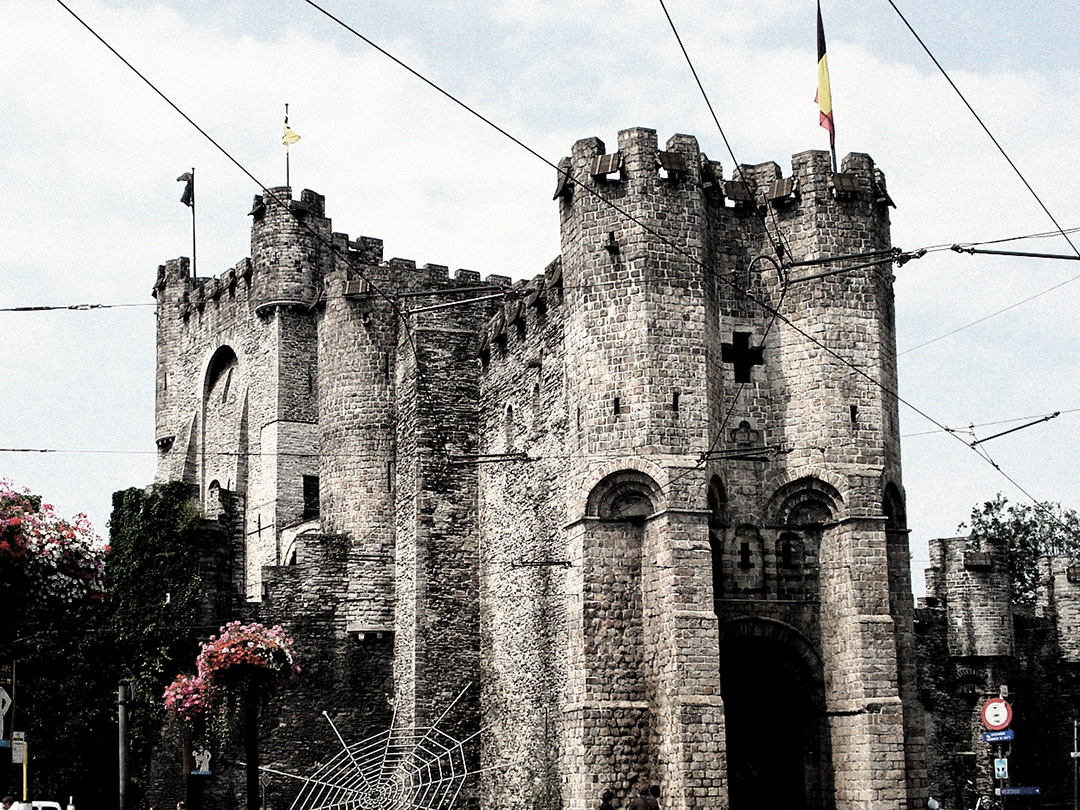
A medieval fortress in central Ghent, built as a symbol of comital power and later used as a court, prison, and industrial site, leaving a legacy shaped by authority, punishment, and confinement.
Gravensteen (“Castle of the Counts”) is a medieval castle in the historic centre of Ghent. The current stone fortress dates largely from 1180, commissioned by Philip of Alsace, Count of Flanders, as a fortified residence and a visible assertion of control over a wealthy and increasingly powerful city. Its keep, walls, and gate complex were designed for defence as well as intimidation, combining practical security with political messaging.
After the Counts of Flanders ceased using the castle as a residence in the 14th century, the site took on functions more closely tied to coercion and administration. It served for long periods as a legal and punitive complex, operating as a court and prison, and it was also connected to minting and other civic uses. These shifts redefined the building from aristocratic stronghold to an instrument of civic authority, where power was exercised through bureaucracy, detention, and judgement.
In the 19th century, the castle was absorbed into industrial use and converted into a cotton mill, altering and crowding the medieval structure. A major restoration between 1893 and 1903 removed later additions and stabilised the monument. Today it functions as a museum, but the fortress retains an austere atmosphere: narrow stairways, stone chambers, and enclosed spaces that emphasise the castle’s long association with control, confinement, and the infrastructure of punishment.
Location: In the historic centre of Ghent, beside the river and the old city streets.
Address: Sint-Veerleplein 11, 9000 Gent, Belgium
Category: castle, museum, historical site
Tags: castle, medieval, fortress, Counts of Flanders, court, prison, mint, industrial heritage, restoration
Darkness Level: ☠ ☠ ☠ ☠ ☠ ☠ ☠ ☠
Homepage: historischehuizen.stad.gent
Map: Open in Google Maps
Gallery