Fremantle Prison
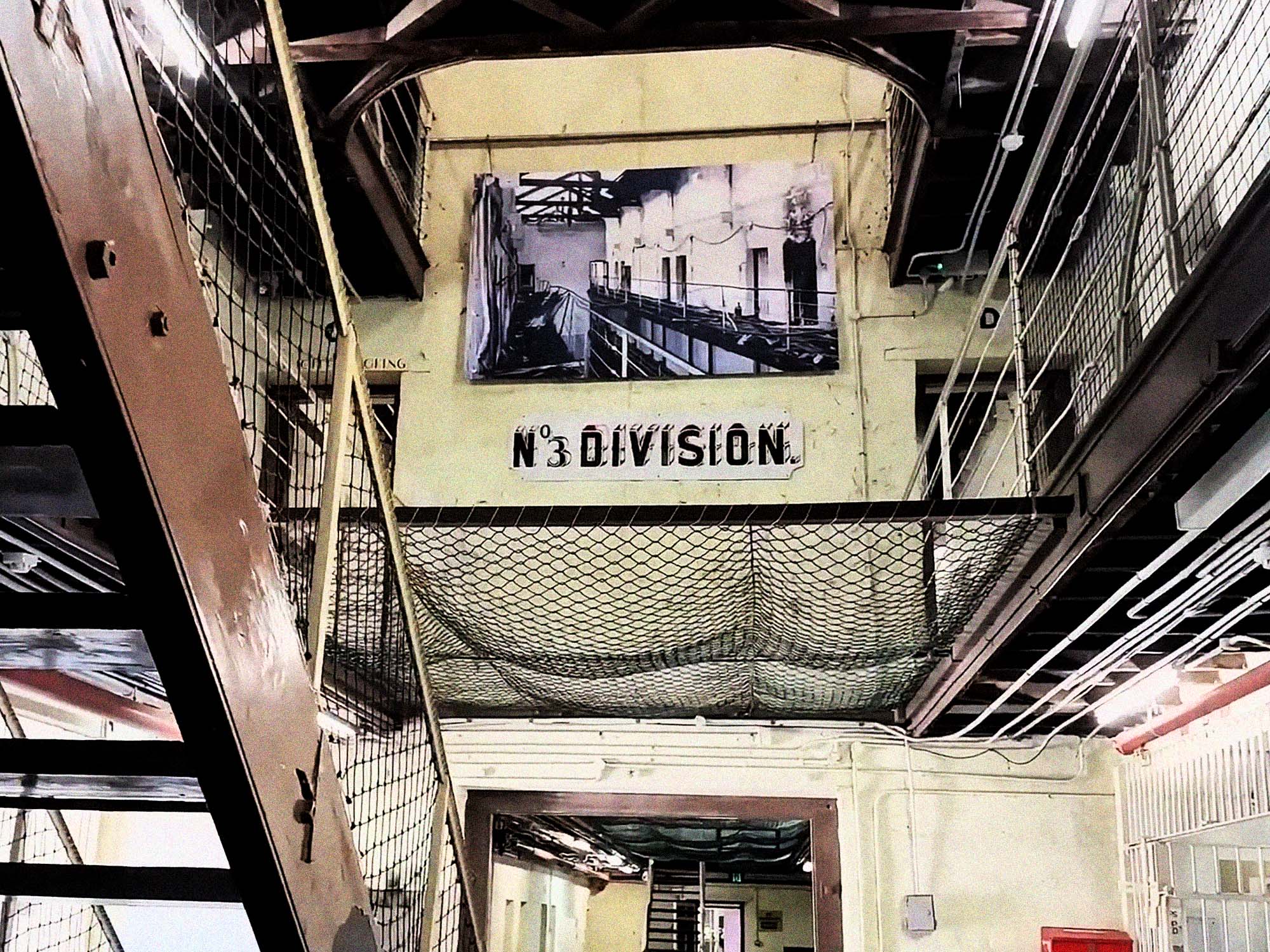
A former maximum-security prison in Western Australia built by convicts in the 1850s, with a history of forced labour, solitary confinement, flogging, executions, underground tunnels, escapes and major prisoner riots.
Fremantle Prison is a former convict establishment and maximum-security prison in the centre of Fremantle, Western Australia. The first ship carrying British convicts arrived in the colony in 1850, and construction of what was then called the Convict Establishment began in 1852. The prison was built largely by convict labour using limestone quarried directly from the site. The first inmates moved into the Main Cell Block in 1855, and the complex was formally completed in 1859.
The Main Cell Block is approximately 150 metres long and four storeys high. Original cells measured only about 1.2 by 2.1 metres. They were later enlarged by knocking adjoining cells together, but conditions remained basic well into the 20th century. The prison had no air conditioning or heating, and inmates were still required to use buckets as toilets. Overcrowding frequently resulted in two or three prisoners being placed in cells originally intended for one person.
Discipline during the convict period included hard labour in leg irons, restricted diets, solitary confinement and flogging. Prisoners could be chained in heavy irons and required to work for ten hours a day. The punishment block contained twelve solitary cells and six windowless dark cells. Prisoners confined in the dark cells could remain without natural light for extended periods, causing disorientation and loss of awareness of time. During the convict era, solitary sentences could last between one and six months, although after 1886 the maximum was reduced to 28 days.
Flogging was carried out with instruments including the cat-o’-nine-tails and the birch. Prisoners could receive sentences of up to one hundred lashes and were secured to a flogging triangle while a medical officer observed the punishment. The last prescribed flogging with the cat-o’-nine-tails at Fremantle took place on 21 June 1943. The prisoner had been sentenced to 25 lashes, but the doctor stopped the punishment after seventeen. Birching continued even longer: the final recorded birching took place in 1962, when a prisoner received twelve strokes.
Convict labour was also used beneath the prison. Between 1852 and 1856, prisoners sank six wells approximately 20 metres deep into the limestone in order to reach the aquifer below. A much larger system of shafts and tunnels was subsequently excavated, eventually extending for around one kilometre. Prisoners initially operated pumps by hand for decades, and at least one prisoner is recorded as having died while performing this work. The underground water system eventually supplied not only the prison but ships and parts of Fremantle itself. Much of the tunnel system survives, with approximately 750 metres remaining partly flooded.
Transportation of British convicts to Western Australia ended in 1868, after more than 9,700 convicts had been sent to the colony. Fremantle Prison passed from British to colonial control in 1886 and became Western Australia’s principal prison. Men, women and juveniles were incarcerated there, and a separate women’s prison operated within the complex until 1970. During both world wars, parts of Fremantle Prison were taken over by the Australian military and used for military prisoners, prisoners of war and people classified as enemy aliens.
In 1888, a permanent gallows was constructed inside the prison. Fremantle subsequently became Western Australia’s only legal execution site. Between 1889 and 1964, 44 people – 43 men and one woman – were hanged there. The only woman was Martha Rendell, executed on 6 October 1909 after being convicted of murdering her stepson. The final execution was that of Perth serial killer Eric Edgar Cooke on 26 October 1964. Condemned prisoners were held in the solitary confinement block before being led to the gallows, a journey that could take approximately one minute.
The prison became increasingly difficult to operate as a modern maximum-security institution. Its 19th-century architecture, poor sanitation, overcrowding and extreme temperatures contributed to persistent unrest. On 4 January 1988, approximately 130 prisoners became involved in a major riot following disputes over conditions and the alleged mistreatment of an inmate. Prison officers were attacked and taken hostage, and fires were started inside the Main Cell Block. The timber roof structure caught fire, causing approximately two million Australian dollars in damage before control was restored the following day.
The 1988 riot accelerated plans to replace the ageing prison, although the Western Australian government had already decided in 1983 that it should eventually close. Fremantle Prison was finally decommissioned in November 1991, ending approximately 136 years of continuous incarceration on the site. It opened to visitors the following year.
Much of the complex remains exceptionally intact, including the Main Cell Block, punishment cells, gallows, exercise yards, workshops, perimeter walls and underground tunnels. Visitors can enter these areas on historical tours, while a specialised tunnel tour descends by ladder into the former water system and uses small boats in flooded sections. In 2010, Fremantle Prison was included as one of the eleven sites making up the UNESCO World Heritage-listed Australian Convict Sites, representing the large-scale transportation and forced labour system used by the British Empire in Australia.
Location: On The Terrace in central Fremantle, south-west of Perth.
Address: 1 The Terrace, Fremantle WA 6160, Australia
Category: prison, museum
Tags: convict history, forced labour, prison history, solitary confinement, flogging, executions, gallows, death penalty, underground tunnels, prison riot, World War II, UNESCO
Darkness Level: ☠ ☠ ☠ ☠ ☠ ☠ ☠ ☠ ☠
Homepage: fremantleprison.com.au
Map: Open in Google Maps
Gallery