Diefenbunker: Canada’s Cold War Museum
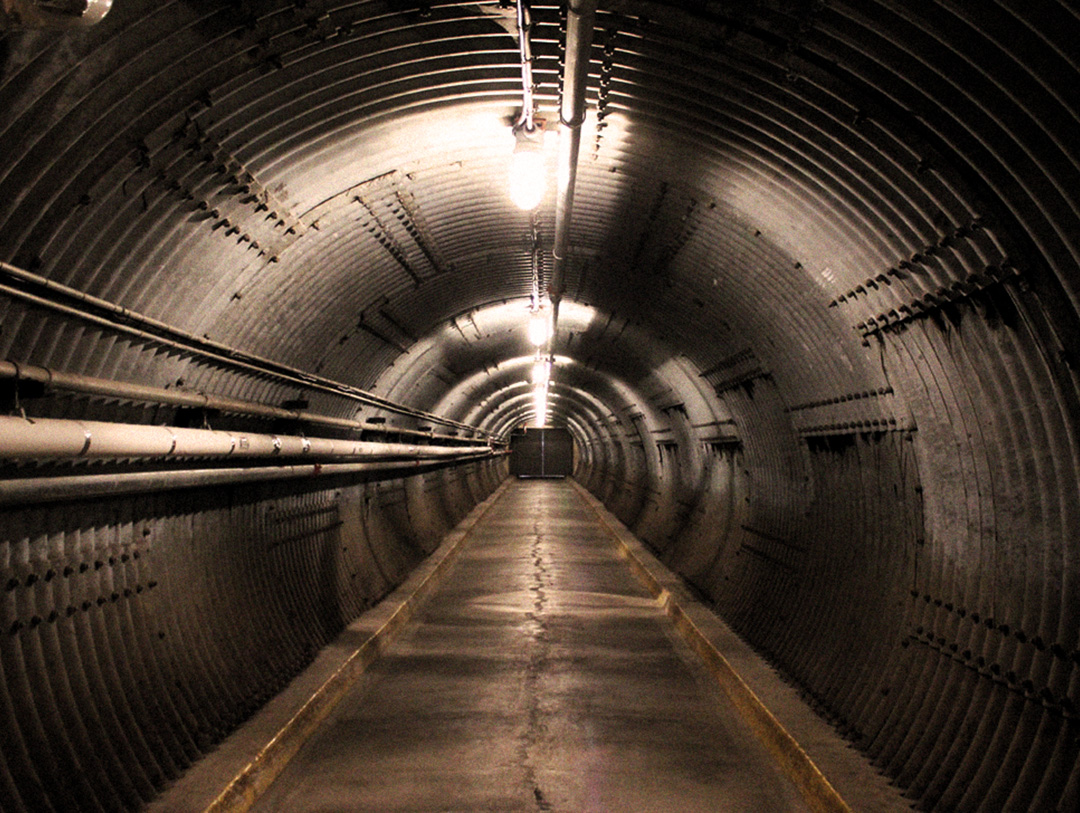
A four-storey underground Cold War bunker built as Canada’s Central Emergency Government Headquarters, designed to preserve command and communications during a nuclear attack and later opened to the public as a museum.
Diefenbunker: Canada’s Cold War Museum occupies a reinforced-concrete underground complex originally constructed between 1959 and 1961 as the Central Emergency Government Headquarters for Canada. Built into a rural ridge west of Ottawa, the facility was engineered for survivability, with blast-protected access, sealed internal zones, and self-contained systems intended to support government and military leadership if the capital became unusable.
The bunker formed part of a wider civil-defence strategy during the Cold War. While it was intended as a protected refuge for key personnel, it never served its primary purpose. Instead, it operated for decades as a secure communications and civil-defence hub, reflecting a period when planning for the unthinkable was treated as routine state infrastructure.
Decommissioned in 1994 and later preserved, the site is now a museum and National Historic Site. Visitors move through corridors, operations rooms, and preserved spaces that illustrate the practical mechanics of continuity-of-government planning. The atmosphere is defined by its controlled, windowless interior and utilitarian design, making the bunker a tangible reminder of Cold War anxiety, institutional secrecy, and the engineered logic of survival beneath the surface.
Location: In a rural ridge near Carp, west of Ottawa, built into the landscape as an underground facility.
Address: 3929 Carp Road, Ottawa, Ontario, K0A 1L0, Canada
Category: museum, bunker, military site, historical site
Tags: bunker, Cold War, nuclear, fallout shelter, civil defence, underground facility, communications, continuity of government, National Historic Site
Darkness Level: ☠ ☠ ☠ ☠ ☠ ☠ ☠ ☠ ☠
Homepage: diefenbunker.ca
Map: Open in Google Maps
Gallery