The Devil of Oslo
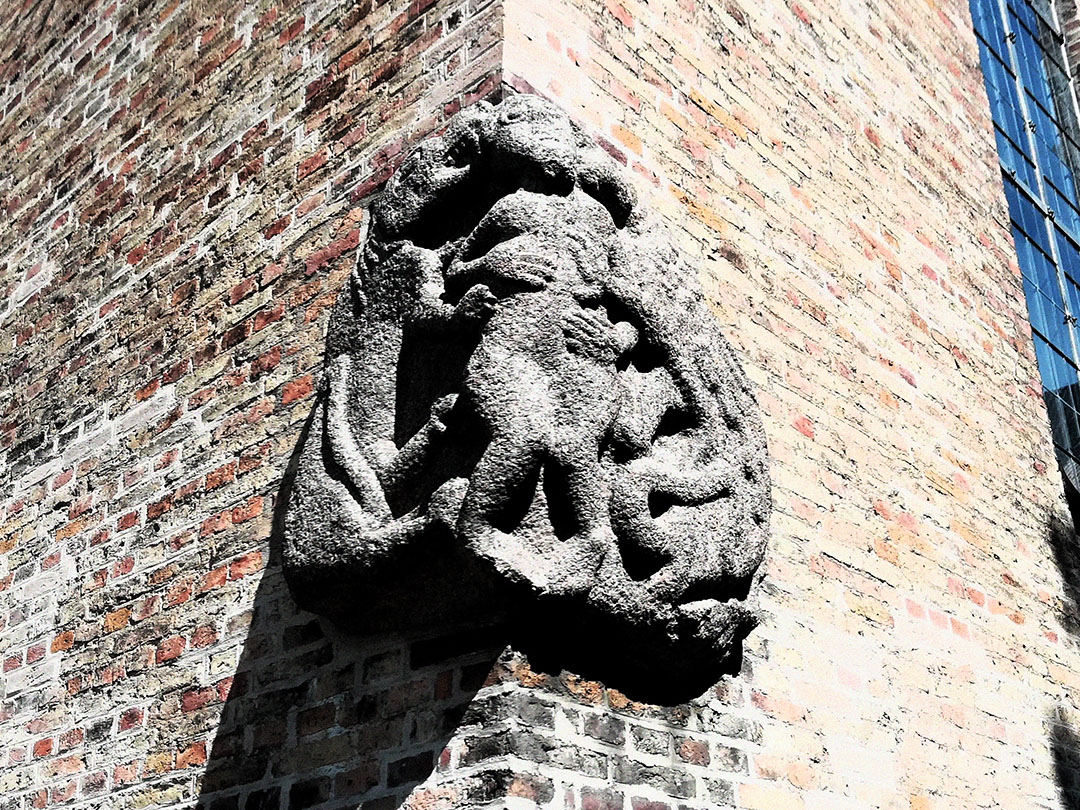
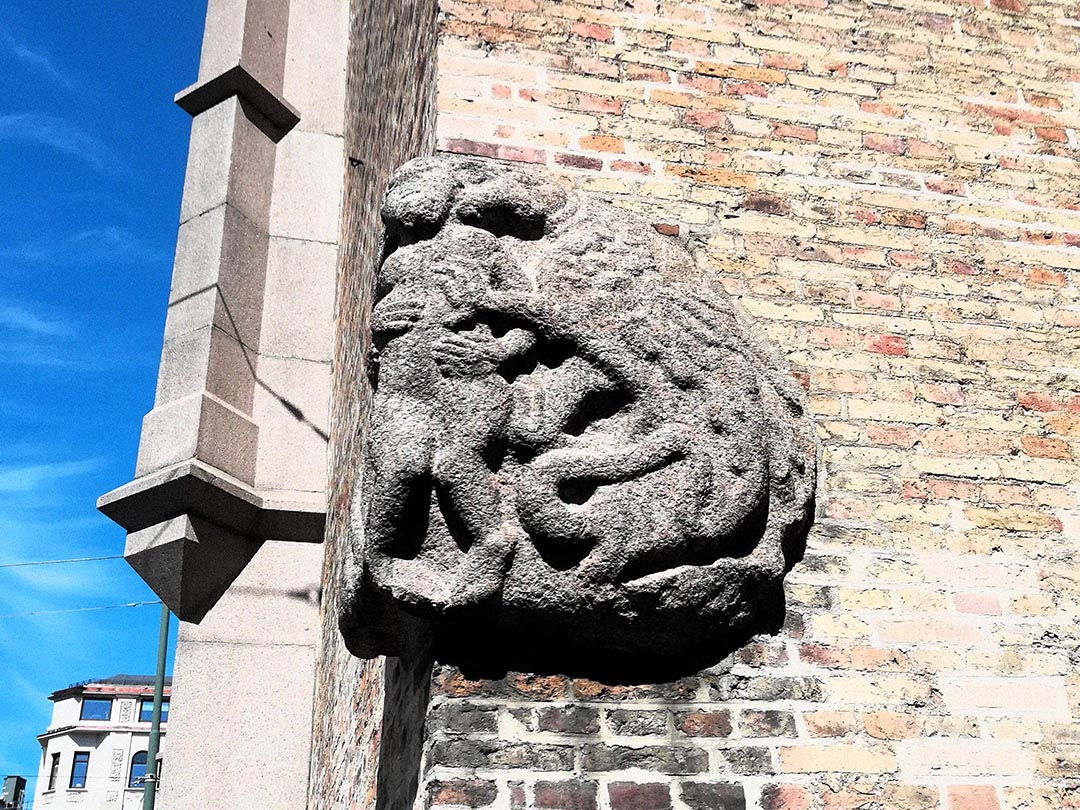
In downtown Oslo, on the Oslo Cathedral facing Market Square, a interesting figure surrounded by a dragon and a lion, is only known as The Devil of Oslo.
Most people walking past Oslo Cathedral never notice the monster on the corner. Look to the right of the main entrance, however, and high on the brick wall is a weathered medieval stone carving showing a human being attacked from both sides by monstrous animals. It is known as Djevelen fra Oslo – “The Devil of Oslo” – and at around 900 years old, it is considerably older than the cathedral it now calls home.
The carving dates from around the 12th century and is believed to have come from St. Hallvard's Cathedral, the great medieval cathedral that once stood in what is now Oslo's Gamlebyen. Built during the first half of the 1100s, St. Hallvard's was the religious centre of medieval Oslo for centuries and was dedicated to the city's patron saint. After Christian IV moved Oslo westwards following the great fire of 1624, the old cathedral gradually fell into ruin. Much of its stone was eventually removed and reused elsewhere in the growing city.
The present Oslo Cathedral was built much later. Originally called Vår Frelsers kirke, or the Church of Our Saviour, it was consecrated on 7 November 1697 and became Oslo's third cathedral. Its builders were not particularly sentimental about recycling. Stone and other material from both the ruined St. Hallvard's Cathedral and the damaged Holy Trinity Church were reused in the new building, while several older church objects were transferred there as well. Medieval Oslo quite literally became part of the fabric of the new city.
Exactly how the Devil of Oslo made that journey is less certain. The carving is generally believed to originate from St. Hallvard's Cathedral and was incorporated into Oslo Cathedral at an early stage. For centuries it was positioned near the priests' entrance by the northern sacristy, where it was partly built into the wall and far less conspicuous than it is today. In 1937, architect Holger Sinding-Larsen proposed moving it to the south-western corner of the cathedral tower. That is where the creature has been staring down at central Oslo ever since.
Despite the name, the sculpture does not simply depict a devil. At the centre is a helpless human figure being attacked by two beasts, traditionally identified as a lion and a dragon. One creature tears at the victim from one side while the other attacks from the opposite direction. The precise meaning has been lost, but similar images of humans threatened or devoured by monstrous animals appear elsewhere in Romanesque church art.
One interpretation is that the carving represented the vulnerability of the human soul to evil. A medieval visitor approaching the church might have understood the beasts as embodiments of sin, temptation or the Devil, while the church offered the possibility of salvation. A biblical connection has also been suggested with the First Epistle of Peter, where the Devil is compared to a roaring lion searching for someone to devour. Another possible inspiration is the terrifying collection of beasts described in the Book of Revelation. We cannot know which interpretation the original stone carver had in mind, and that uncertainty is part of what makes the figure so intriguing.
Its old position at the priests' entrance eventually produced another interpretation. According to an old church record, the frightening image could serve as a warning specifically to priests, sextons and other church employees. Familiarity with religious life, the argument went, could make people complacent, and even those working inside the church needed a reminder to remain vigilant. Having a man visibly torn apart by monsters beside the staff entrance was certainly one way of making the point.
Today the Devil of Oslo sits in one of the busiest parts of the modern capital, surrounded by shops, trams, restaurants and people crossing Stortorvet. It is easy to pass within a few metres of it without looking up. Yet the battered piece of granite has survived the disappearance of medieval Oslo, the abandonment of the cathedral it probably belonged to and centuries of rebuilding in the city around it. Oslo Cathedral dates from 1697. The creature on its wall has been watching humans struggle with their demons for several centuries longer.
Location: The Devil of Oslo can be found on the wall outside of The Oslo Cathedral to the right of the entrance.
Address: Karl Johans gt. 11, 0154 Oslo, Norway
Category: monument
Tags: local history, religion
Darkness Level: ☠ ☠ ☠ ☠ ☠ ☠ ☠ ☠ ☠
Map: Open in Google Maps
Gallery