Cave of the Apocalypse
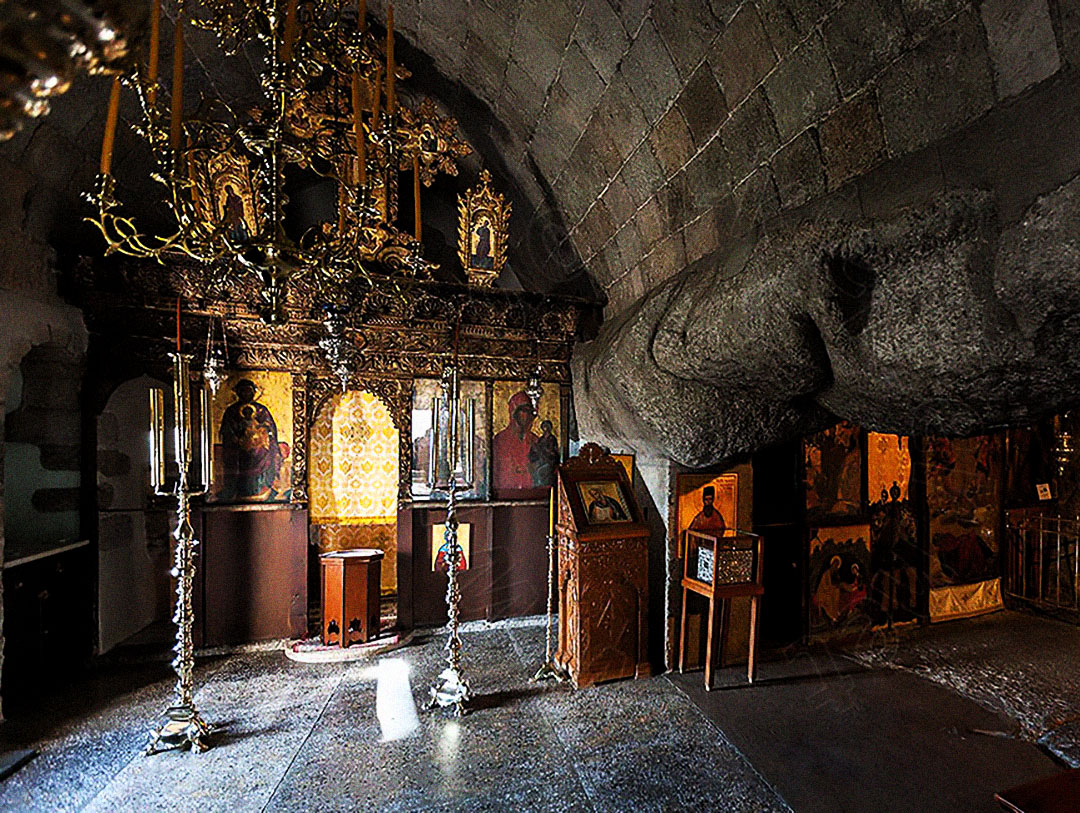
An austere grotto on the island of Patmos where, according to Christian tradition, Saint John recorded his visions of the Book of Revelation—an epicenter of prophecy, exile, and apocalyptic mystery.
Cave of the Apocalypse is a sacred, dimly lit cavern carved into the slopes of Patmos, Greece—said to be the very place where St. John received divine visions forming the Book of Revelation while exiled under Roman rule in the late 1st century. This site has been a persistent locus of pilgrimage and devotion, now encompassed by a chapel and recognized by UNESCO as part of the Historic Centre of Chóra and the Monastery of Saint‑John the Theologian.
The cave’s interior still bears ancient markers: three slender fissures in the rock—interpreted as tears of the Holy Trinity—through which God’s voice reputedly spoke. Visitors can touch the indent where John is said to have rested his head, grasp the stone “handhold” he used to rise, and view the ledge believed to hold the parchment upon which his disciple, Prochorus, recorded the revelation.
Adventure to the cave involves winding halfway up a mountain from Skála toward Chóra, passing beneath the fortified Byzantine Monastery of Saint‑John—built in 1088—to enter a stark grotto turned chapel. The austerity amplifies the sense of solitude, trial, and the impending doom of the visions within.
Location: Island of Patmos, Dodecanese, Greece
Address: Officially part of the Monastery complex near Chóra, Patmos
Category: sacred site, Christian pilgrimage, prophecy, religion
Tags: Apocalypse, Patmos, St. John of Patmos, Book of Revelation, cave church, Christian pilgrimage, exile, religion
Darkness Level: ☠ ☠ ☠ ☠ ☠ ☠ ☠ ☠ ☠
Map: Open in Google Maps
Gallery