The Catacombs of Paris
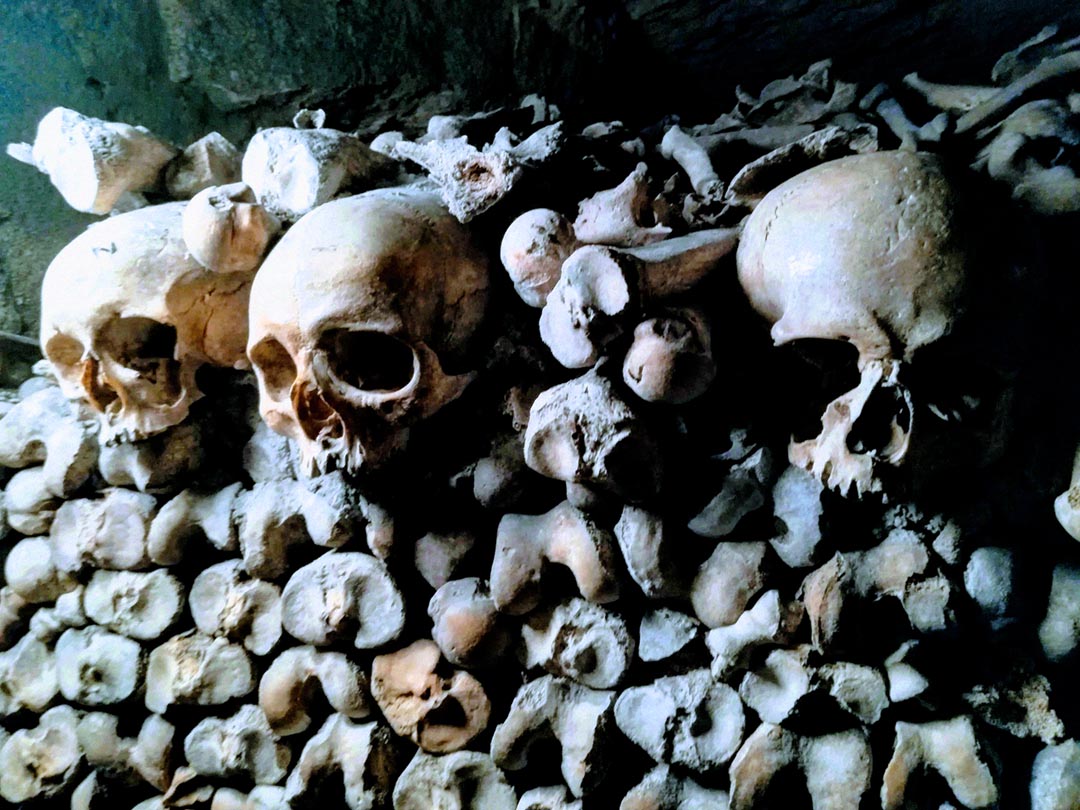
The Catacombs of Paris, an underground labyrinth lined with the bones of over six million people, is one of the most chilling and fascinating dark tourism sites in the world.
Some 20 metres beneath the streets of Paris lies one of the world's largest underground ossuaries. The Catacombs of Paris contain the remains of several million people, arranged inside a section of the old limestone quarries that honeycomb the ground beneath the southern part of the city. Despite the name, these are not ancient Roman-style catacombs built for burials. They are a municipal ossuary created in the late 18th century as a solution to two very real problems facing Paris: unstable abandoned quarries beneath the city and dangerously overcrowded cemeteries above it.
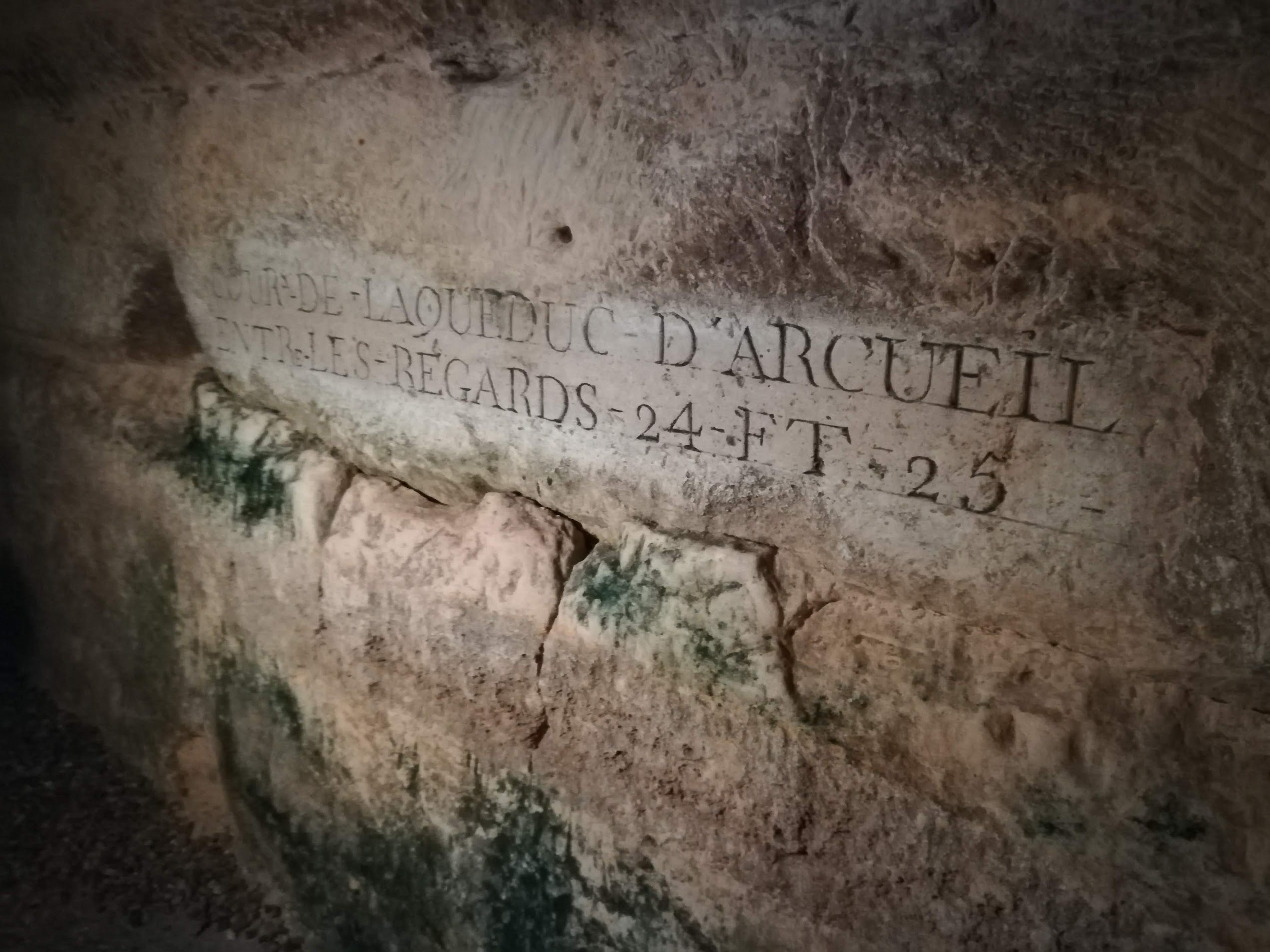
Stone had been extracted from beneath Paris for centuries, supplying limestone for many of the buildings that transformed the medieval city. As quarrying moved underground, it left behind an extensive and poorly documented network of galleries. By the 18th century, sections had begun to collapse, sometimes taking streets and buildings with them. In response, Louis XVI established the Inspection Générale des Carrières in 1777 to survey, reinforce and secure the abandoned workings. Only a few years later, some of those same tunnels would be given an entirely different purpose.
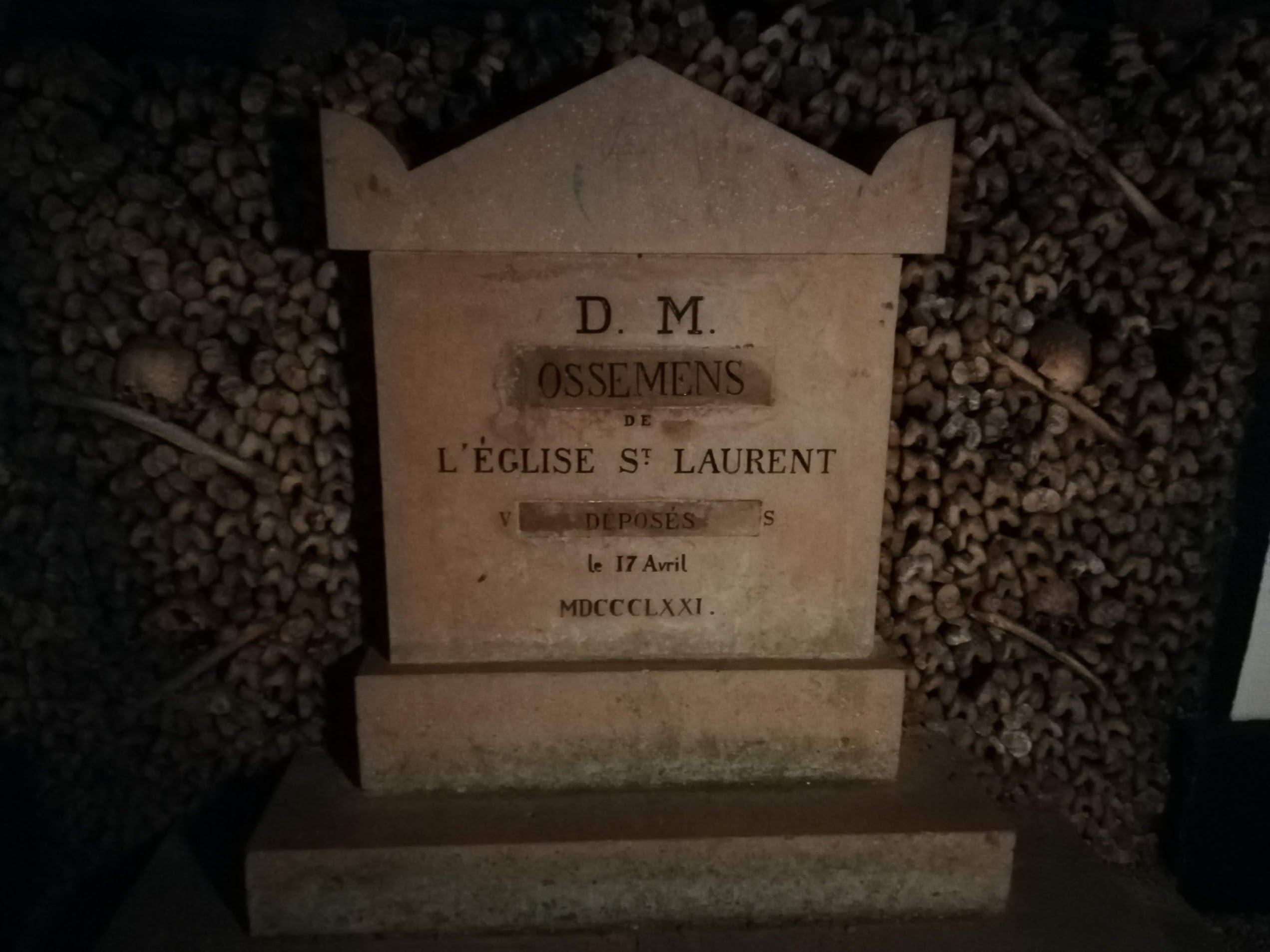
The immediate catalyst was the disastrous condition of the Cimetière des Saints-Innocents near Les Halles. Used for almost ten centuries, it had become so overcrowded that local residents complained of terrible smells and unsanitary conditions. In 1780, the wall of a neighbouring cellar collapsed under the pressure of a mass grave, sending human remains and decomposing bodies into the building. The cemetery was subsequently closed, and in 1785 the authorities began removing its contents. Bones were transported across Paris after nightfall, partly to avoid provoking opposition from residents and the Church, before being lowered through quarry shafts into the former Tombe-Issoire workings.
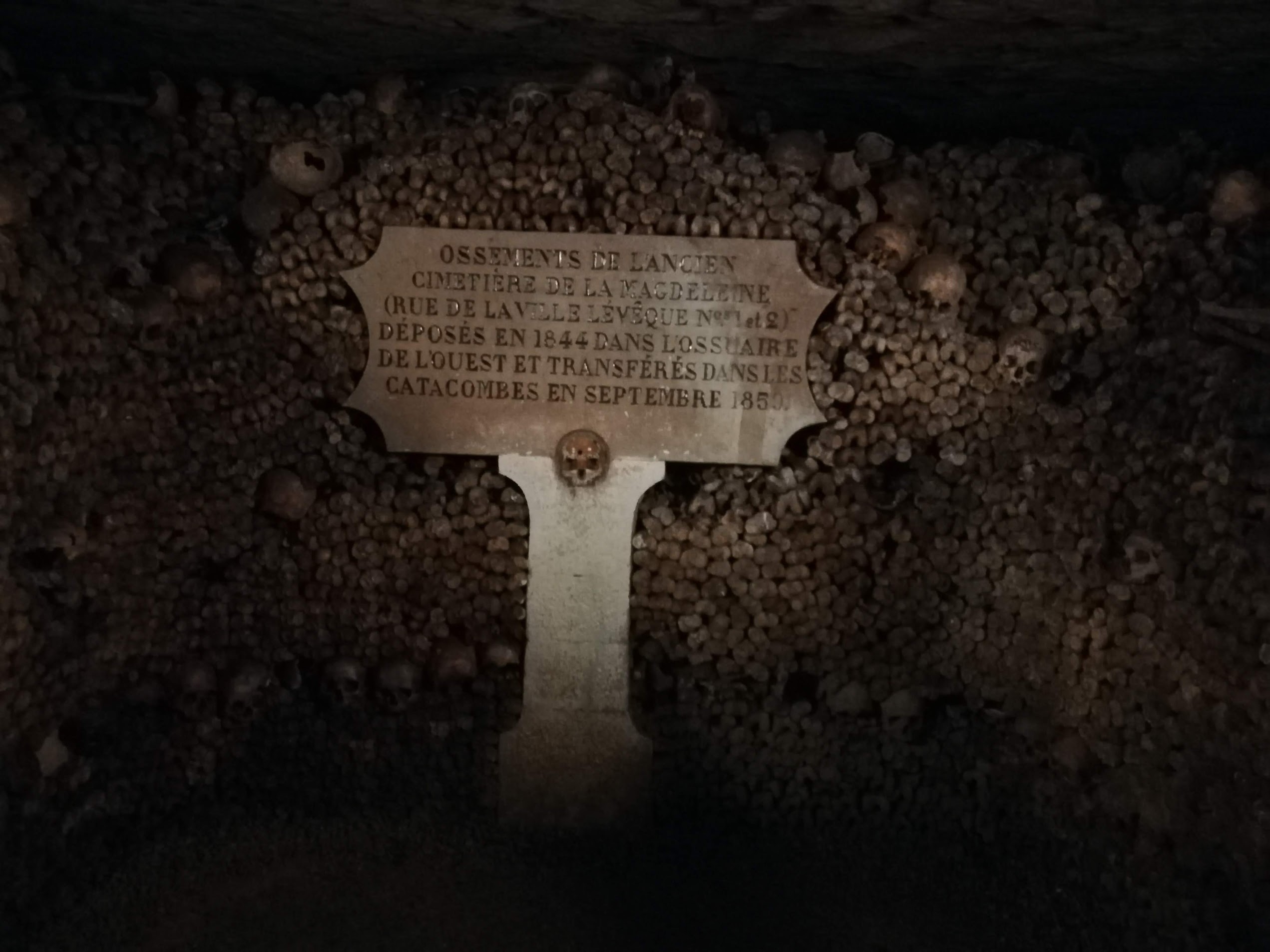
The underground site was consecrated as the Municipal Ossuary of Paris on 7 April 1786 and soon became known as the Catacombs, a name borrowed from the famous burial chambers of Rome. Transfers from Saints-Innocents continued for two years, followed by remains from numerous other parish cemeteries and religious institutions. The work continued through the French Revolution and into the early 19th century, with further deposits made during later redevelopment projects in Paris. As a result, the Catacombs contain the mingled remains of generations of Parisians who died over many centuries, their individual identities largely lost during the transfer.
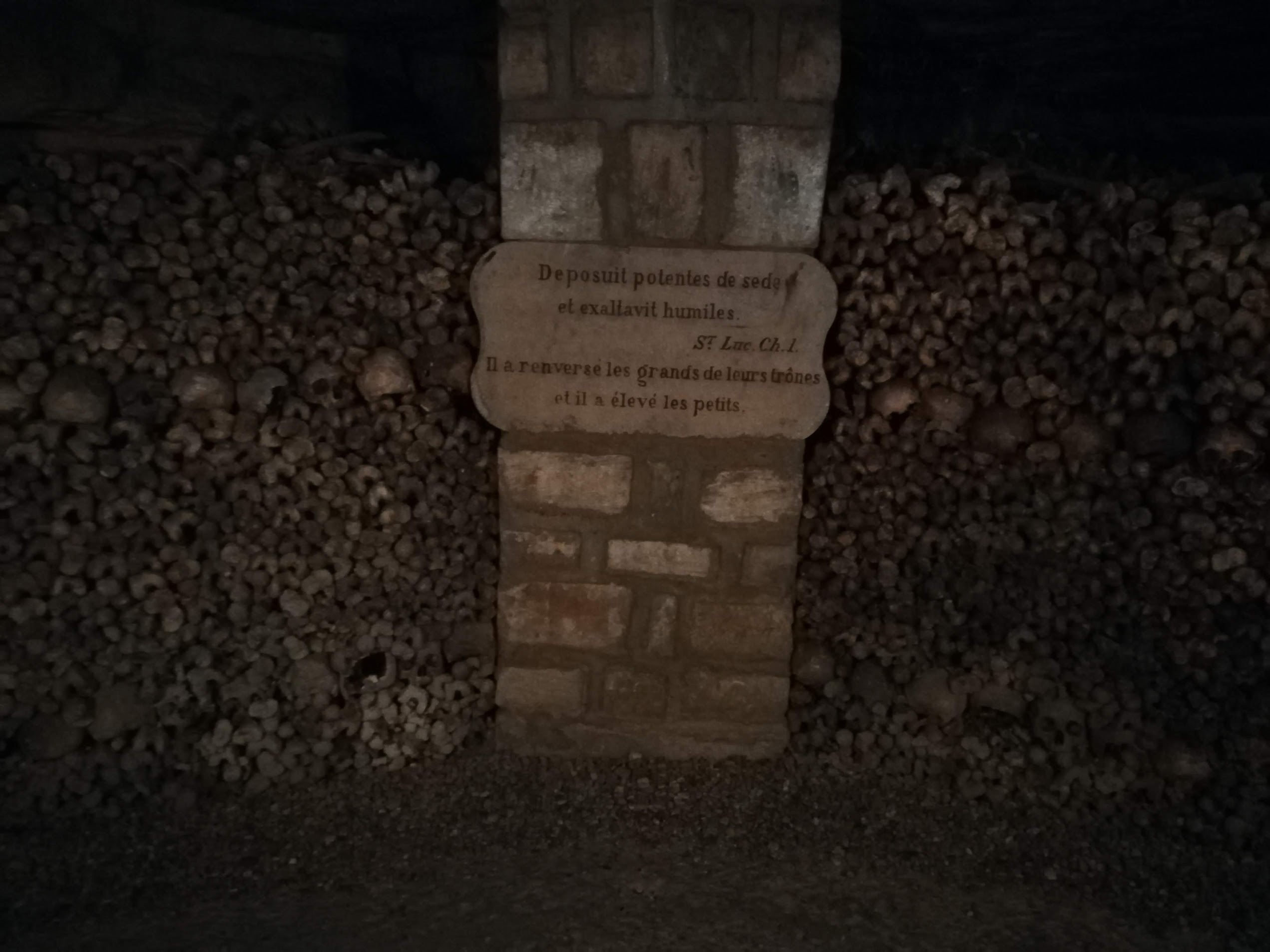
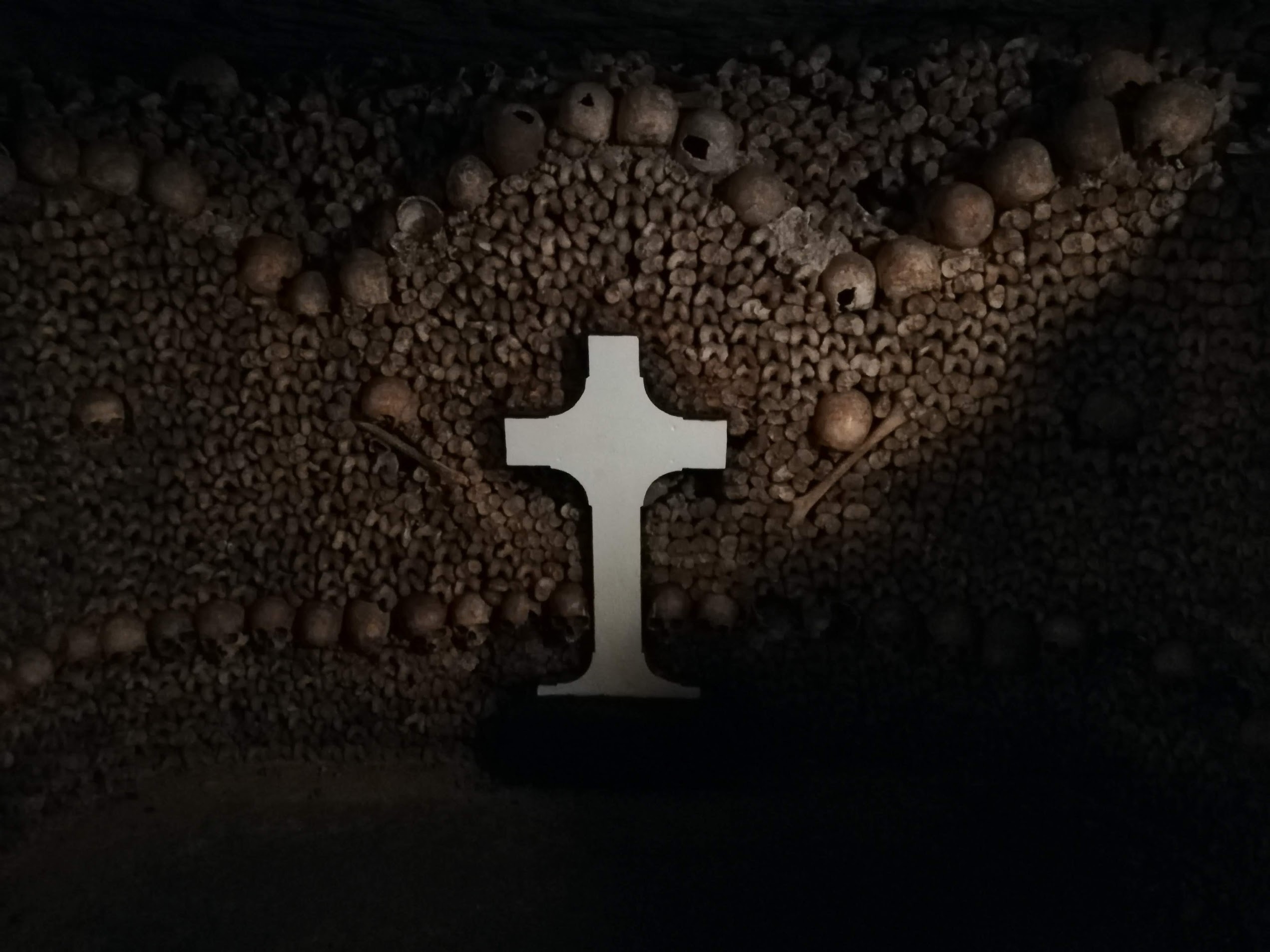
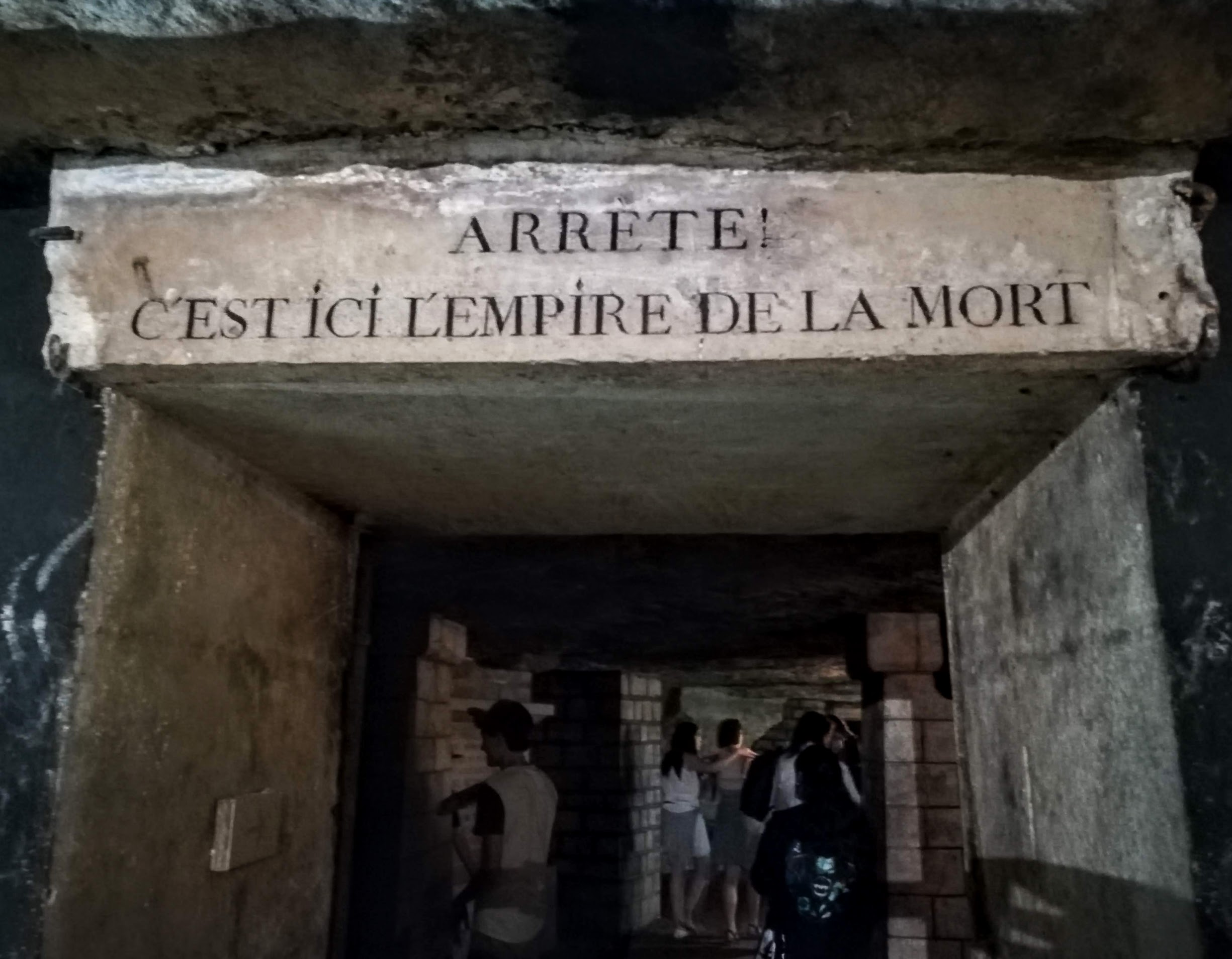
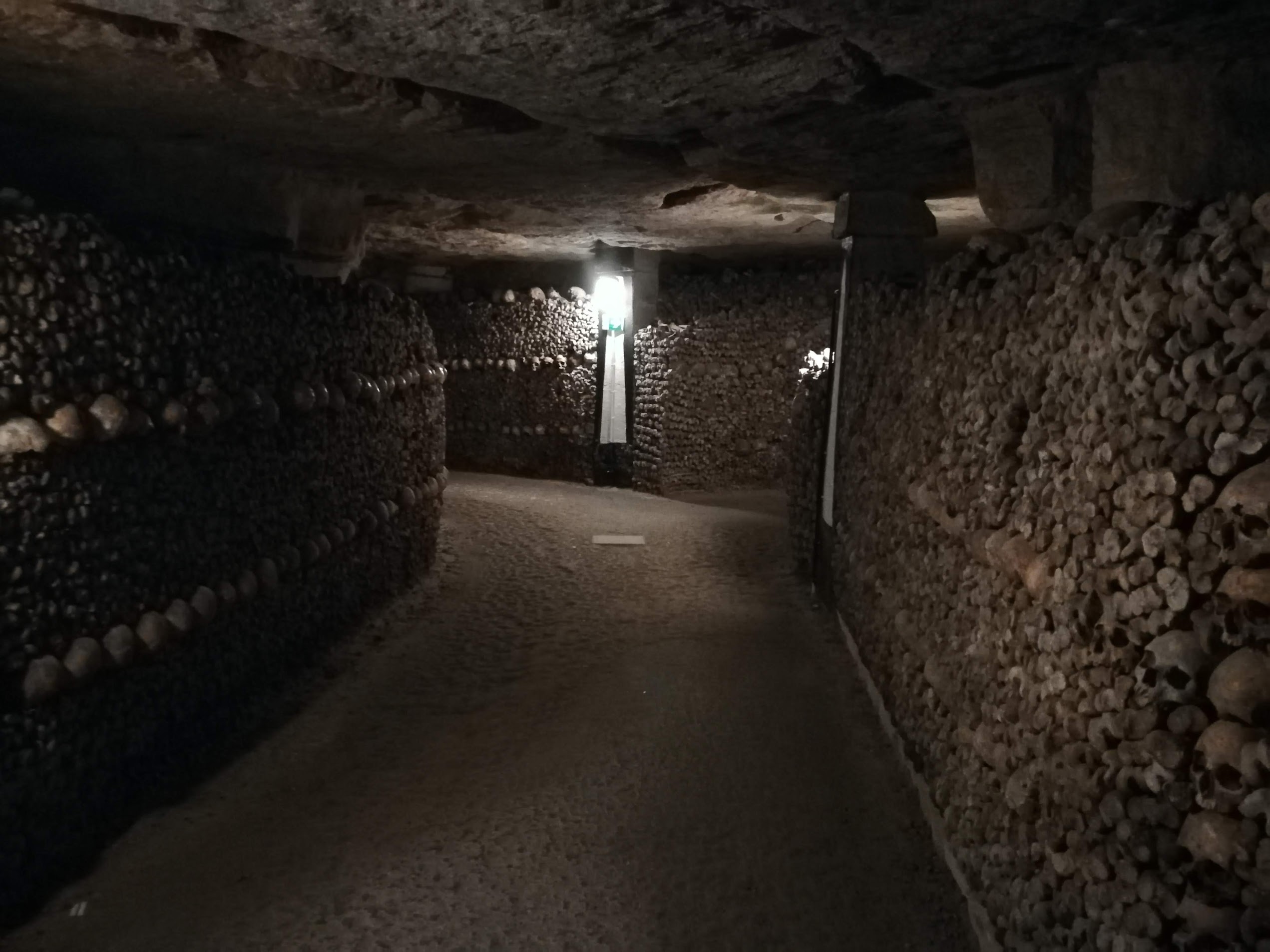
The famous walls of skulls and long bones were not part of the original arrangement. At first, the remains were simply tipped into the quarry and piled into the galleries. Around 1810, Inspector General of Quarries Louis-Étienne Héricart de Thury began transforming the ossuary into something far more deliberate. Femurs, tibias and skulls were arranged into long decorative façades, with smaller and fragmented bones stacked behind them. He added altars, columns, tomb-like structures and plaques carrying religious, philosophical and poetic reflections on mortality. At the entrance to the ossuary, visitors encounter its best-known warning: “Arrête! C'est ici l'empire de la Mort” – “Stop! This is the empire of Death.”
Héricart de Thury intended the Catacombs to be more than a storage place for bones. He developed them almost as an underground museum, with sections devoted to geology and pathological specimens as well as the monumental displays of human remains. The unusual environment also attracted scientific experiments. In 1813, Héricart de Thury placed four goldfish in the basin of the Samaritan Fountain deep underground; the fish survived but reportedly became blind and failed to reproduce. In 1861, pioneering photographer Nadar spent months experimenting with artificial light in the tunnels, producing some of the earliest photographs ever taken underground.
The Catacombs opened to visitors by appointment in 1809 and gradually became one of the strangest historical sites in Paris. The official route today runs for roughly 1.5 kilometres through about 11,000 square metres of galleries, around five storeys beneath street level. This represents only a tiny fraction of the much larger network of former quarries beneath Paris. The wider underground system extends for roughly 280 kilometres and is normally closed to the public, although illicit explorers known as cataphiles have been entering and mapping its forgotten passages for decades.
That distinction is important: the Catacombs themselves are the ossuary, while much of what is popularly described as the “Paris Catacombs” is actually the surrounding quarry network. Together they form a remarkable underground record of the city's development. Above ground, Paris was rebuilding itself and clearing away its old overcrowded burial grounds; below ground, the remains of those earlier generations were being gathered into a vast monument to death. The result is not simply a macabre collection of bones, but a physical record of how Paris dealt with overcrowding, disease, unstable ground and the dead as it developed into a modern city.
Location: The Catacombs of Paris are located beneath the streets of Paris, France, with the official entrance near Place Denfert-Rochereau.
Address: 1 Avenue du Colonel Henri Rol-Tanguy, 75014 Paris, France
Category: ossuary, historical site, death
Tags: death, underground
Darkness Level: ☠ ☠ ☠ ☠ ☠ ☠ ☠ ☠ ☠
Homepage: catacombes.paris.fr
Map: Open in Google Maps
Gallery