The Cannonball on the Wall
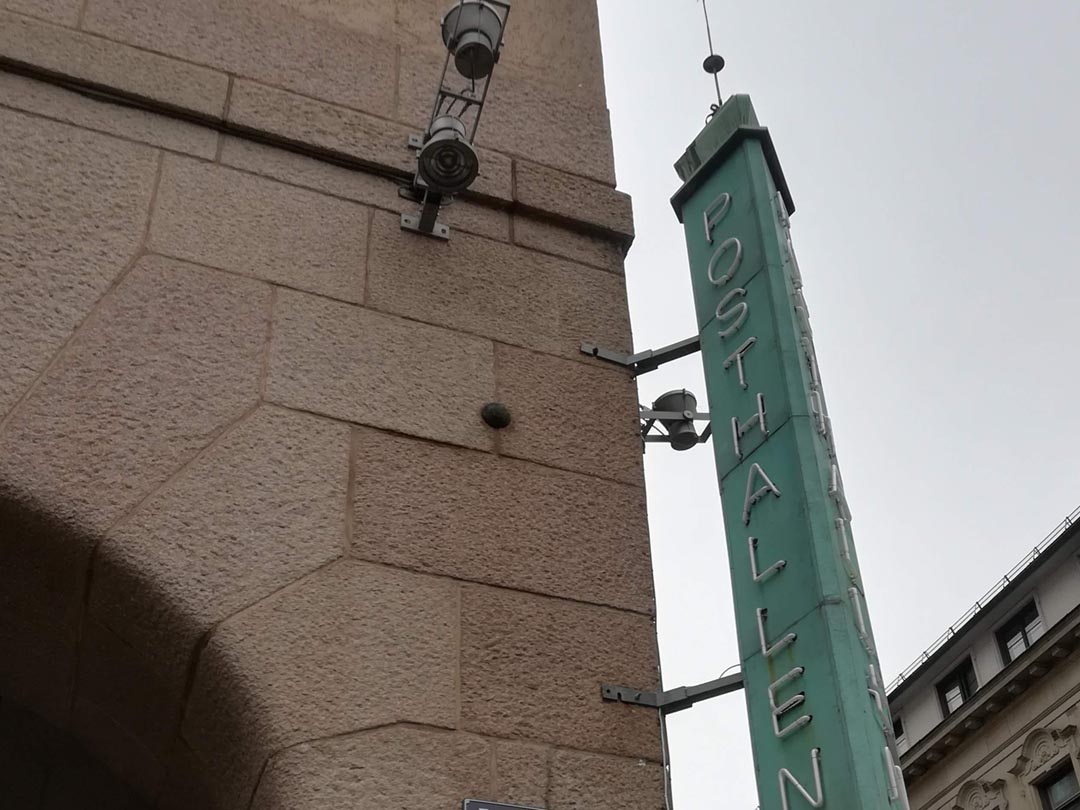
A cannonball from the war against Sweden in 1716 is still embedded in a wall in Oslo today.
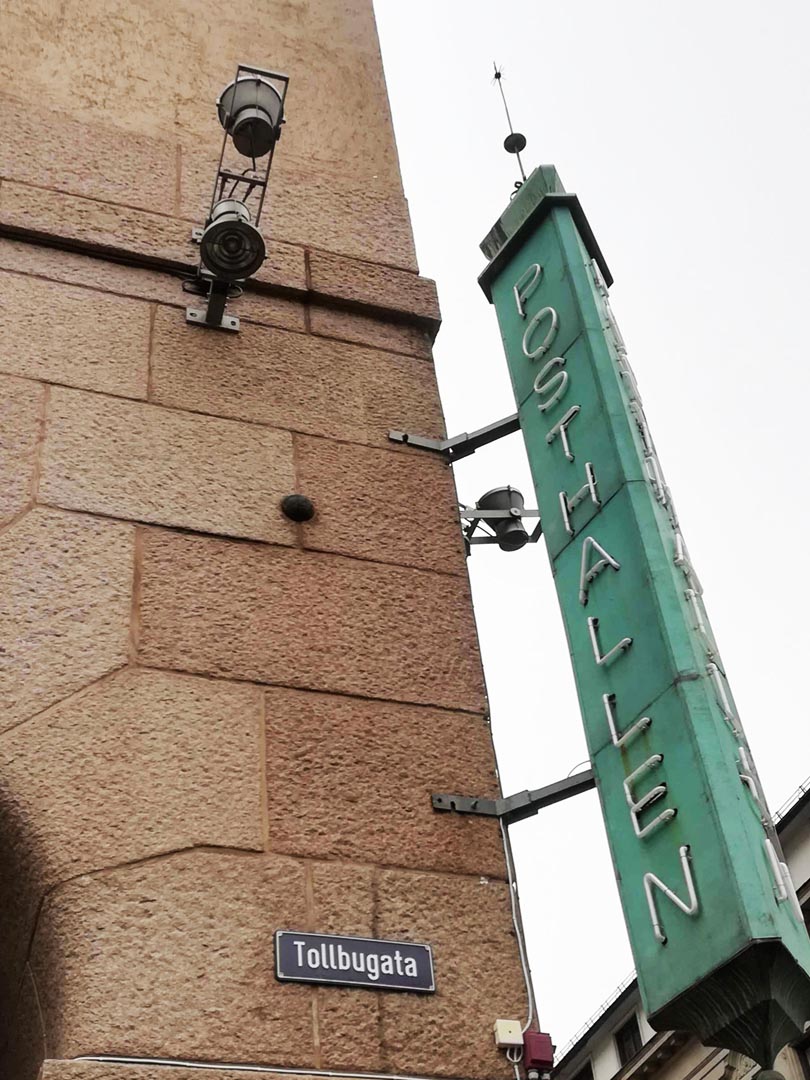
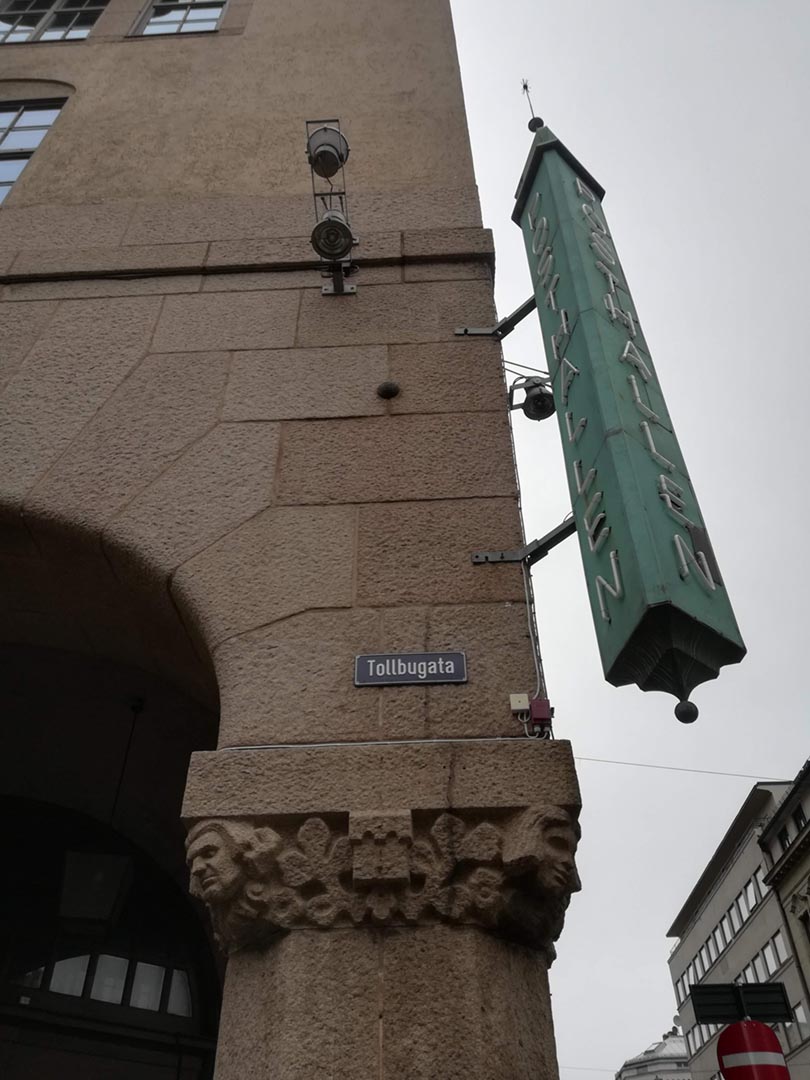
High on the wall of the old Oslo Main Post Office at Dronningens gate 15 is a small object that is very easy to miss. Embedded in the stone façade towards Tollbugata is a round iron cannonball. It does not belong to the building – in fact, it is almost two centuries older. The ball was fired from Akershus Fortress in 1716, when the Swedish army under King Charles XII occupied Christiania and attempted to capture the fortress. More than 300 years later, the shot is still sitting only a few hundred metres from the place where it was fired.
The story begins during the Great Northern War, when Denmark–Norway and Sweden were fighting on opposing sides. In March 1716, Charles XII personally led an invasion of southeastern Norway. After several attempts to force his way towards Christiania from the east had been blocked by Norwegian defensive positions, the Swedish king joined another column approaching from the south. By 20 March, he had gathered a force of around 7,000 men and was preparing to take the Norwegian capital.
The main roads towards Christiania had been obstructed with felled trees and defensive barriers, so Charles chose a more unusual route. His army marched onto the frozen Bunnefjorden and headed north across the ice. On the morning of 21 March, the Swedes came within range of Akershus Fortress. The fortress commander, Jørgen Christopher von Klenow, ordered his artillery to open fire. Cannonballs struck the ice ahead of the advancing soldiers and broke it apart, forcing the Swedish columns to change direction.
Using Bleikøya, Hovedøya and Nakholmen as cover from the guns of Akershus, the Swedish army moved west across the fjord and reached Bygdøy. From there the troops crossed Frognerkilen and established positions around Gamle Aker Church. The Norwegian field army had already withdrawn from Christiania to stronger defensive positions west of the city, leaving more than 3,000 soldiers behind to defend Akershus. Charles XII entered the largely abandoned capital on 22 March without a battle for the city itself.
Taking Christiania turned out to be the easy part. Taking Akershus was something else entirely. The fortress dominated the city from above, and its artillery had clear lines of fire along several of the streets. Swedish troops moving through Christiania risked being hit by cannon and musket fire from the walls, while the Swedes had failed to bring the heavy siege artillery needed to seriously damage the fortress. An attempted assault on 23 March was driven back, and further attacks were also unsuccessful.
The bombardment was not particularly kind to Christiania either. Cannonballs fired from Akershus passed through streets and buildings occupied by the Swedish army, damaging numerous houses and killing soldiers. Civilians who had remained in the city reportedly wore white cloth around their arms to identify themselves and reduce the risk of being mistaken for enemy troops. Contemporary accounts describe cannonballs passing through several house walls before finally stopping.
One of those shots ended its journey in Lagmannsgården at what is now Dronningens gate 15. The cannonball missed its Swedish target and lodged in the wall of the building. Normally that would have been the end of the story. Buildings disappear, walls are rebuilt and old pieces of ammunition are thrown away. For some reason, this particular cannonball stayed.
The house itself went on to have an extraordinary history. From 1719 it was used by Christiania Katedralskole. After Norway gained its own constitution in 1814, the building became the meeting place of the Norwegian Parliament, and the Storting held its sessions here until 1854. Government departments also moved into the complex, which eventually became known as Departementsgården. Through all of those changes, the old reminder of Charles XII's occupation remained in the wall.
By the early 20th century, the government wanted the site for a new main post office. Departementsgården and the neighbouring buildings were demolished during the 1910s, although historically important sections – including the old parliamentary chamber – were moved to the Norwegian Museum of Cultural History at Bygdøy. Someone also remembered the cannonball. Instead of allowing it to disappear with the demolished wall, it was removed, preserved and embedded into the new post office building.
The new Oslo Main Post Office was constructed in stages from 1914 into the 1920s. The postal service eventually left the building in 2004, and the large historic complex has since been converted for residential and commercial use. The cannonball, however, is still where it was deliberately placed, high on the wall facing Tollbugata near the corner of Dronningens gate. There is something wonderfully understated about it. Thousands of people pass below every day, and most probably have no idea that they are walking beneath ammunition from an actual battle fought in the streets of Oslo.
The Swedish occupation of Christiania lasted for 39 days. Charles XII never captured Akershus. His army was increasingly isolated as Norwegian forces blocked the route west at Gjellebekk, defeated Swedish detachments at Norderhov and Nordkleiva, and attacked the important Swedish supply base at Moss. Without heavy siege artillery and with his supply situation becoming increasingly difficult, Charles abandoned Christiania on 30 April 1716. The city had been occupied and badly damaged, but Akershus Fortress remained in Norwegian hands.
Charles XII was not finished with Norway. Two years later he returned with a much larger army and once again attempted to break the Norwegian defences. This time the main target in the south was Fredriksten Fortress at Fredrikshald, now Halden. On the evening of 11 December 1718, the 36-year-old king was inspecting the Swedish siege trenches when he raised his head above the parapet. A projectile entered his temple and passed through his skull, killing him instantly.
For more than three centuries, people have argued about who fired the fatal shot. One of the most persistent theories claims that Charles was deliberately killed by someone on his own side, perhaps by officers who had finally grown tired of his endless wars. Modern ballistic and historical studies have made that explanation less likely, and a projectile fired from the Norwegian positions is now generally considered the more probable explanation. Exactly who fired it remains unknown.
Naturally, Norway has its own candidate. Jo Vedlo Hodne, a soldier from Myking north of Bergen, later claimed that he may have fired the shot that killed the Swedish king. He was probably serving at Fredriksten and may indeed have fired towards the Swedish trenches that night, but there is no evidence that his particular shot struck Charles XII. The distance was considerable, visibility was poor and Hodne could not have known who he was shooting at. Nevertheless, the story survived. In 1926, a monument was erected at Hodne describing him rather confidently as “banemann åt Karl XII” – the slayer of Charles XII.
Charles XII has remained an unusually visible historical figure in Scandinavian popular culture. His life inspired the enormous Swedish silent film Karl XII in 1925, released in two parts with a combined running time of almost six hours. He later became central to the Norwegian comedy series Brødrene Dal og mysteriet med Karl XIIs gamasjer, while Swedish metal band Sabaton devoted much of their 2012 concept album Carolus Rex to the rise and fall of the Swedish Empire and the king's final campaign. Sabaton even performed the entire album at Fredriksten Fortress in 2017, almost exactly where the story had ended three centuries earlier.
Yet one of the simplest surviving reminders of Charles XII's wars is still the little iron ball in central Oslo. It has outlived the building it originally struck, survived several completely different uses of the site and was deliberately carried into a new building so the story would not disappear. It is not a grand battlefield monument, and unless you know where to look, you can easily walk straight past it. But there it is: one missed shot from Akershus Fortress, still stuck in Oslo more than 300 years later.
Location: The cannonball can be found on the south-east side of the old Oslo Main Post Office. Look up about ten meters.
Address: Dronningens gt. 15, 0152 Oslo, Norway
Category: monument, history, war
Tags: war, war monument
Darkness Level: ☠ ☠ ☠ ☠ ☠ ☠ ☠ ☠ ☠
Map: Open in Google Maps
Gallery