Berlin-Hohenschönhausen Memorial
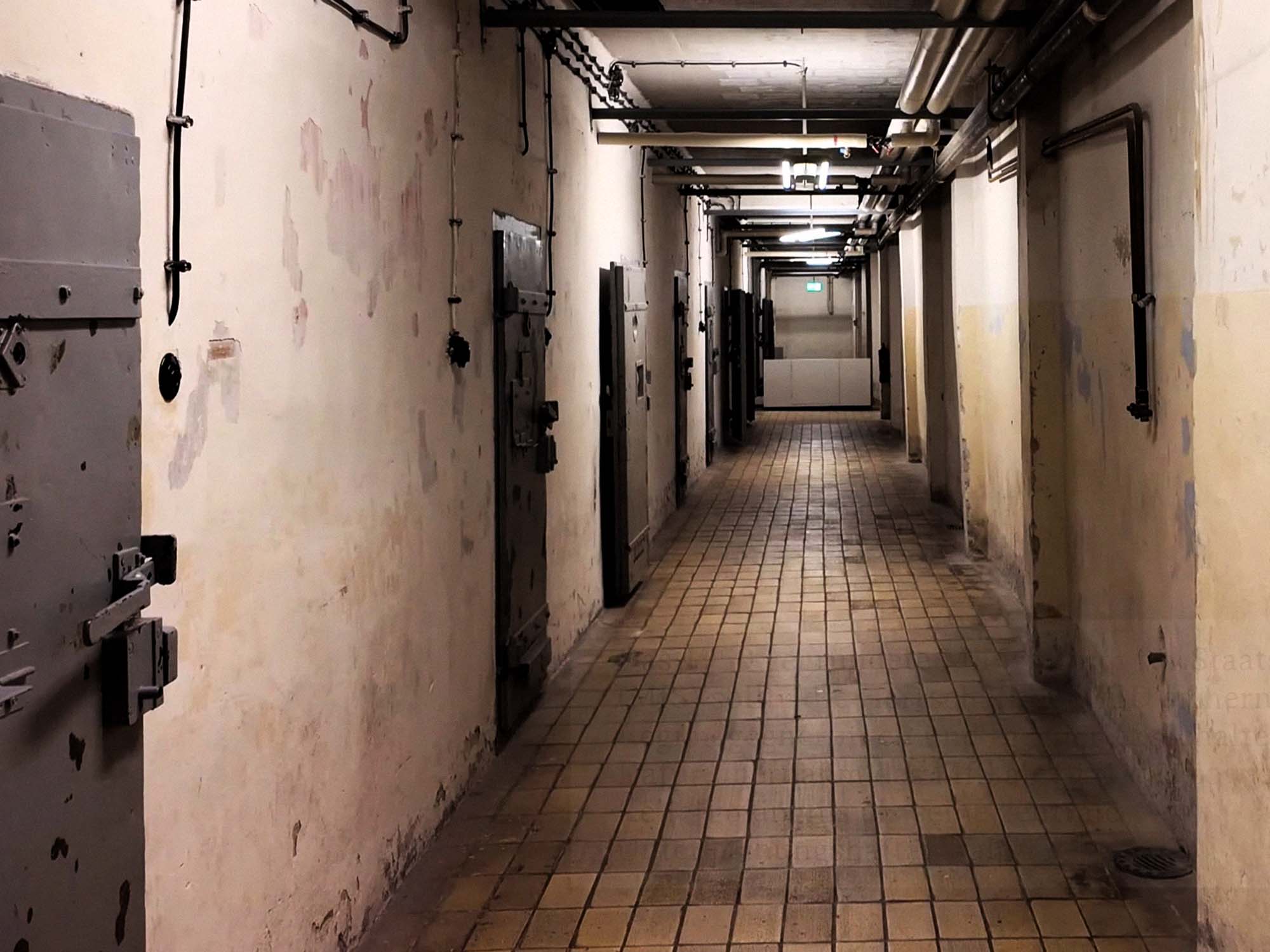
The former central remand prison of East Germany's Stasi, hidden for decades inside a restricted district that disappeared from public maps of Berlin. Thousands of political prisoners were isolated, interrogated and psychologically broken here, while an earlier Soviet camp on the same site claimed around a thousand lives. Much of the prison survives almost unchanged, including underground cells known as the “U-Boot”, interrogation rooms, isolation cells and the enclosed exercise yards prisoners called tiger cages.
Berlin-Hohenschönhausen Memorial preserves the former central remand prison of the East German Ministry for State Security, better known as the Stasi. Located in the northeastern Berlin district of Lichtenberg, the complex was one of the most secretive sites in the German Democratic Republic. Political prisoners were brought here for interrogation before trial, frequently without knowing exactly where they had been taken. The surrounding neighbourhood formed a Stasi-controlled restricted zone that ordinary citizens could not enter and which, from the early 1970s, appeared as a blank area on official East Berlin maps.
The site's history of political imprisonment began immediately after the Second World War. In May 1945, Soviet occupation authorities seized a complex at Genslerstraße that had originally contained a large kitchen belonging to the National Socialist People's Welfare organisation. The Soviet secret police, the NKVD, converted the buildings and surrounding barracks into Special Camp No. 3, one of a network of detention camps established across the Soviet occupation zone.
More than 16,000 men, women and adolescents passed through Special Camp No. 3, which functioned primarily as a transit camp for prisoners being sent to places including Sachsenhausen, Ketschendorf and Weesow. At times more than 4,200 people were confined within the overcrowded compound. Food was inadequate, sanitation was catastrophic and medical care was minimal. The memorial estimates that approximately 1,000 people died as a result of the conditions.
The dead were not given individual graves. Bodies were taken to a nearby rubble dump and buried anonymously in mass graves. After German reunification, searches of the area recovered the remains of 127 prisoners, which were reburied at Hohenschönhausen cemetery in 1995. Research by the memorial has identified by name more than 700 people who died in the special camp and an associated forced-labour camp between 1945 and 1949, although the complete death toll remains uncertain.
Those imprisoned were not all convicted Nazis. Soviet Order 00315 authorised the detention of former Nazi Party members, police and intelligence personnel and officials of the defeated regime, but categories such as “spy”, “saboteur” and “terrorist” could be applied much more broadly. Children as young as twelve were detained after accusations of belonging to supposed Nazi “Werwolf” resistance organisations, while denunciations could result in imprisonment without a conventional judicial process. By 1946, opponents of Soviet occupation policy were increasingly among those brought to Hohenschönhausen.
The special camp closed in November 1946, but political imprisonment at Hohenschönhausen did not end. Remaining prisoners were forced to convert the basement of the former kitchen building into a new detention facility for the Soviet secret police. From 1947, the bunker-like underground prison served as the central Soviet remand prison in Berlin.
Prisoners later nicknamed this underground section the “U-Boot” – the Submarine. Its windowless cells were damp and initially unheated, with little more than a wooden sleeping platform and a bucket for sanitation. Ventilation came through openings near the bottoms of the doors, while an electric bulb burned continuously day and night. Without daylight, prisoners could lose their sense of time almost immediately.
Interrogations under Soviet control frequently took place at night and could last for hours. Former prisoners described threats, beatings, sleep deprivation, being forced to stand for prolonged periods and confinement for days in punishment cells as methods used to obtain confessions. The physical environment itself contributed to the pressure: isolation, exhaustion and uncertainty deprived prisoners of ordinary reference points while interrogators controlled almost every aspect of their existence.
In 1951, the newly established East German Ministry for State Security took control of the prison. Hohenschönhausen became the Stasi's central remand centre, used principally for people under investigation for political offences. Between 1951 and 1989, more than 11,000 people were imprisoned in the Stasi facilities on the site.
The old underground prison remained in use during the 1950s, a period when physical violence was still common. Prisoners included people involved in the uprising of 17 June 1953, reform-minded communists and senior political figures who had fallen from favour. Former GDR foreign minister Georg Dertinger and former SED Politburo member Paul Merker were among those held here.
The Stasi did not restrict itself to arrests inside East Germany. Journalist Karl Wilhelm Fricke, a prominent critic of the communist regime, was abducted from West Berlin in 1955 and secretly taken to Hohenschönhausen. He was interrogated here for fifteen months before being sentenced to four years' imprisonment during a closed trial. His case demonstrates how the institution could operate beyond the formal borders of the state it served.
At the end of the 1950s, prisoners themselves were forced to help construct a much larger prison alongside the Soviet cell block. Completed in 1960, the new building contained more than a hundred cells across three floors, most intended for solitary confinement, together with a large interrogation wing. It remained the central Stasi remand prison until the collapse of East Germany.
After construction of the Berlin Wall in 1961, people accused of attempting to flee East Germany or applying to leave the country formed an increasing proportion of the prisoners. Other inmates were writers, church activists, dissidents and civil-rights campaigners whose activities challenged the ruling Socialist Unity Party. Among the better-known prisoners were writer Jürgen Fuchs, dissident Marxist Rudolf Bahro and civil-rights activist Bärbel Bohley.
The methods used against them changed. From the 1960s onwards, the Stasi increasingly replaced the open physical brutality of the previous decade with what the memorial describes as psychological torture. The intention was not necessarily to leave marks on the body but to create a feeling of total helplessness and dependence on the interrogator. Isolation became one of the most effective weapons.
Prisoners were kept strictly separated from one another and could spend long periods alone. Guards coordinated movements through the corridors so that detainees would not accidentally meet or even see another prisoner. Their location was deliberately concealed from them. A person taken to Hohenschönhausen might know that they were somewhere in Berlin but have no reliable way to determine where, who else had been arrested or what was happening outside.
This uncertainty was exploited during interrogation. Sessions could continue for months, with the interrogator controlling information about family members, friends, employment and the progress of the case. Prisoners could be led to believe that associates had betrayed them or that resistance was pointless because the state already knew everything. The objective was to obtain incriminating statements while convincing the prisoner that cooperation with the interrogator represented the only possible route out of isolation.
Even exercise was designed to prevent contact. Prisoners were taken alone into small outdoor enclosures surrounded by high walls and covered with wire mesh. They nicknamed these bleak exercise yards “Tigerkäfige” – tiger cages. There was no communal exercise yard in which detainees could speak to one another or discover who else was being held.
Transport formed another part of the system of disorientation. Prison vehicles were disguised from the outside and divided internally into tiny compartments so prisoners could be moved without seeing one another or the streets outside. The memorial also preserves the last surviving East German prisoner railway wagon, nicknamed the “Grotewohl Express” after GDR prime minister Otto Grotewohl. Such wagons transferred prisoners between detention centres while keeping them concealed from the public.
Hohenschönhausen also contained the central prison hospital of the Stasi, the only facility of its kind operated by the ministry. It treated prisoners from across East Germany, including people shot by border guards while attempting to escape, detainees injured after suicide attempts, hunger strikers and prisoners suffering severe psychological breakdowns or prison psychosis. The surviving hospital includes treatment rooms, an operating theatre, laboratory facilities and an X-ray department.
The prison did not stand alone. Hohenschönhausen lay inside one of the largest Stasi restricted areas in East Berlin. Hidden behind guarded gates were facilities responsible for developing wiretapping equipment and concealed cameras, producing forged documents, maintaining weapons and conducting electronic espionage against the West. The secret labour camp known as Lager X was also located within this zone. From the outside, residents encountered fences, surveillance cameras and armed guards but were given little indication of what took place beyond them.
The concealment extended to maps. From the early 1970s, official maps of East Berlin showed the restricted area as a largely blank space. Hohenschönhausen therefore became a prison that thousands of people knew existed only through rumour and personal experience, while its physical location was deliberately removed from ordinary public geography.
The system survived until the political crisis of 1989. Mass demonstrations, increasing numbers of people leaving East Germany and the opening of the Berlin Wall on 9 November rapidly undermined the power of the SED regime. The Stasi began to dissolve, and its detention centres were gradually emptied. Hohenschönhausen finally ceased functioning as a prison when German reunification took effect on 3 October 1990.
Unlike many prisons that were demolished or heavily altered after closure, large parts of Hohenschönhausen survived almost intact. Former prisoners campaigned to prevent the site from disappearing and to preserve it as evidence of political persecution. The memorial opened in 1994, only a few years after the final inmates had left.
This involvement of former prisoners remains one of the defining characteristics of the memorial. Guided tours are conducted both by historians and by people who were themselves politically imprisoned in East Germany. Their testimony adds a dimension that documents and preserved cells cannot provide, connecting individual rooms with the experiences of people who were interrogated, isolated and held there.
The permanent exhibition Imprisoned at Hohenschönhausen combines documents, photographs and surviving objects with around seventy audio and video testimonies from former detainees. Stasi training materials are also displayed, allowing the same system to be viewed from two radically different positions: those of the people imprisoned and the officers trained to control and interrogate them.
The physical prison itself remains the most direct evidence. Visitors can enter the underground U-Boot, walk through the later cell blocks and see the interrogation rooms where prisoners sat opposite officers for months. Much of the furniture and institutional architecture is strikingly ordinary. Like the offices preserved at the Stasi Museum in Normannenstraße, these rooms make clear that repression did not require a theatrical torture chamber. It could operate through a desk, a locked door, controlled information and the systematic removal of every ordinary point of human contact.
Berlin-Hohenschönhausen therefore complements the Stasi Museum almost perfectly. Normannenstraße preserves the administrative centre from which East Germany's surveillance state was managed; Hohenschönhausen preserves one of the places where those decisions ended with a person behind a locked door. Before the Stasi, the same ground had already held thousands of Soviet prisoners and concealed the bodies of people who died in an overcrowded camp. Few surviving sites in Berlin contain such a continuous record of political imprisonment from the immediate aftermath of Nazi Germany through almost the entire existence of the GDR.
Location: Inside the former Stasi restricted area in Berlin-Hohenschönhausen, in the Lichtenberg district of eastern Berlin.
Address: Genslerstraße 66, 13055 Berlin, Germany
Category: prison, memorial
Tags: Stasi, Ministry for State Security, MfS, East Germany, GDR, DDR, political prisoners, secret police, Soviet occupation, NKVD, Special Camp No. 3, U-Boot, underground prison, solitary confinement, psychological torture, interrogation, sleep deprivation, political repression, Berlin Wall, escape attempts, tiger cages, Grotewohl Express, prison hospital, mass graves, Erich Mielke, Jürgen Fuchs, Rudolf Bahro, Bärbel Bohley, Karl Wilhelm Fricke, Cold War, memorial
Darkness Level: ☠ ☠ ☠ ☠ ☠ ☠ ☠ ☠ ☠
Homepage: stiftung-hsh.de
Map: Open in Google Maps
Gallery